
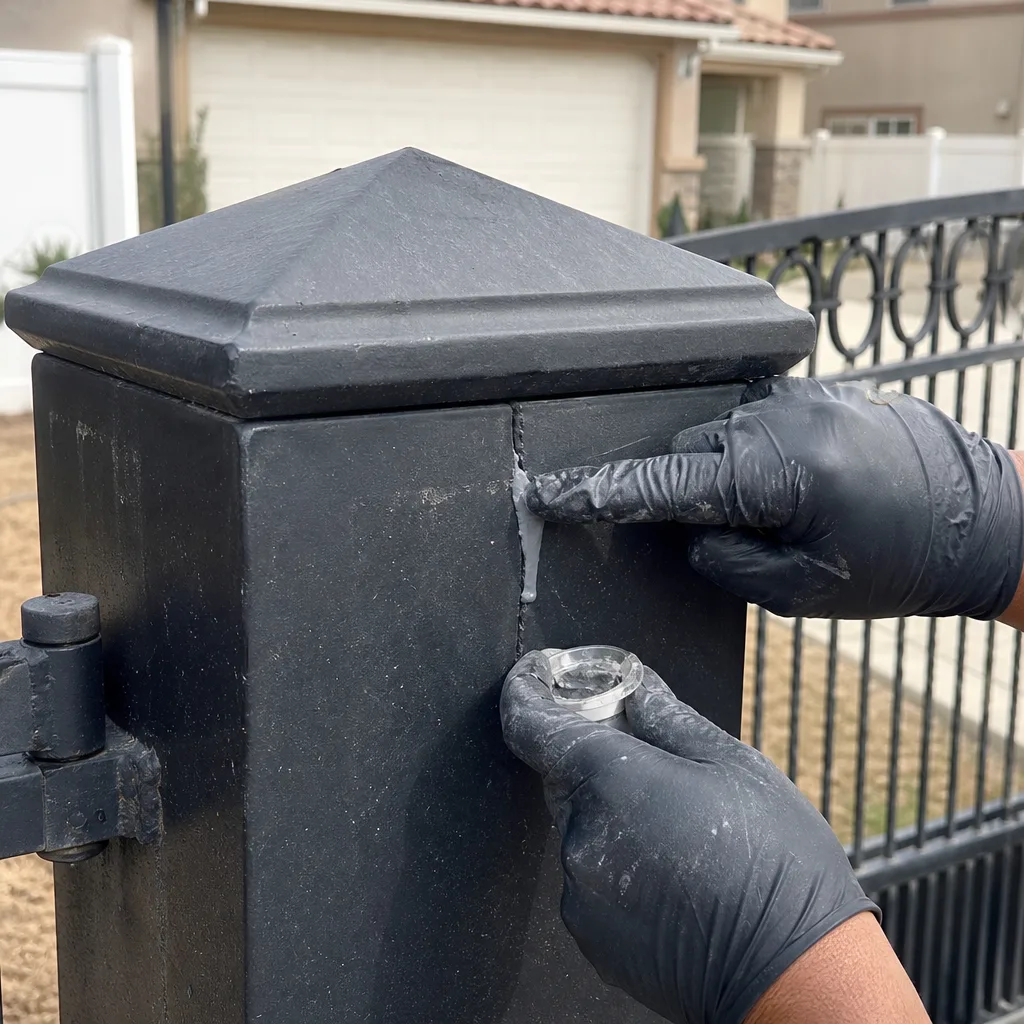
Last updated November 3, 2026
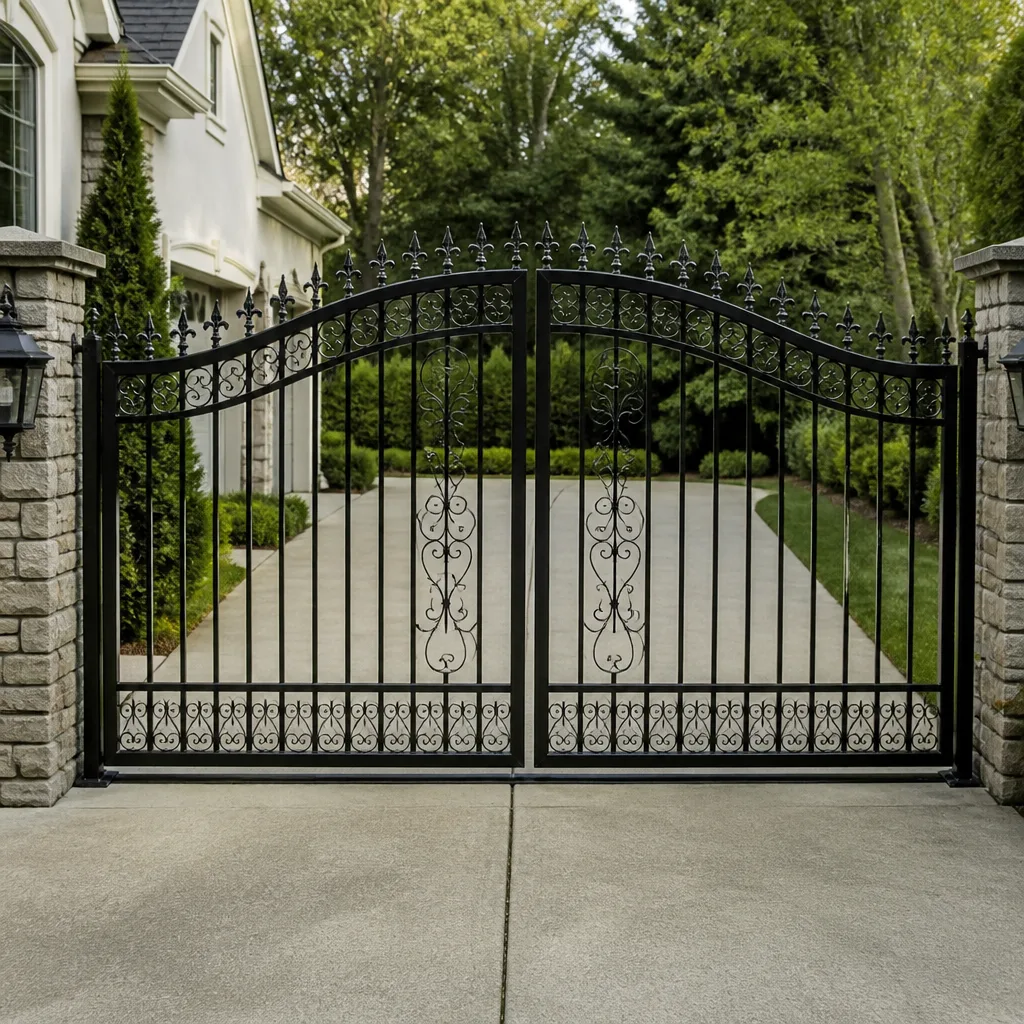 Wrought iron
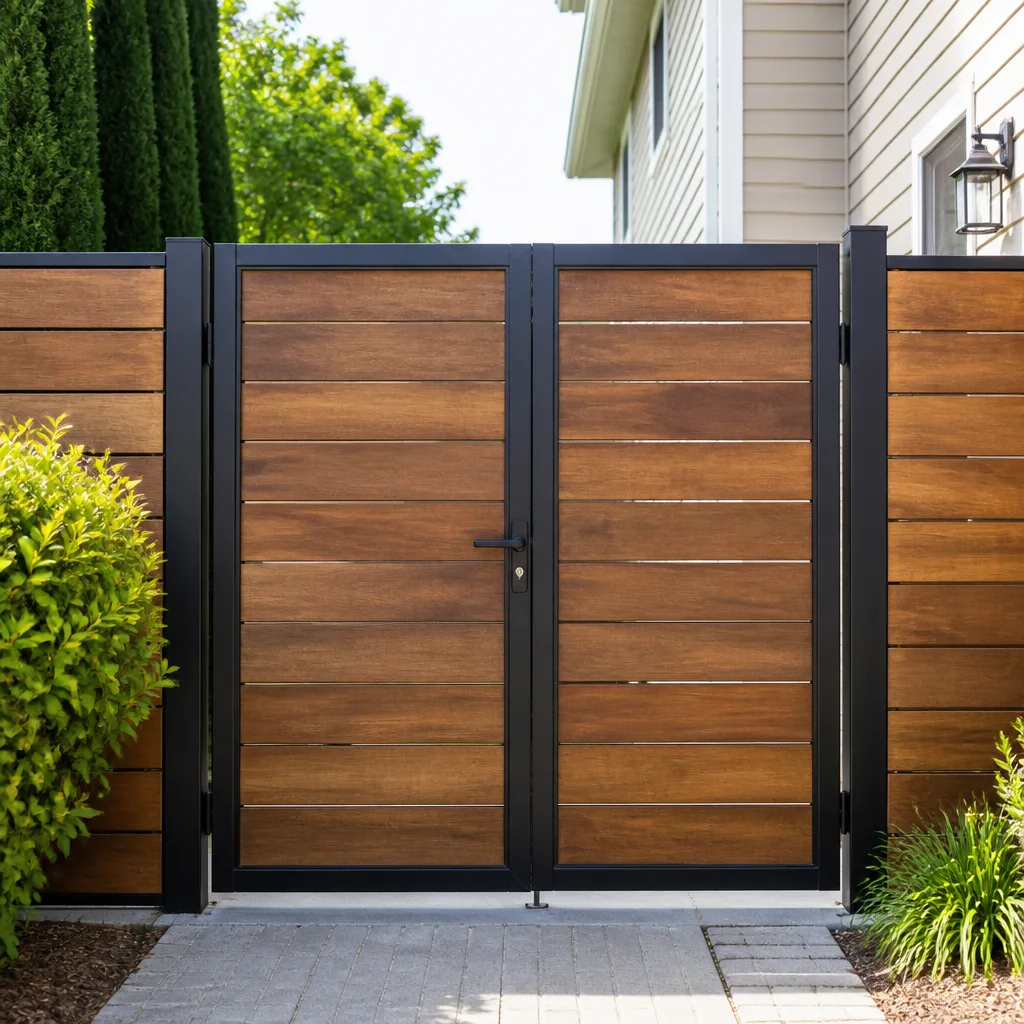 Wood & steel frame
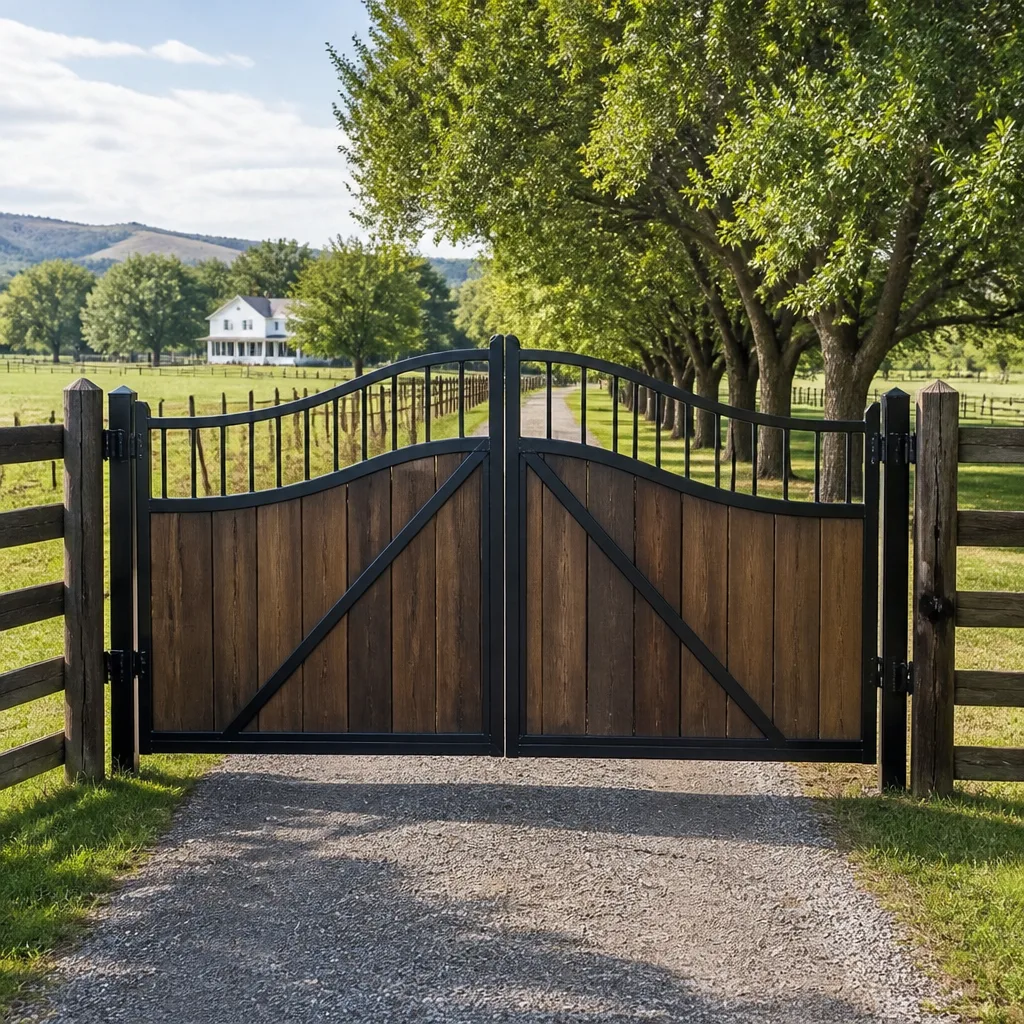 Farm & ranch
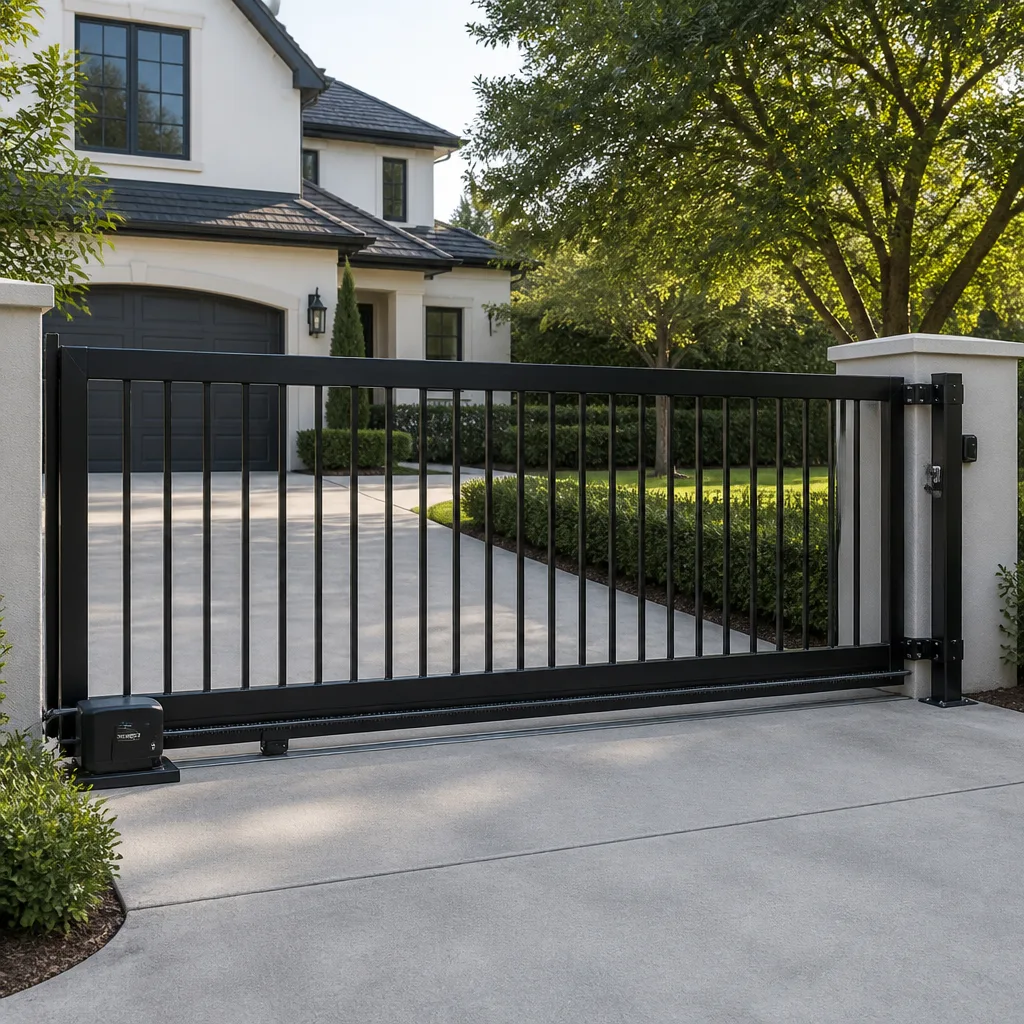 Sliding driveway gates
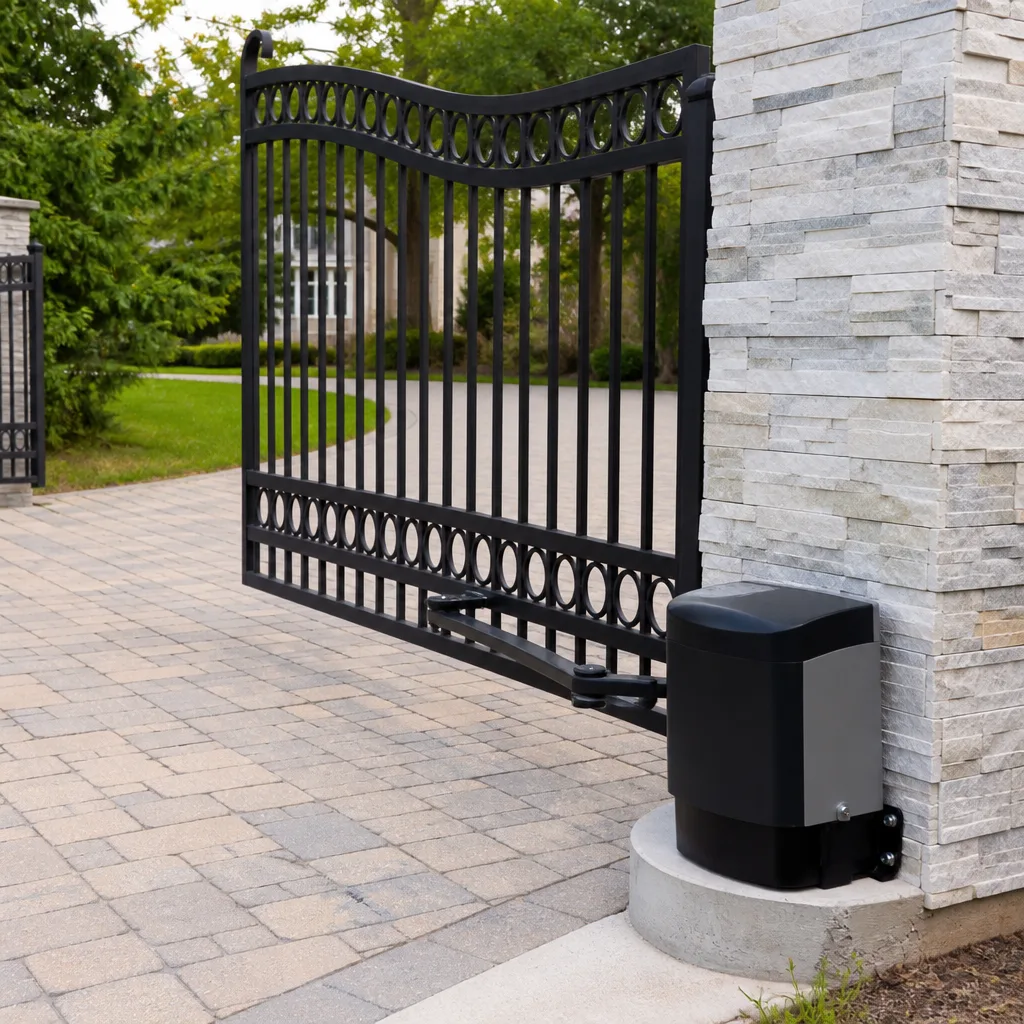 LiftMaster operators
Free on-site gate assessment - hinges, posts, and your LiftMaster or Nice gate operator checked before anything is quoted
The assessment is free and the quote is the invoice.
Get your free estimateThe Complete Gate Repair Guide for Victorville Homeowners
A gate that worked fine in January and drags in August isn’t broken. It’s reacting to a 40°F temperature swing that expanded your steel frame enough to misalign the latch. That’s a Victorville problem, not a gate problem. This guide explains what actually breaks gates in the High Desert, what fails in what order, and when a repair beats replacement. For The Complete Guide to Gate Repair in Victorville and related resources, see our blog. You’ll learn what to check before calling a technician, what the components cost, and how to avoid paying for work you don’t need.
Styles & brands we work with
- Wrought iron
- Wood & steel frame
- Farm & ranch
- Sliding driveway gates
- LiftMaster operators
Quick Answer
Gate Repair services in Victorville typically cost $150 to $450 for mechanical fixes like hinge realignment and latch adjustments, while electric gate repairs involving control boards, motors, or sensors run $300 to $1,200 depending on brand and component. The most common local failure points are heat-expanded frames, caliche-shifted posts, and blown transformer fuses from summer power spikes. Most repairs are completed same-day when parts are in stock.
Table of Contents
- Why Victorville’s Environment Attacks Your Gate
- What Fails First: A Component-by-Component Breakdown
- How to Diagnose a Gate Problem Before You Call
- Electric Gate Operator Problems and What They Cost to Fix
- Hydraulic vs. Electromechanical Operators in the High Desert
- Repair or Replace: How to Decide
- Caliche Soil, Post Lean, and Frame Racking
- Choosing a Gate Repair Technician in Victorville
- Common Mistakes to Avoid
- When to Call a Professional
- Frequently Asked Questions
- The Bottom Line
Why Victorville’s Environment Attacks Your Gate
Victorville sits in the High Desert at roughly 2,700 feet of elevation. That means summer days above 100°F, winter nights below freezing, rapid temperature swings, and soil that doesn’t behave like the loose topsoil you’d find in coastal California. Your gate sits in the middle of all that. Every day. The three forces that kill gates here faster than anywhere in Los Angeles County are heat expansion, caliche soil movement, and power surges from blown distribution transformers.
Heat expansion is the one people miss. A 20-foot steel gate can expand by roughly a quarter inch across a 100°F temperature spread. That might not sound like much until you understand how it affects latch alignment, hinge bind, and the gap between the gate leaf and the post. We’ve seen gates that opened cleanly for 20 years start dragging every afternoon in July, then work fine again after dark. That’s not a failing operator. That’s physics.
Caliche is the second factor. Victorville and much of Hesperia sit on caliche, a hardpan layer of calcium carbonate that forms a concrete-like crust a few feet below the surface. It’s excellent for building stable structures when you dig deep and pour properly. But gate posts are often set shallow, only 2 to 3 feet down. When the caliche expands and contracts with moisture changes, or when it shifts slightly over time, shallow-set posts lean. A leaning post is not a gate problem. It’s a foundation problem that happens gradually over 2 to 5 years. You’ll see it as a gate that swings sluggish, scrapes the ground at one end, or won’t latch because the latch post has drifted.
Power spikes come in summer. Victorville’s electrical grid gets hammered in July and August when every AC unit runs full tilt. Transformers blow, voltage dips, and when the power comes back, it often comes back with a spike. Gate operators take that hit directly through the control board. A transformer fuse or capacitor blows, and the gate dies. If it happens twice in one season, that’s not random chance. That’s your local grid. Proper surge protection on a gate operator is not a luxury in Victorville. It’s baseline equipment.
What Fails First: A Component-by-Component Breakdown
Gates fail in a predictable order. Understanding that order helps you decide what to inspect and what to budget for. Here’s the sequence we see on Victorville properties, from most common to least.
1. Hinges and Hinge Bolts
Hinges fail first because they carry the entire weight of the gate leaf while dealing with every temperature cycle. The steel expands and contracts, the hinge pin wears, and the mounting bolts loosen. A sagging gate is almost always a hinge problem before it’s anything else. The fix is often straightforward: replace worn hinges, tighten or upgrade the bolts, and realign the gate. Cost range: $120 to $350 depending on gate weight and hinge type.
2. Latch and Strike Plate Alignment
When the frame expands or the post shifts, the latch no longer meets the strike plate at the right angle. The gate won’t close cleanly, or the lock cylinder binds. This is a secondary problem caused by the underlying hinge or post issue. Fixing the latch without fixing the alignment is how you end up calling a technician twice. Cost range: $80 to $200 for latch adjustment or replacement.
3. Safety Sensors and Photo Eyes
Electric gates have safety sensors that stop or reverse the gate when something is in the path. In Victorville’s dusty environment, these sensors get coated with fine dust and sand. A sensor that worked fine in September gets caked with dust by November and the gate refuses to close. Cleaning and realigning sensors solves most of these problems. Cost range: $100 to $250 for cleaning, realignment, or replacement.
4. Control Boards
Control boards fail from two main causes in the High Desert: power surges and heat degradation. Capacitors wear out faster when ambient temperatures exceed 90°F for months on end. A board that fails during a July power spike usually shows visible damage, but boards that fail from heat exposure can look fine while behaving erratically. Brand matters here. Some control boards are easier to diagnose than others. We work on LiftMaster, FAAC, BFT, Linear, Viking, Ghost Controls, DoorKing, Elite, and Mighty Mule boards, and each has its own failure signature. Cost range: $300 to $900 for board replacement, depending on brand and model.
5. Motors and Gearboxes
Motors are the long-term failure item. In a residential electromechanical operator like a LiftMaster or Mighty Mule, the motor usually outlasts the board and the sensors. But when a motor does fail, it often follows years of added strain from misaligned gates. A motor that fights a sagging hinge for two years burns out faster than a motor pulling a properly balanced gate. That’s why hinge neglect is the most expensive mistake in gate maintenance. Motor replacement cost range: $400 to $1,200.
6. Receivers and Remote Access Components
When remotes stop working but the gate still opens from the keypad or the hardwired button, the receiver is usually the issue. In Victorville’s heat, receiver antennas corrode and solder joints crack. These are quick, inexpensive fixes when diagnosed correctly. Cost range: $150 to $350 for receiver replacement.
For a deeper look at what electric repair involves, see our guide on Electric Gate Repair in Hesperia.
How to Diagnose a Gate Problem Before You Call
You don’t need to be a technician to figure out what’s going wrong. You just need to know what to look at and in what order. This is the diagnostic sequence we use on service calls in Victorville, and it works for any gate brand.
Warning: Electric gates contain high-voltage components and heavy moving parts. Do not open the operator housing while the unit is powered. Do not attempt electrical repairs yourself. Use this guide to identify the problem, then call a trained professional for the fix.
- Check the manual operation first. Disengage the operator using the release handle or key, then swing the gate by hand. If it drags, scrapes, or feels heavy, you have a mechanical problem, not an electrical one. The hinges, the post alignment, or the gate weight are the issue. An electric repair won’t fix a mechanical problem, and any technician who doesn’t check this first is skipping the diagnostic step that matters most.
- Listen for unusual sounds. A grinding noise when the gate moves points to gearbox wear. A clicking sound that repeats without the gate moving points to a motor or capacitor problem. A humming sound with no movement often means the motor is getting power but can’t overcome the load, which loops back to step one: check manual operation.
- Test the gate from every control point. Try the remote, the keypad, and the hardwired indoor button. If none of them work, the problem is at the operator or the power source. If the keypad works but the remote doesn’t, the issue is the receiver or the remote itself. If only the indoor button works, the problem might be a broken wire between the house and the operator.
- Check the safety sensors. Look for the two small boxes mounted on either side of the gate path near the ground. If one has a blinking or steady light and the gate refuses to close, the sensors are misaligned or dirty. Wipe them off. If the problem persists, the sensor itself may need replacement.
- Look at the posts. Stand back and sight down the gate line. If one post leans noticeably, even by an inch or two, the gate will never operate correctly until that post is reset. This is the caliche problem discussed later, and it’s more common in Victorville than anywhere else we’ve worked.
- Check for recent power events. If the gate worked yesterday and is completely dead today, think back. Did a transformer blow nearby? Did the lights flicker recently? A dead gate after a power event usually points to a blown fuse, tripped breaker, or damaged control board.
Electric Gate Operator Problems and What They Cost to Fix
Electric gate repair is a core service, not an upsell. When a homeowner calls about a gate that won’t open, the problem is usually one of five things: the control board, the motor capacitor, the safety sensors, the receiver, or the power supply. Here’s what each repair involves and what you should expect to pay for parts and labor in the Victorville market.
- Control board replacement: $300 to $900. The board is the brain. It interprets signals from remotes, keypads, and sensors, and tells the motor what to do. Boards fail from power surges, heat degradation, and age. We replace boards across all major brands, including DoorKing, Elite, Mighty Mule, and LiftMaster.
- Motor capacitor replacement: $120 to $300. The capacitor provides the starting jolt that gets the motor spinning. A failed capacitor produces a humming sound with no movement. This is one of the least expensive electric gate repairs and one that general handymen often misdiagnose as a dead motor.
- Safety sensor replacement: $150 to $400. Photo eyes and edge sensors keep the gate from closing on cars, kids, and pets. In Victorville’s dust and wind, these get dirty fast. When cleaning doesn’t fix the issue, replacement is straightforward.
- Receiver and remote programming: $100 to $350. Receivers fail from heat and corrosion. If your remote only works from a few feet away, or intermittently, the receiver is the likely culprit. Programming a new remote to an existing receiver is a quick fix.
- Power supply and fuse replacement: $80 to $250. The transformer that steps down house voltage to operator voltage sits in a box near the gate. Surge damage to this component is common in Victorville during summer power events.
- Full motor replacement: $400 to $1,200. This is the expensive one, and it’s rarely the first thing that fails. A motor that has burned out usually did so because the gate was misaligned or overloaded for months or years first.
If your gate is in a neighboring community, our Gate Repair in Hesperia page covers the same diagnostic and repair approach for that area. Every repair starts with a diagnosis, and every diagnosis starts with understanding the mechanical condition of the gate before touching the electronics.
Hydraulic vs. Electromechanical Operators in the High Desert
Victorville heat treats hydraulic and electromechanical operators differently, and the distinction matters when you’re choosing between a repair and a replacement. Here’s what we see on the ground.
Hydraulic operators use fluid pressure to move the gate. They’re the workhorses of commercial installations, especially FAAC and BFT units on HOA entrances and industrial access points. Hydraulic operators handle heavy gates well and run cool under load because the hydraulic fluid dissipates heat. In the High Desert, hydraulic operators hold up well against ambient heat, but they have one weakness: cold. On winter mornings when temperatures drop into the teens, hydraulic fluid thickens. The gate moves slower until the fluid warms up. For commercial properties where gates cycle hundreds of times a day, that’s a minor inconvenience. For residential Victorville homeowners with a hydraulic unit, the bigger issue is maintenance: hydraulic fluid must be checked and changed on schedule, or pump failures follow.
Electromechanical operators use a motor, gears, and often a chain or belt to move the gate. This is what most residential Victorville properties have: LiftMaster, Mighty Mule, Elite, Ghost Controls, and most DoorKing residential units. Electromechanical operators don’t care about cold weather. They do care about heat. The motor generates its own heat, and when ambient temperatures climb above 100°F, the motor runs hotter, capacitors degrade faster, and control boards age quicker. The practical result: electromechanical operators in Victorville have shorter control board lifespans than the same units installed in coastal climates.
Which is better locally? For residential use in Victorville, an electromechanical operator with proper surge protection and a shaded control board location will serve most homeowners well for 8 to 12 years. For high-cycle commercial use, a hydraulic operator from FAAC or BFT remains the durable choice because it handles the duty cycle better. What we tell clients: don’t chase the “better” technology. Choose the operator that matches the gate weight, the cycle count, and the power conditions on your specific property. A mismatched operator fails early no matter the brand.
Repair or Replace: How to Decide
A gate repair is the right call when the failure is isolated and the surrounding hardware is sound. Replacing a hinge, a control board, or a sensor is cheap compared to a full system swap, and a properly repaired component can add years to the life of the operator. The repair-first approach means we fix what’s there before recommending a replacement. But there’s a line where cumulative damage changes the math.
Here’s the decision framework we use with Victorville clients:
- Add up the individual repairs. If the gate needs new hinges, a new latch, sensor replacement, and a control board, the total can approach 60 to 70 percent of a full replacement. At that point, you’re paying to restore a system that still has aged components waiting to fail.
- Check the post condition. If the posts have shifted in the caliche soil, even a perfect gate and operator will fail prematurely. Resetting posts costs $500 to $1,500 depending on depth and concrete work. If the posts need resetting and the operator is more than 10 years old, replacement often makes more sense than repair.
- Evaluate the operator’s duty cycle match. A residential operator that fails repeatedly on a heavily used driveway gate is the wrong tool for the job. Replacing it with a properly sized commercial-grade unit costs more up front but eliminates the recurring repair cycle.
- Look at the gate itself. If the gate frame is racked, rusted through, or structurally compromised, no repair will hold. Steel gates in Victorville’s dry climate last a long time, but once the frame starts to rack from post movement, the damage compounds.
When replacement is the right call, you want a company that handles both repair and installation. No handing the customer off to someone else. Our Gate Installation in Hesperia page walks through what a full install involves, from post setting to operator programming.
Caliche Soil, Post Lean, and Frame Racking
This is the most Victorville-specific gate problem there is, and most national guides never mention it. Caliche is a hardpan layer formed when calcium carbonate binds sand and gravel into a cement-like crust. It’s widespread throughout the High Desert, including Victorville and Hesperia. When a gate post is set shallow in caliche, the post appears solid for the first year or two. Then seasonal moisture changes cause the caliche to expand and contract, the post shifts, and the gate starts to lean.
Here’s what post lean looks like in practice: the gate scrapes the ground at the latch end. The latch no longer aligns with the strike plate. The gate swings open or closed on its own depending on the direction of the lean. The operator strains and the motor runs hot. By the time most homeowners notice the problem, the post has moved enough that realigning the hinges is only a temporary fix.
Post resetting in caliche requires digging below the hardpan layer, widening the hole, and setting the post in concrete that extends below the caliche. It’s labor-intensive and it’s the kind of repair that shows up on Victorville properties far more often than on coastal installations. A gate that’s been in place for 5 years and suddenly starts dragging is usually a post problem, not a hinge problem. When we reset a post, we also fix the frame racking that occurred while the gate operated misaligned. The two go together.
Frame racking is the distortion that happens when a gate operates with one post leaning. The steel frame twists slightly each time the gate cycles, and over months, the twist becomes permanent. A racked frame won’t sit flat, won’t close cleanly, and puts stress on every component. This is why DIY repairs fail so often in Victorville: the homeowner replaces hinges and adjusts the latch, but the post is still leaning and the frame is still twisted. The symptom improves for a few weeks, then the problem comes back. The repair didn’t address the foundation.
Choosing a Gate Repair Technician in Victorville
Most gate repair callers never ask the right questions up front, and that’s how they end up with a handyman who installs a part wrong or a dealer who insists on replacing an entire system because they don’t stock the part. Here’s what to ask before you let anyone touch your gate.
- What brands does your technician actually work on? A single-brand dealer will only service what they sell. If your property has a DoorKing and the dealer only works on LiftMaster, you’re getting a replacement pitch, not a repair. We service your brand, not just the ones we sell.
- Do you diagnose the mechanical condition before replacing electrical components? A technician who skips the manual operation test before swapping a control board is guessing. The best technicians check hinges, post alignment, and gate weight first.
- What’s the diagnostic approach when the gate won’t open at all? A real specialist works through a diagnostic sequence: power, fuse, board, motor, sensors. A parts replacer starts swapping components and hoping something works.
- Do you repair the existing operator or push replacement? The honest answer is “we repair what’s there when it makes financial sense.” The sales pitch answer is “that old unit isn’t worth fixing.” Most operators are worth fixing.
- Do you handle both repair and installation? A company that only does repairs might be great at diagnosis, but when replacement becomes the right call, they hand you off to someone else. A company that handles the full lifecycle can repair an aging operator today and install a new system when the time comes.
We work with nine operator brands: LiftMaster, FAAC, BFT, Linear, Viking, Ghost Controls, DoorKing, Elite, and Mighty Mule. That range covers everything from residential DIY systems to high-cycle commercial operators, which means we diagnose what’s in front of us and recommend the fix that matches the equipment, not the fix that matches our inventory sheet.
Common Mistakes to Avoid
- Treating symptoms instead of the cause. Replacing hinges or adjusting a latch on a gate with leaning posts fixes nothing long-term. The problem is the foundation, not the hardware. In Victorville’s caliche soil, this is the most common and most expensive homeowner mistake.
- Skipping the manual operation test. Disengaging the operator and swinging the gate by hand costs nothing and tells you whether the problem is mechanical or electrical. Homeowners who skip this step and call for an electric gate repair often pay for a diagnostic that ends with “your hinge is worn out.”
- Buying replacement parts online without verifying compatibility. Control boards for operator brands like Elite and DoorKing have multiple revisions. A board that looks identical might have different firmware or wiring layout. Ordering a discounted board that doesn’t match your unit means paying for the part twice plus a service call to sort it out.
- Ignoring surge protection. Victorville’s summer grid conditions make surge protection essential for electric gate operators. A $100 surge protector can prevent a $600 control board replacement. Most gate owners learn this the hard way after the first blowout.
- Neglecting the safety sensors. When sensors get dirty or misaligned, the gate stops working. Homeowners sometimes bypass the sensors to get the gate operational again. That’s a safety violation and it puts liability on you if someone gets hurt. A proper repair is cheaper than a lawsuit.
- Attempting electrical repair without training. Electric gate operators have capacitors that hold charge even after power is disconnected, plus moving parts that can crush fingers or hands. The repair videos make it look easy. It’s not easy, and the consequences of a mistake are serious.
- Waiting until the gate completely fails. A gate that drags, hums, or opens slowly is telling you something. The repair is cheaper and simpler before the component fails entirely. By the time a motor burns out, the cause was usually present for months.
When to Call a Professional
Some gate repairs are manageable with basic tools and a clear head. Adjusting a latch, tightening hinge bolts, cleaning sensors, and replacing a remote battery are within reach of most homeowners. But call a professional when the gate won’t move under manual power, when the operator doesn’t respond to any control point, when you hear grinding or humming from the motor, when a post is visibly leaning, or when the gate has been hit by a vehicle. Don’t attempt any repair that involves wiring, capacitors, or control boards. Those components bite back. For more guides & resources, visit our blog. Gate Repair Victorville offers free estimates in Victorville, call (833) 589-9763 and we’ll diagnose the problem correctly the first time.
Frequently Asked Questions
Most gate repairs in Victorville run between $150 and $450 for mechanical issues and $300 to $1,200 for electrical repairs involving motors, control boards, or sensors. The exact cost depends on the brand, the component, and the condition of the gate’s mechanical foundation. Call (833) 589-9763 for a free estimate on your specific gate.
We work on nine major operator brands: LiftMaster, FAAC, BFT, Linear, Viking, Ghost Controls, DoorKing, Elite, and Mighty Mule. That covers residential systems from Mighty Mule and Ghost Controls through commercial operators from FAAC, BFT, and DoorKing. Most repairs don’t require brand-specific parts, but when they do, we know what to order and where to get it.
That pattern is a classic sign of heat expansion in Victorville. The steel frame expands in the afternoon sun, the latch misaligns, and the gate binds. When temperatures drop at night, the frame contracts and the gate works again. The fix is hinge realignment with proper clearance for the expansion cycle.
A properly installed and maintained residential gate operator in Victorville typically lasts 8 to 12 years. High-cycle commercial operators on HOA entrances or industrial properties have shorter lifespans, often 5 to 8 years, due to the number of cycles they run. The control board usually fails before the motor, especially in the High Desert heat.
Yes. We handle both gate repair and full gate installation, from post setting through operator programming. That means one company for the full lifecycle: we repair an aging operator today, and when replacement becomes the smarter financial decision, we handle that too. See our Gate Repair Victorville home page for details on the full service range.
Call for an assessment before the problem gets worse. A leaning post is usually a caliche soil issue in Victorville, and the fix requires digging below the hardpan and resetting the post in deep concrete. Any repair that doesn’t address the post will fail within months. We assess post condition on every service call and quote the reset work separately.
The Bottom Line
Your gate fails differently in Victorville than it would in Rancho Cucamonga. The heat expands the steel, the caliche shifts the posts, and the summer grid spikes the electronics. That’s the local reality. The fix starts with understanding which force is attacking your specific gate, then addressing the root cause instead of the symptom. Most gates are repairable. Most operators are worth fixing. The trick is finding a technician who can diagnose across brands without pushing a replacement. That’s what we do at Gate Repair Victorville. From Mighty Mule driveways to FAAC commercial entrances, we repair what’s there, replace when it makes sense, and never sell you a new system because we don’t stock the part for the old one. Call (833) 589-9763 for a free estimate, and we’ll tell you exactly what’s wrong and what it costs to fix before any work begins.
Written by the team at Gate Repair Victorville, serving Victorville since 2013.
See the difference
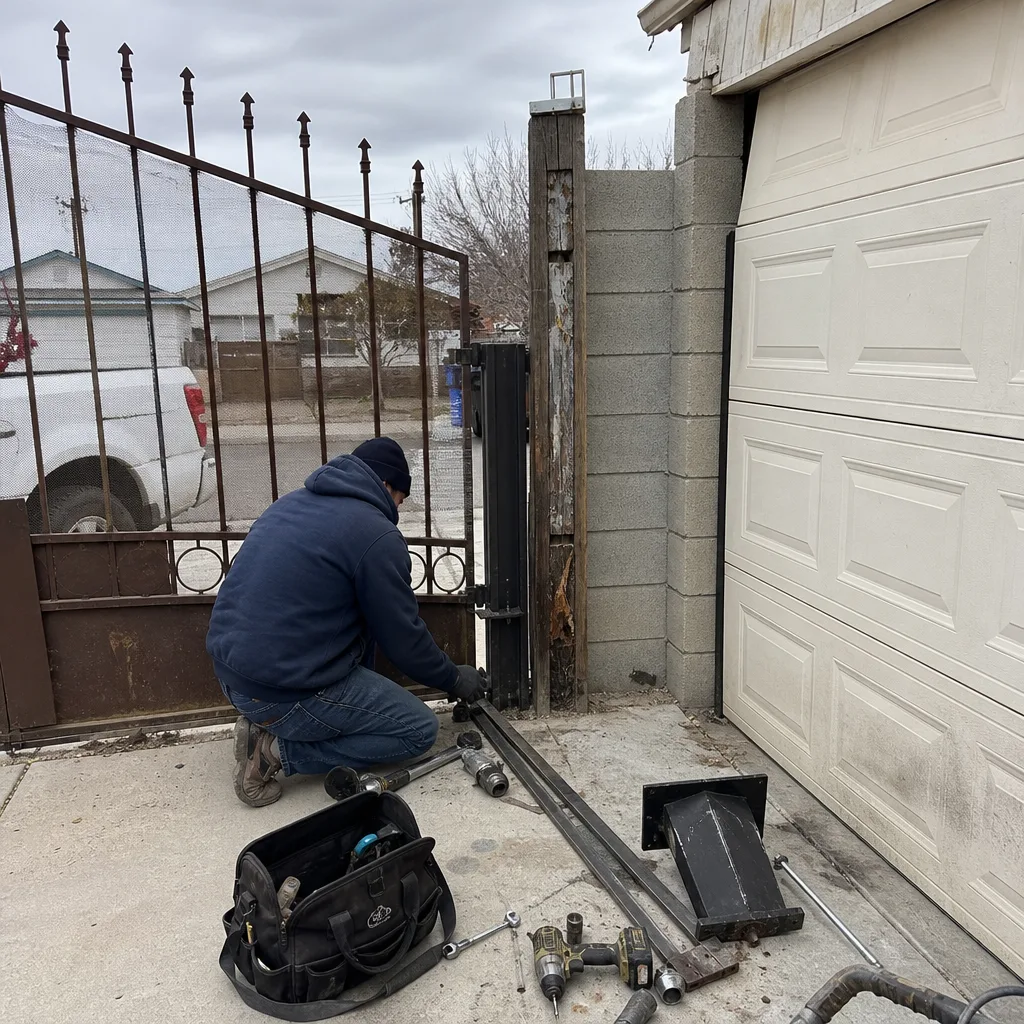 Before
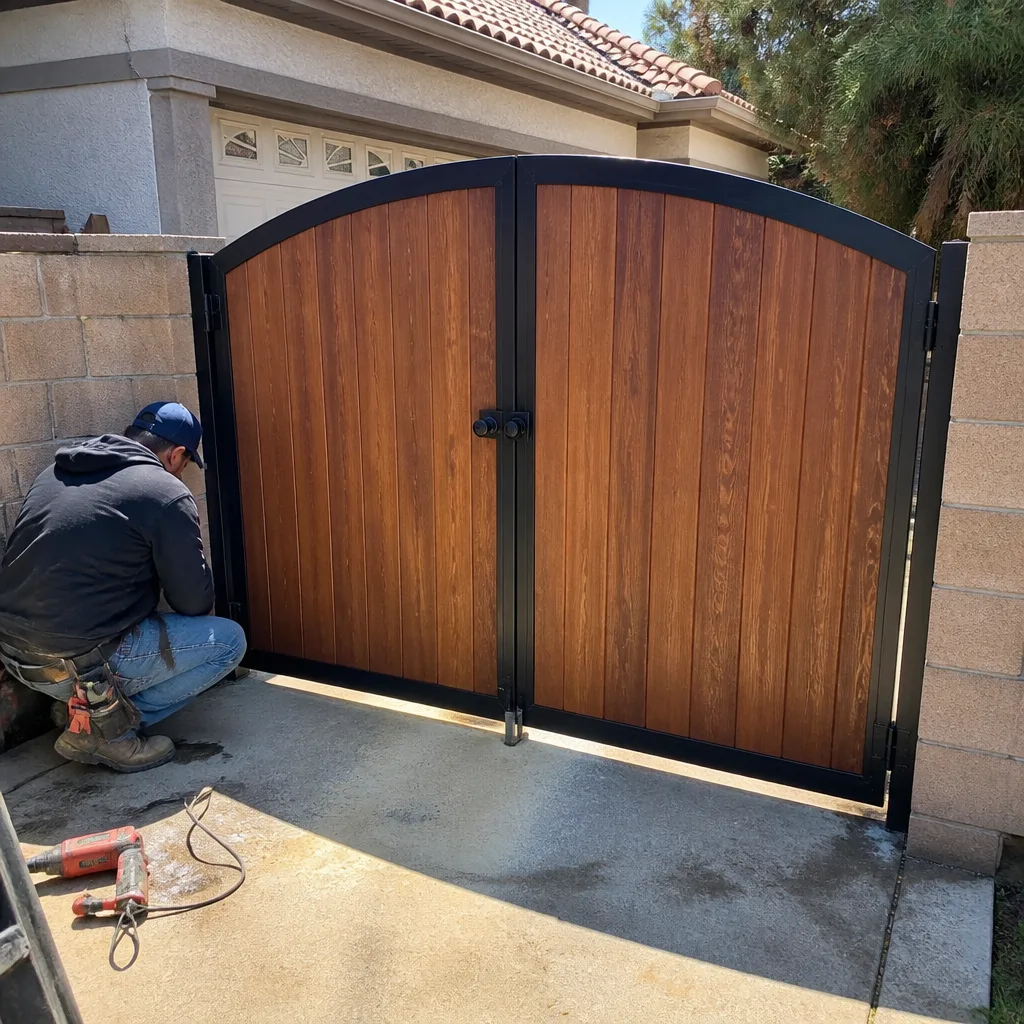 After
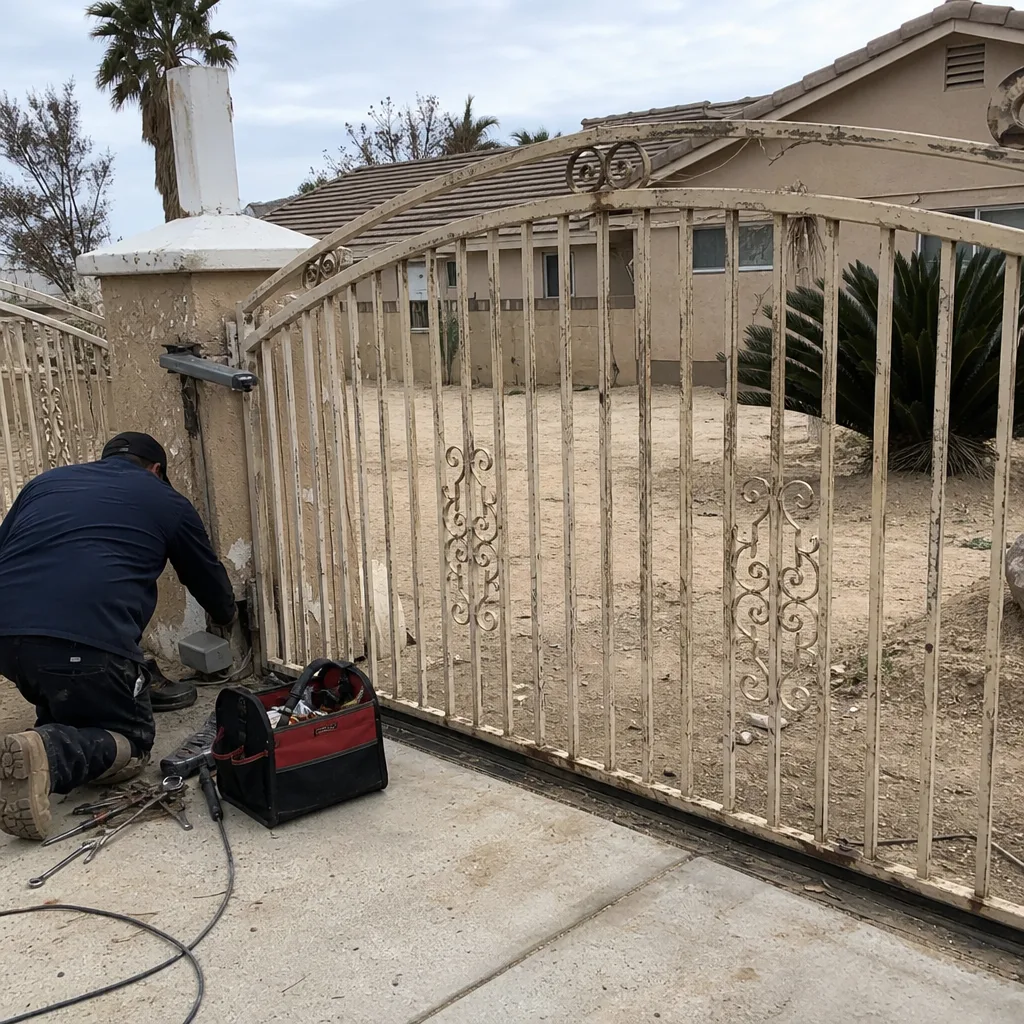 Before
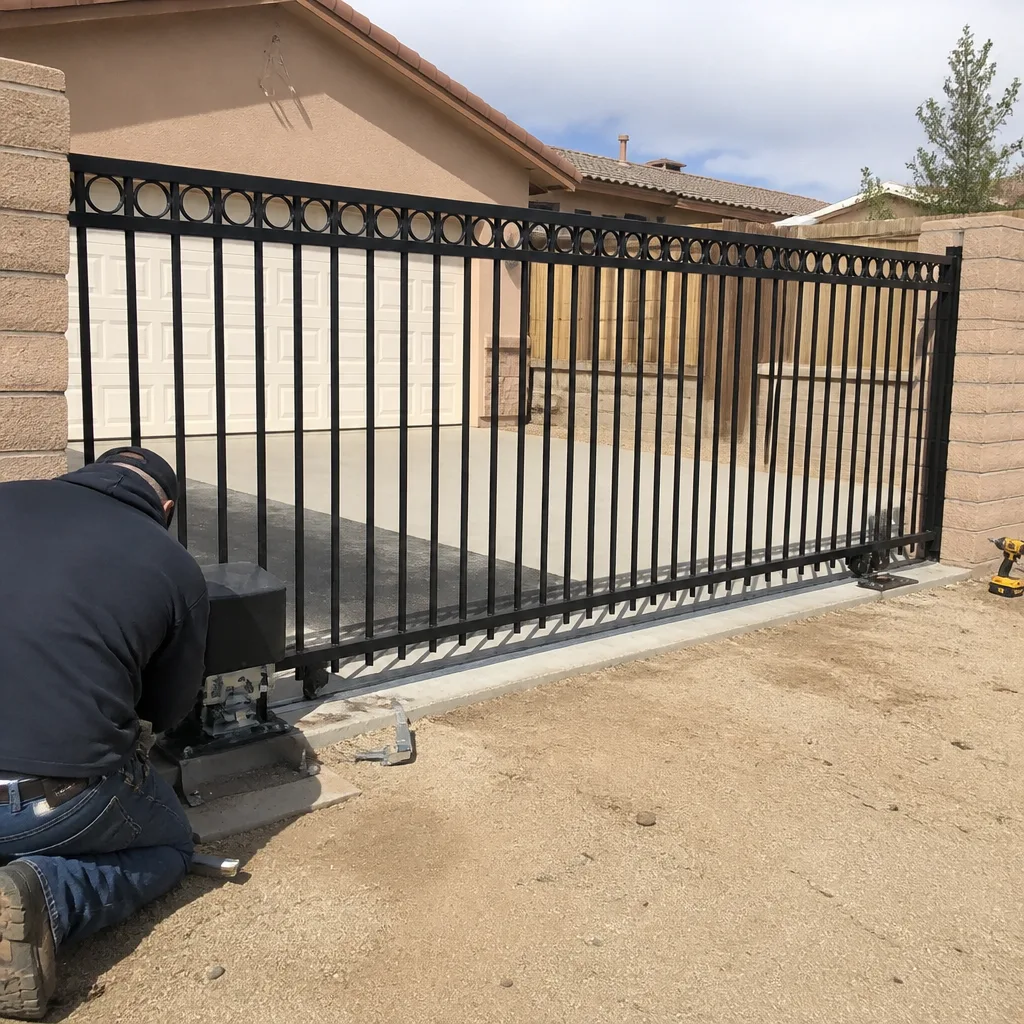 After
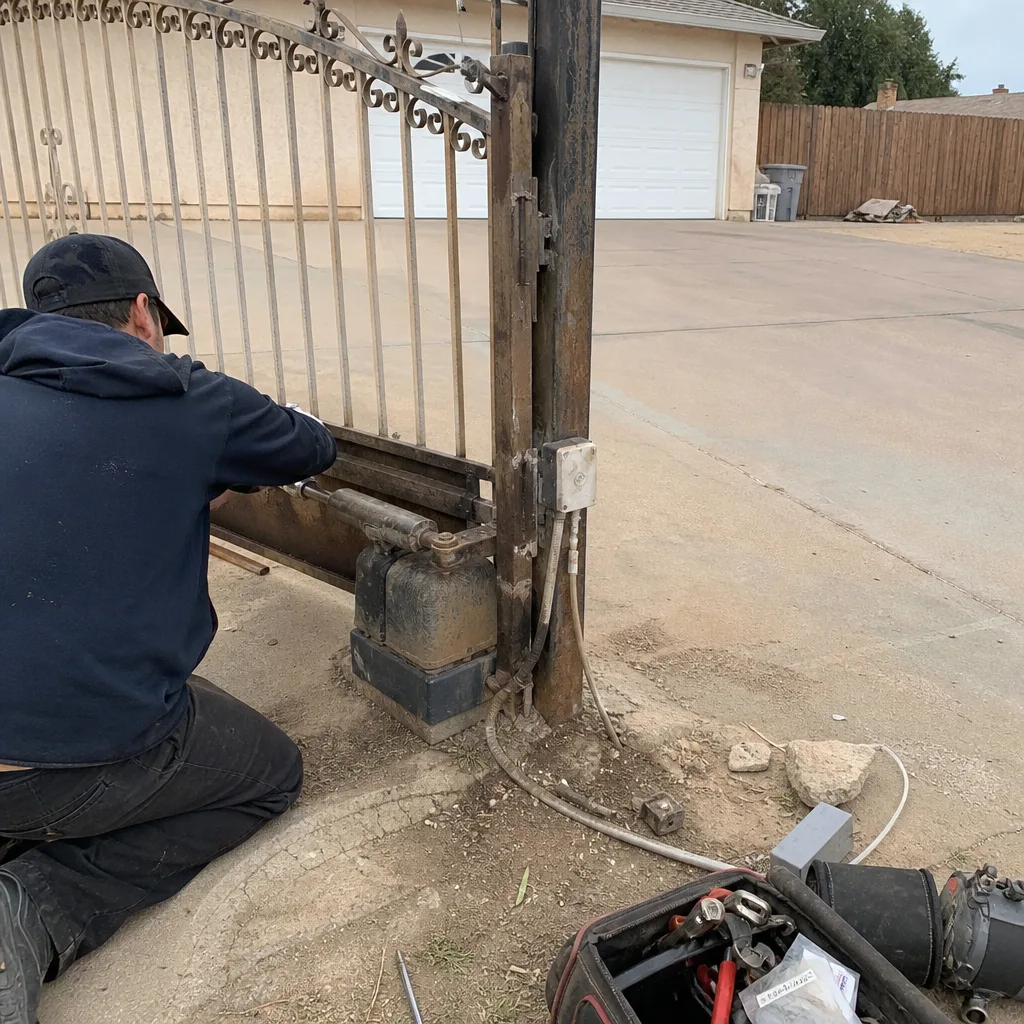 Before
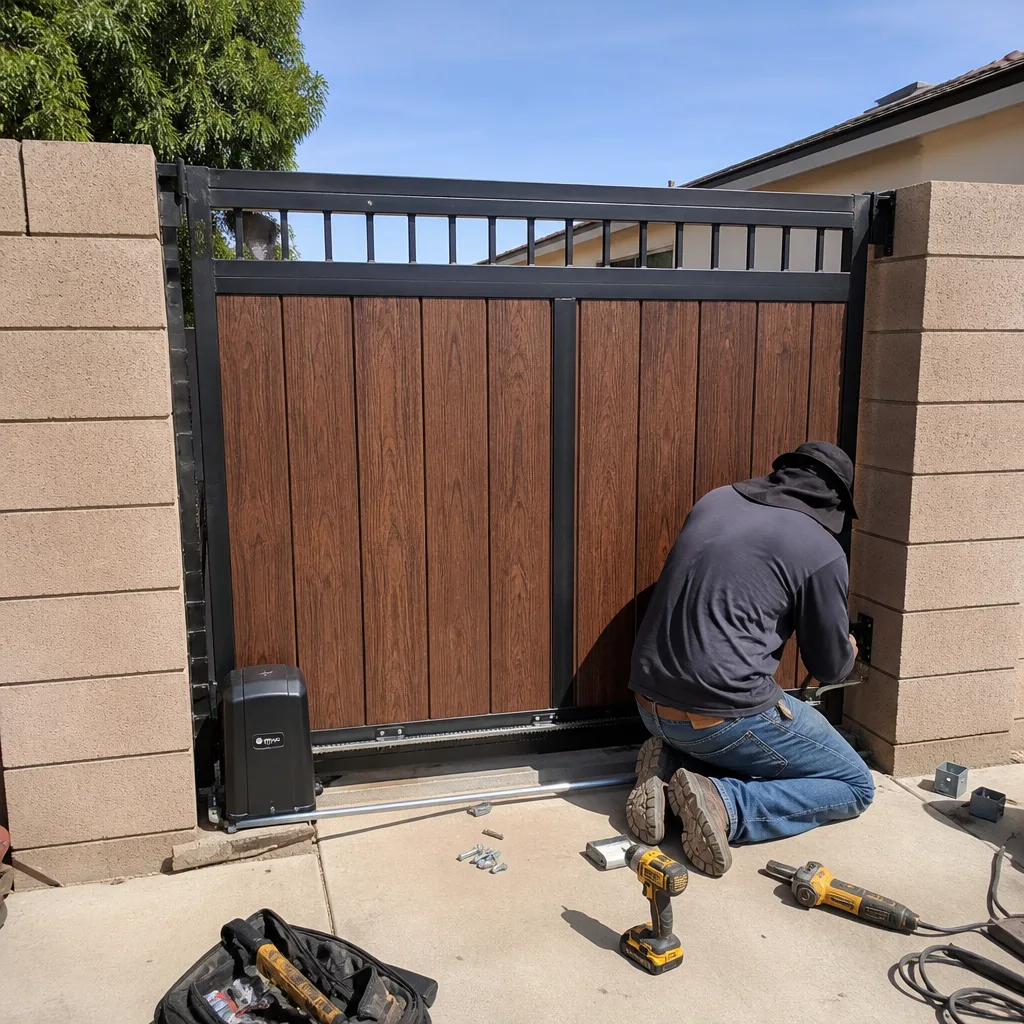 After