
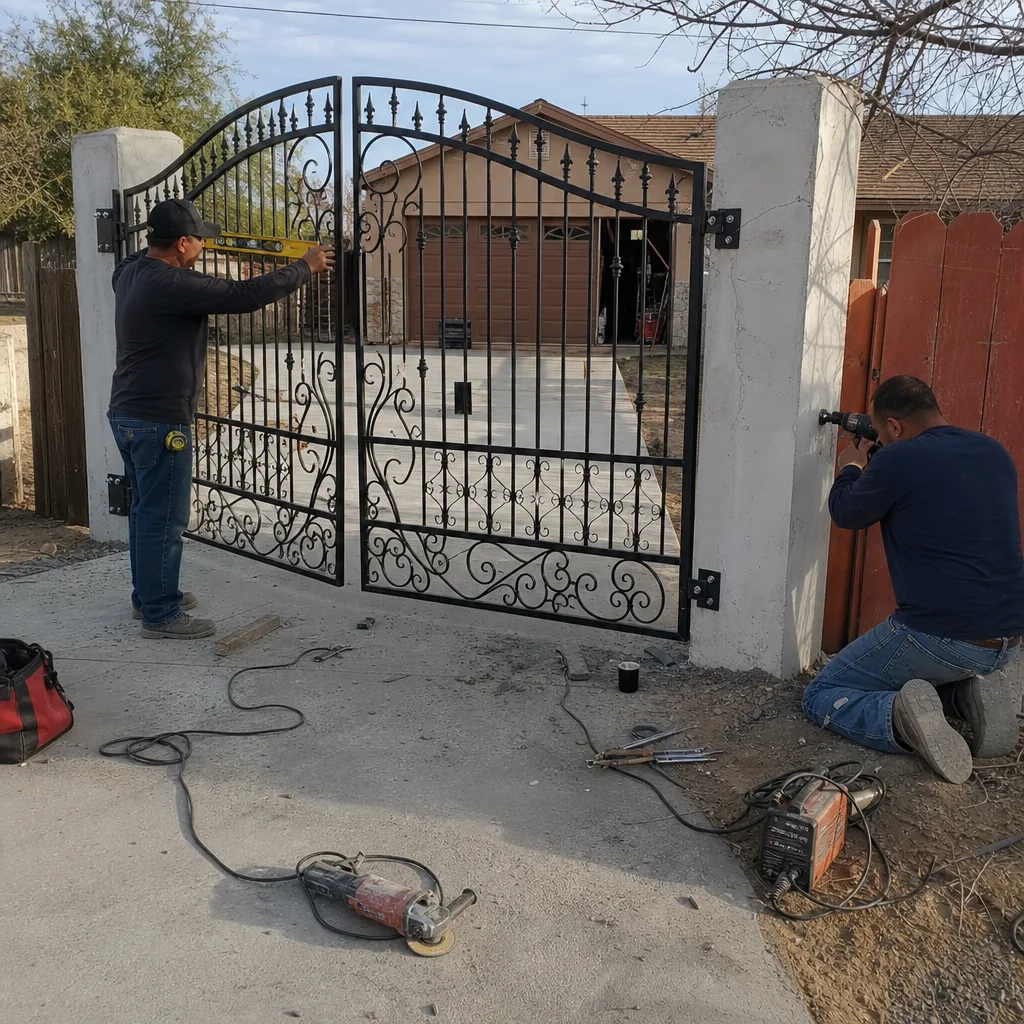
Last updated November 2, 2026
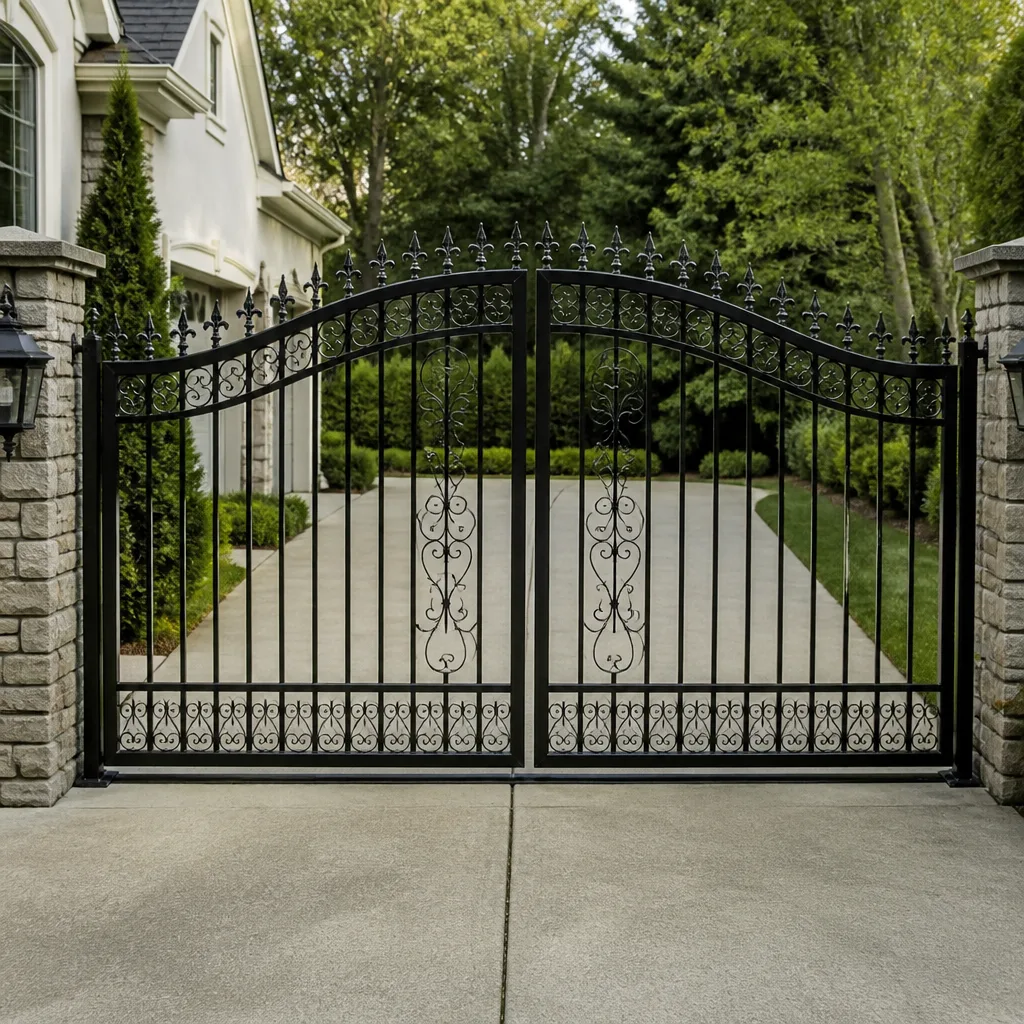 Wrought iron
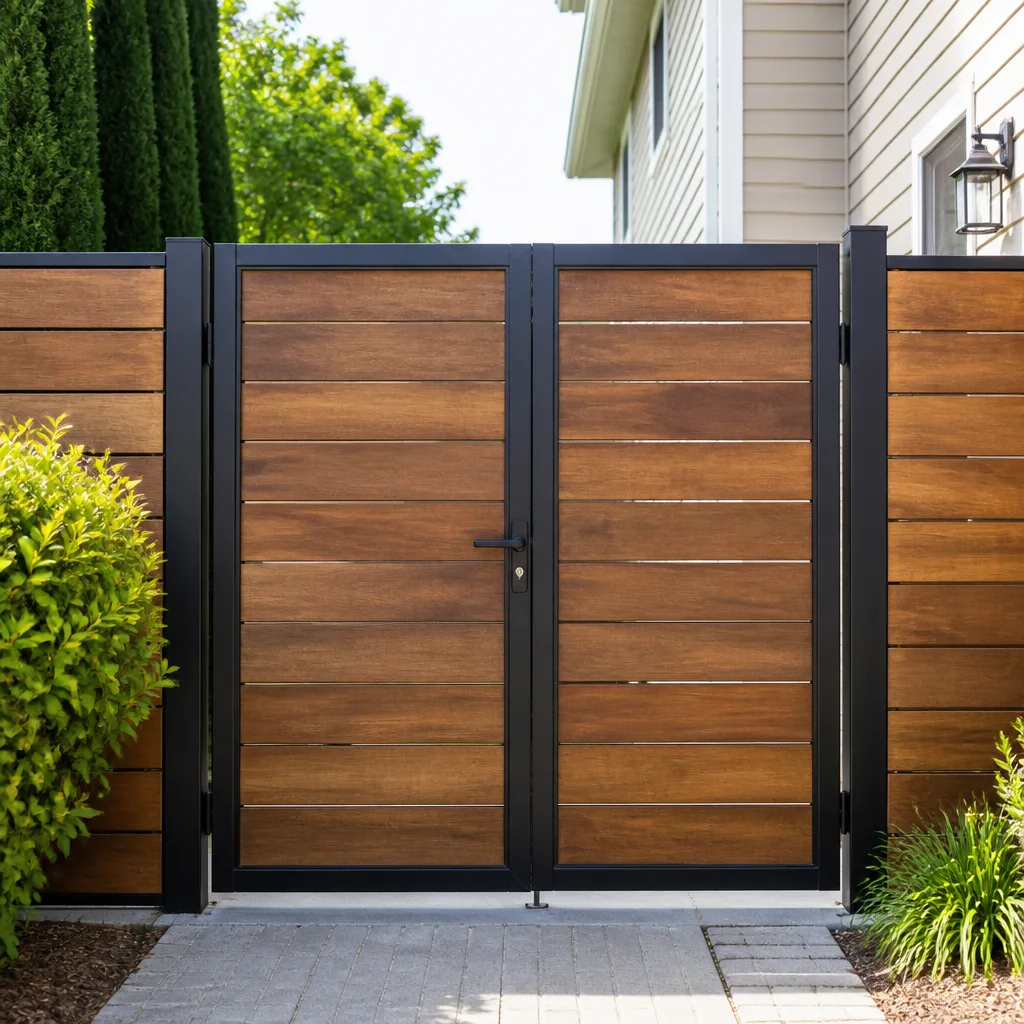 Wood & steel frame
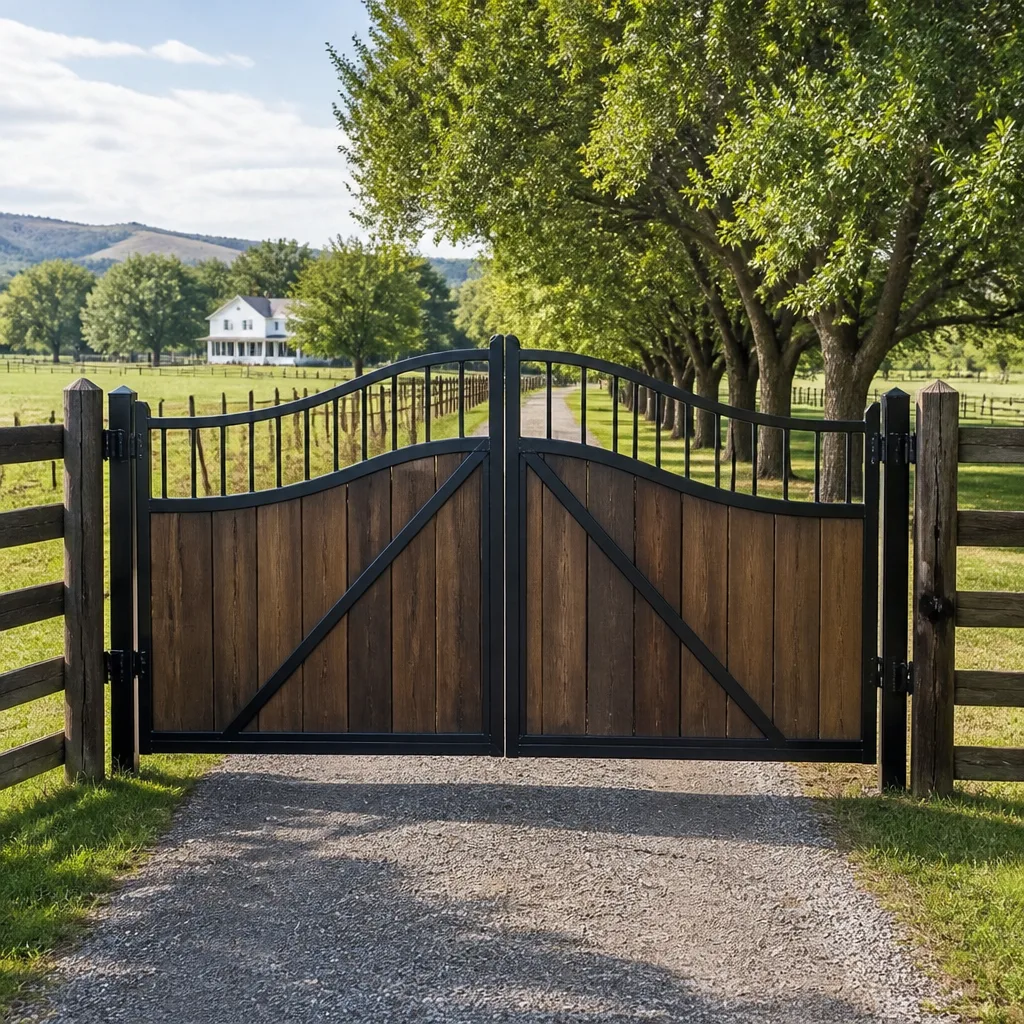 Farm & ranch
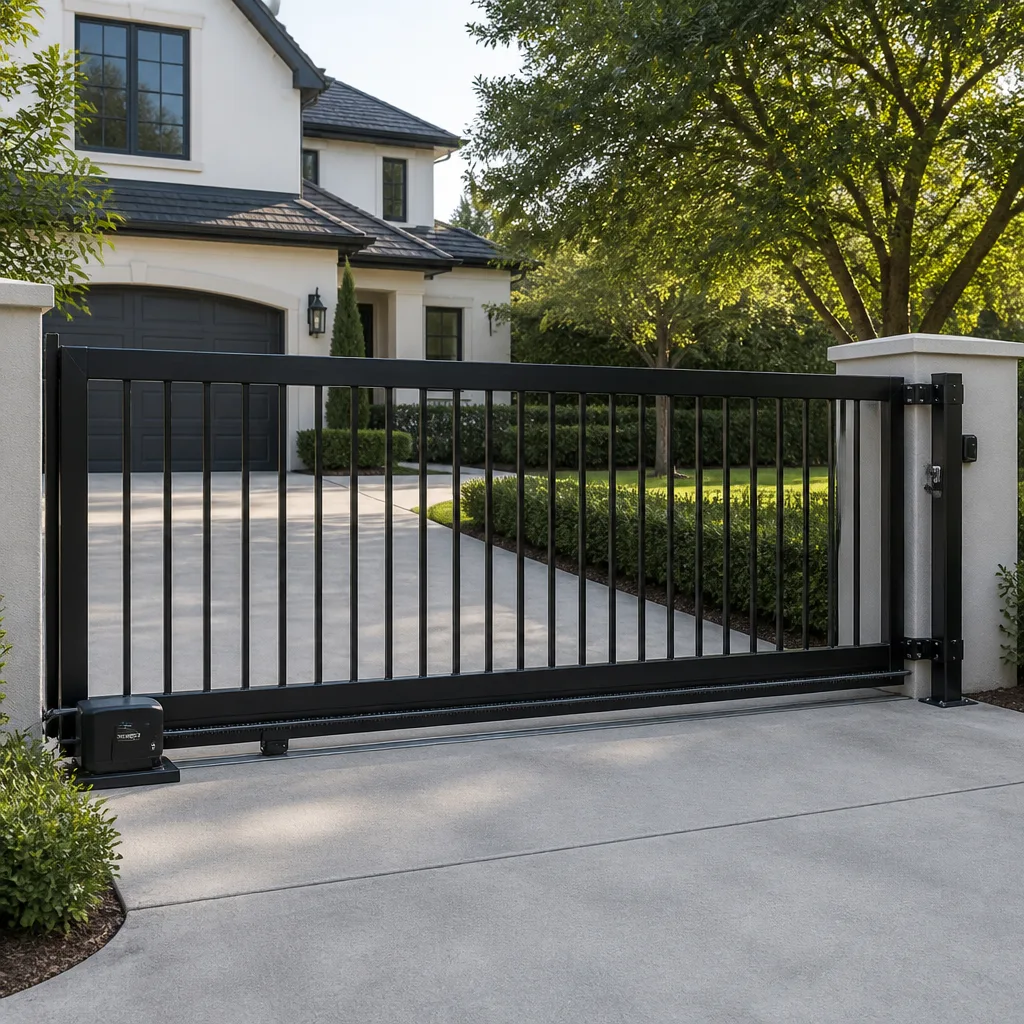 Sliding driveway gates
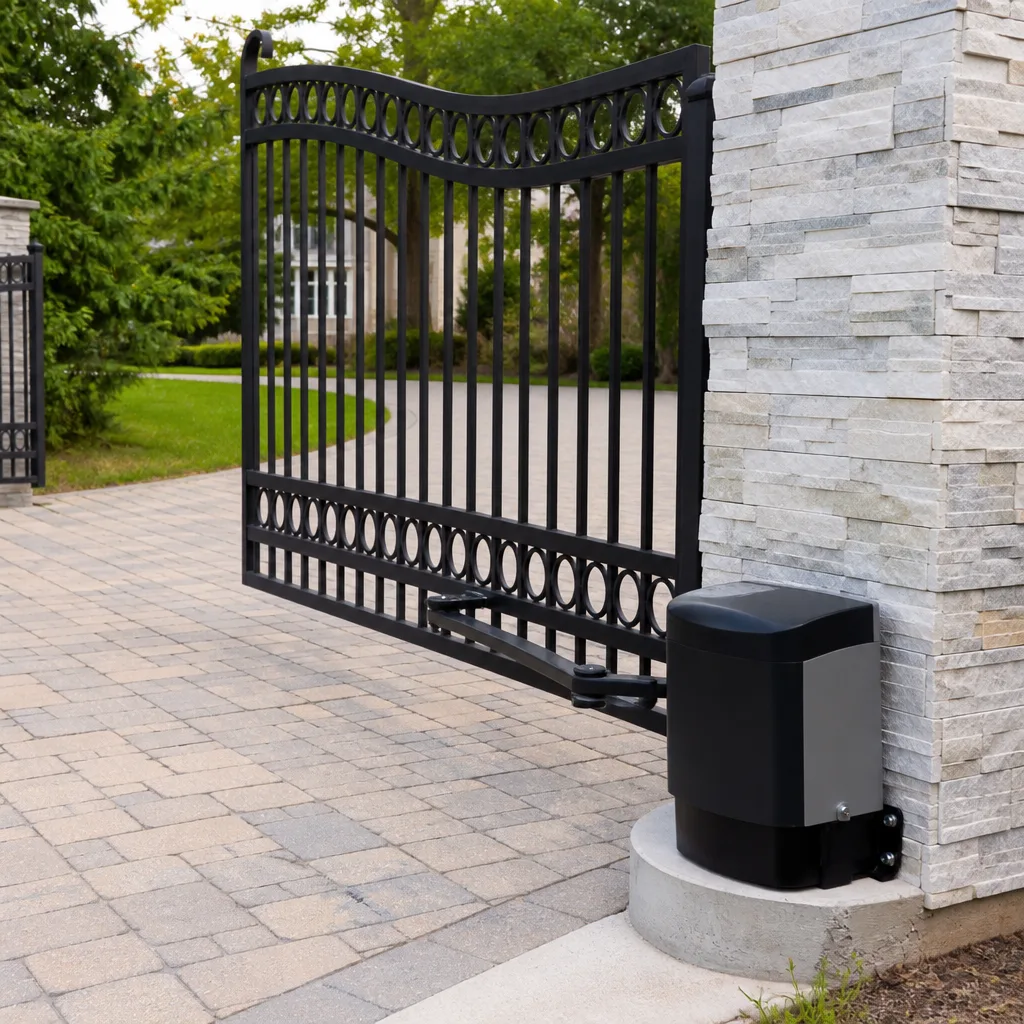 LiftMaster operators
Free on-site gate assessment - hinges, posts, and your LiftMaster or Nice gate operator checked before anything is quoted
The assessment is free and the quote is the invoice.
Get your free estimateDIY vs Professional Gate Repair: The Victorville Homeowner’s Decision Guide
Most gate failures in Victorville don’t start with a catastrophic snap. They start with a gate that drags slightly, a motor that hums a half-second longer than it should, or a remote that works only when you’re ten feet closer than yesterday. By the time a homeowner opens the operator cover, they’ve usually already made the decision that gets them into trouble: they’ve assumed the problem is mechanical, because mechanical problems are the ones YouTube taught them to fix. The reality is different. The line between a safe DIY repair and a genuine liability sits between mechanical components and electrical or safety systems, and this Gate Repair guide will show you exactly where that line is drawn in Victorville’s climate, with its wind, dust, and heat that punish gate hardware differently than coastal California.
Quick Answer
DIY gate repair in Victorville is safe and practical for mechanical components like wheels, hinges, and latch hardware, but electrical systems, operators, and UL 325 safety devices should be handled by a professional. The determining factor isn’t your skill level; it’s whether the component you’re touching is passive steel or an active system that senses, stops, and reverses a moving gate. Homeowners who limit DIY work to mechanical fixes and call a specialist for anything wired, automated, or safety-related will spend less money over time and avoid creating a liability exposure they didn’t know existed.
Styles & brands we work with
- Wrought iron
- Wood & steel frame
- Farm & ranch
- Sliding driveway gates
- LiftMaster operators
Table of Contents
- The Mechanical vs. Electrical Line: Why It Matters More Than Skill
- Mechanical Repairs That Are Genuinely Safe to DIY
- UL 325 and the Liability You Create When You Touch Safety Systems
- The Diagnostic Gap: Why Homeowners Replace the Wrong Part
- Cost Analysis: Six Common Victorville Gate Failures, DIY vs. Professional
- When DIY Turns a $200 Repair Into a $1,400 One
- Victorville Climate Factors That Change the Repair Calculus
- Common Mistakes to Avoid
- When to Call a Professional
- Frequently Asked Questions
The Mechanical vs. Electrical Line: Why It Matters More Than Skill
A gate is two systems bolted together. The first system is passive: posts, hinges, wheels, the gate leaf itself, latch hardware, track. These components move when force is applied and stop when force stops. They fail visibly. A bent hinge shows you it’s bent. A seized wheel squeals or scrapes. A sagging gate leaf drags a crescent into the dirt. These failures announce themselves in ways a homeowner can see, hear, and touch.
The second system is active: the operator motor, the control board, photo eyes, safety edges, loop detectors, the wiring that connects all of it. These components make decisions. A UL 325-compliant operator monitors its sensors continuously and reverses when it detects an obstruction. A photo eye sends an invisible beam across the gate path. A safety edge registers physical contact and commands the motor to stop within a specified distance. When these components fail, they often fail silently, and a gate that operates normally can still be dangerous. That’s the distinction that matters. Mechanical failures are visible; electrical and safety failures are invisible, and the consequences of a botched electrical repair don’t show up as a crooked gate. They show up as a gate that crushes a child’s bike, a delivery driver’s leg, or a vehicle, and the homeowner who adjusted the safety system is the one whose liability is now documented.
Victorville’s housing mix adds another layer. The city has a high proportion of properties with automated driveway gates, particularly in newer developments and larger lots north of Bear Valley Road. These aren’t simple farm gates you shove open by hand. They’re LiftMaster, FAAC, and BFT units wired into the property’s electrical system, often with keypads, remotes, and intercoms. The mechanical portions of these gates are no different from a manual gate. The electrical portions are governed by a safety standard most homeowners have never heard of, and that ignorance is what makes DIY electrical work on a gate so costly when something goes wrong.
Mechanical Repairs That Are Genuinely Safe to DIY
There’s a real, legitimate place for DIY gate work, and we don’t discourage it. A capable homeowner with the right tools can handle several mechanical repairs without creating risk, assuming the gate’s electrical system is left untouched. In our experience working on gate repair in Victorville, the following jobs are the ones we see homeowners complete successfully most often.
- Replacing a gate wheel or roller. A gate that scrapes or drags on its outer edge usually has a worn wheel. On most residential gates, the wheel bolts to the gate frame or a bracket with one or two fasteners. You’ll need a jack or a lever to lift the gate slightly, a socket set, and about 45 minutes. The wheel itself costs $20 to $60 depending on diameter and load rating. This is the single most common DIY gate repair, and it’s completely reasonable to tackle.
- Lubricating hinges and pivot points. A noisy gate is often a dry gate. Use a silicone-based lubricant or white lithium grease on hinge pins, pivot brackets, and wheel bearings. Do this every six months in Victorville, because the high desert’s fine dust mixes with old grease and turns it into grinding paste. Fifteen minutes, $10 in lubricant, no risk.
- Tightening loose hardware. Over years of wind cycling and thermal expansion, hinge bolts, bracket bolts, and wheel mount fasteners work loose. Every Victorville homeowner should walk their gate quarterly with a socket set and check every fastener they can see. Wind is a real factor here: the Victorville area regularly sees 30+ mph gusts in the spring and fall, and those gusts hammer gate hardware in a way coastal homeowners don’t experience.
- Replacing a manual latch or drop bar. On a manual gate, a worn latch is straightforward: remove the fasteners, replace the latch, reinstall. On an automated gate’s mechanical latch, be more careful: if the latch is tied into the operator control wiring, you’re crossing into electrical territory, and the line is no longer clean.
- Adjusting gate sag with a turnbuckle or anti-sag kit. Large steel or wood gates sag over time. An anti-sag kit with a turnbuckle and cable can pull the far corner back up without touching the operator. This is a $35 to $80 kit and a couple of hours of careful work, including drilling one or two holes. It’s mechanical, visible, and easy to verify.
Tools for these jobs: socket set, adjustable wrench, jack or pry lever, drill (for some jobs), torque wrench if you want to be precise, silicone lubricant. Realistic time: 45 minutes to half a day. The key test we apply is this: if you can see the part that’s failed and you don’t need to disconnect anything electrical to reach it, the job is probably a reasonable DIY candidate. If you have to unplug a wire, remove a control board cover, or bypass a sensor to reach the part, stop.
UL 325 and the Liability You Create When You Touch Safety Systems
UL 325 is the U.S. safety standard for automated gate operators. It exists for one reason: automated gates have killed and injured people, in the majority of cases as a result of improper installation or maintenance of the safety systems. The standard governs entrapment protection: how quickly a gate must reverse when it contacts an obstruction, what types of sensors are required, how they must be positioned, and how the system must fail if a sensor is disconnected. Every automated gate operator sold in the U.S., including the LiftMaster and FAAC units common across Victorville, is engineered around this standard.
Here’s what homeowners generally don’t understand: UL 325 compliance is not a property of the operator as it ships from the factory. It’s a property of the installed system, including how the installer mounted the safety edges, positioned the photo eyes, set the force limits on the motor, and configured the board. When a homeowner opens the operator cover and adjusts the force dial because the gate seemed sluggish, they’re changing a safety-critical setting. When a homeowner disconnects a nuisance-tripping photo eye, even temporarily, they’ve disabled a required entrapment protection device. When a homeowner moves a safety edge because it’s ugly or interfering with the gate’s close path, they have changed the geometry that UL 325 compliance depends on.
The liability follows. If an automated gate injures someone, a personal-injury claim routinely names the property owner, the operator manufacturer, and the last party that serviced or modified the system. If that last party is the homeowner, and discovery shows a non-compliant configuration, the homeowner loses the assumption of due care. Insurance policies are not a shelter here: many homeowners policies exclude or limit coverage for injury caused by a non-compliant automated gate, and any modification by an unqualified person gives the insurer a denial argument. The gate is now a known hazard on the property, and the owner knew, or should have known, that they created it.
This is why the line is so stark. A bent hinge is a nuisance. A misconfigured safety edge is a premises-liability exposure that follows the homeowner for as long as the gate operates non-compliantly, potentially through a sale of the property if the condition isn’t disclosed. We tell Victorville homeowners the same thing every time: if it’s metal and doesn’t move on its own, DIY it. If it’s wired, sensing, reversing, or controlled by a board, call someone who makes it their entire job. That’s what specializing in Gate Repair Emergency Preparedness Guide for Victorville Homes means in practice.
The Diagnostic Gap: Why Homeowners Replace the Wrong Part
Gate failures are indirect. A symptom that appears in one system often originates in another, and that indirection is the single biggest reason capable DIYers waste money on gate repair, in Victorville as anywhere else. Some examples from real service calls we’ve run:
- Symptom: gate reverses immediately after closing. Homeowner’s assumption: the motor or board is failing. Most common actual cause: a photo eye out of alignment, a dirty photo eye lens, or a failing safety edge. The operator is doing exactly what it’s supposed to do. Replacing the motor fixes nothing.
- Symptom: operator hums but gate doesn’t move. Homeowner’s assumption: dead motor. Most common actual cause: a broken capacitor, stripped drive gear, or a seized wheel putting the motor into overload. A handyman replaces the motor at $400 to $900, and the gate still doesn’t move.
- Symptom: remote only works at short range. Homeowner’s assumption: failing receiver board. Most common actual cause in Victorville: a low remote battery, antenna damage, or the antenna being pinched or grounded against the steel chassis. Boards get replaced unnecessarily for $300 when a $5 battery or a repositioned antenna was the fix.
- Symptom: gate slams shut at full speed. Homeowner’s assumption: nothing, they usually don’t notice. But a gate that closes fast and hard is a gate with failed force-limit settings, a disconnected safety edge, or a board that has lost its configuration. This is a safety failure, not a performance quirk, and it’s the symptom we most want Victorville homeowners to recognize as urgent.
- Symptom: keypad works intermittently. Homeowner’s assumption: keypad failure. Most common actual causes: corroded wire connector, failing transformer, or a power draw issue from the operator. Replacing the keypad addresses the visible component, not the feed.
The diagnostic gap exists because electronic gate failures present as behavioral problems, not physical damage. A cracked hinge is diagnosable by eye. An operator that reverses mysteriously requires understanding the control logic, the sensor circuit, and the power path, and that’s a specialist’s fluent language. Cross-brand fluency matters here too: a LiftMaster behaves differently from a BFT, and a FAAC hydraulic unit is a different animal entirely from a Mighty Mule swing opener. The DIY repair path usually converges on the part that’s easiest to reach and most visible, and that part is frequently not the part that failed.
Cost Analysis: Six Common Victorville Gate Failures, DIY vs. Professional
The financial case for DIY only holds when the repair is correctly diagnosed and you don’t count your own time as zero. Here’s a Gate Repair Cost Breakdown: The Victorville Homeowner’s Reference for 2026 for six of the most common gate failures we see in Victorville, with regional parts pricing and the cost of professional repair for comparison.
- Worn gate wheel or roller. DIY: $20 to $60 for the wheel, plus an hour of time. Professional: $120 to $220 including the part. Verdict: good DIY candidate if the diagnosis is obvious.
- Sagging gate leaf (no operator involvement). DIY: $35 to $80 for an anti-sag kit, two to three hours. Professional: $180 to $350 for realignment and hardware. Verdict: reasonable DIY for a patient homeowner; the tricky part is getting the gate to hang square, not installing the kit.
- Operator capacitor failure (gate hums, no movement). DIY: $15 to $40 for the part, but the diagnostic step requires a multimeter and some electrical knowledge, and the capacitor must be discharged correctly. Professional: $140 to $260 diagnostic plus repair. Verdict: marginal DIY; the correct diagnosis, not the part, is what you’re really paying for.
- Photo eye misalignment or failure. DIY: $0 to $60 if you’re only cleaning lenses and realigning; more if the eye pair needs replacing. Professional: $120 to $200. Verdict: DIY-friendly only for cleaning and realignment; replacement crosses into entrapment-protection territory, and UL 325 compliance depends on proper positioning.
- Control board failure (random behavior, dead operator). DIY: $150 to $500 for a board you hope is the problem. Professional: $250 to $650 including correct diagnosis. Verdict: poor DIY candidate; misdiagnosis is the most expensive outcome and boards are usually non-returnable once installed.
- Broken safety edge or edge sensor. DIY: $60 to $150 for the edge strip; the install involves wiring and often board-level adjustments. Professional: $200 to $350. Verdict: not a DIY candidate; this is a UL 325 safety device and incorrect installation leaves a non-compliant gate.
Across all six, the DIY savings range from roughly $100 on the safest jobs to negative dollars on misdiagnosed electrical failures. The Victorville-specific factor is time distance from parts suppliers: if you’re ordering a board or an operator part and it ships from Los Angeles, your gate is down for days unless the part is stocked locally, and the professional route typically restores operation faster because specialist service vehicles carry common failure parts for LiftMaster, FAAC, and Linear units. For electric gate repair in Hesperia and Victorville alike, same-day restoration is usually achievable for common failures.
When DIY Turns a $200 Repair Into a $1,400 One
There are specific interventions that reliably convert a simple, affordable repair into an expensive remediation. We see these patterns repeat across the High Desert, and they’re rarely the homeowner’s fault: the Internet’s DIY advice often skips the part where the simple thing goes wrong.
- Cutting the wrong wire. Homeowners unplugging an operator often cut or strip a wiring run rather than unplugging the connector. If that wire run is the loop-detector lead or the safety-edge lead, the repair now includes re-running wire, potentially through conduit and under paving. Material cost was a $5 repair; the fix is now $400 in labor.
- Forcing a seized wheel instead of replacing it. A gate with a seized wheel gets shoved, jacked, or driven (with the car, in the worst cases) until the wheel frees or breaks. The force bends the gate frame or the wheel bracket, turning a $40 wheel into a resquared gate and a new bracket, plus the labor to weld or re-drill.
- Adjusting the operator force dial to fix a slow gate. A slow gate is usually a mechanical issue: a dragging wheel, a stiff hinge, or a sagging leaf. Increasing the motor force to compensate doesn’t fix the drag; it stresses the operator, overheats the motor, and pushes the system out of UL 325 compliance. The eventual failure is the motor or the board, not the original wheel.
- Bypassing a nuisance-tripping safety sensor. A photo eye that trips randomly usually has a dirty lens, a loose mount, or a misalignment. Bypassing it with a jumper wire restores operation and disables a required safety system. When the sensor is eventually reinstalled correctly, the board may require reconfiguration, and some operators log bypass events that complicate future diagnostics.
- Using the wrong replacement part because “looks compatible.” A homeowner installs a generic transformer or capacitor with the wrong rating, the operator works for a few weeks, and then the board fails. The under-spec part damaged the board gradually. The original part was $30; the board is $300 to $500, plus diagnosis.
The common thread is this: DIY work on the mechanical parts is reversible. A wheel can be replaced again. A hinge tightened differently. But when DIY work touches wiring, control logic, force settings, or safety circuits, the damage is often not recoverable at the original repair’s price point. That’s the line drawn a second time: mechanical failures degrade gracefully; electrical and control failures degrade expensively.
Victorville Climate Factors That Change the Repair Calculus
Victorville’s high-desert climate is a real and underappreciated factor in gate longevity and repair strategy. Average summer highs in the upper 90s, winter lows regularly below freezing, persistent wind, and fine alkaline dust all interact with gate hardware in ways a national DIY video doesn’t account for.
Heat and electronics. Gate operator control boards have a rated operating temperature range, and the inside of a black steel operator housing in a Victorville summer can exceed 130°F. Capacitors age faster in heat, solder joints crack under repeated thermal cycling, and boards fail earlier than the same model would on the coast. A gate that works fine every morning but fails at 3 p.m. in July is usually a thermal failure, and it can’t be diagnosed by a homeowner with the cover off in the cool morning.
Dust and mechanical parts. The fine dust of the High Desert is abrasive and hydrophilic: it absorbs what little moisture there is and forms a grinding paste on hinge pins, wheel bearings, and drive gears. Sealed bearings last longer; unsealed bearings fail faster. We routinely find Victorville gates with wheel bearings seized solid after three years, when the same wheel in a milder climate would run for eight. Lubrication schedules matter more here, and the right lubricant matters more too: a heavy grease traps dust, while the correct silicone-based product sheds it.
Wind and structural fatigue. Strong, gusting wind, particularly in the spring, repeatedly loads and unloads gate hinges and posts. Over time, hinge bolts stretch, brackets crack, and posts lean. A gate that’s begun to sag or a post that’s begun to lean isn’t going to self-correct, and the Victorville homeowner who addresses it early deals with a hardware issue; the one who waits deals with a structural one.
Freeze-thaw and wiring. Winter nights below freezing, followed by warm days, create condensation inside operator housings and junction boxes. Corrosion on terminals causes intermittent faults that mimic board failures. A homeowner chasing a flaky keypad or a random operator fault in January is often dealing with a corroded wire connection, not a failed component. These are exactly the cases where a specialist with a multimeter and experience beats a parts-cannon approach.
For homeowners in neighboring Hesperia, the same conditions apply with minor variation; the High Desert treats gate hardware similarly across the Victor Valley.
Common Mistakes to Avoid
- Assuming a gate that opens and closes is a safe gate. A gate can operate fully while its safety edge is dead, its photo eyes are misaligned, or its force limits are set too high. Operation is not compliance, and the gate only reveals the failure when someone is in its path.
- Replacing the operator before checking the mechanical system. Many “dead” operators in Victorville are healthy motors overloaded by a seized wheel or a sagging gate. Replace the operator and the same failure returns within months, with the new operator destroyed by the same mechanical load.
- Buying a universal remote that isn’t actually universal. Multi-frequency and rolling-code remotes are not broadly interchangeable across brands. A homeowner gets a $30 “universal” remote, finds it doesn’t pair with the LiftMaster or FAAC panel, and has added a store return trip to a repair that still needs doing.
- Drilling into a gate post without checking for wiring. Some Victorville gate posts carry low-voltage wiring for keypads, intercoms, or the operator itself. A drill bit through a wire run turns a simple post repair into a re-wiring job.
- Ignoring a gate that “works, but weird.” Slow opening, slight stutter at start, occasional random reversal, a three-second delay before movement: these are early-failure signals. Each one is cheaper to address as a diagnosed issue than as a stranded vehicle and a dead gate at 7 a.m.
- Using WD-40 as a gate lubricant. It displaces moisture and degreases, but it is not a long-wear lubricant. In Victorville’s dust, it accelerates bearing failure. Use the correct silicone or lithium product or the same wheel fails again in six weeks.
- Underestimating the force of a moving gate. A 500-pound gate moving at even a modest speed carries enough energy to seriously injure or kill a person. Any work near a moving automated gate requires first disarming the operator and ensuring it cannot energize while hands are in the pinch zone.
When to Call a Professional
Call a professional when the failure is electrical, when the failure is in a UL 325 safety device, when the gate’s behavior is intermittent and you can’t reproduce it on demand, when anyone has already attempted a repair and the behavior changed, or when the gate has contacted a person, vehicle, or animal. Call a specialist if the operator is a hydraulic BFT or FAAC unit, if the system is high-cycle commercial or HOA-scaled, or if the failure involves the control board, loop detectors, or safety edges. And if the gate is your property’s primary security barrier and it has failed closed or, worse, failed open, a down day has real consequences. Gate installation in Hesperia and repair in Victorville are the same call when the time comes to replace an operator that’s beyond economic repair. Gate Repair Victorville offers free estimates in Victorville. Call (833) 589-9763 and we’ll tell you straight whether the job is a DIY wheel or a specialist repair, because both answers are honest ones.
Frequently Asked Questions
Mechanical repairs like wheels, hinges, and latch hardware typically run $120 to $350 including parts and labor. Electrical repairs like photo eyes, capacitors, and safety edges run $140 to $350 depending on the component. Control board replacement runs $250 to $650. Call (833) 589-9763 for a free estimate with the price quoted and agreed before any work starts.
If the repair is strictly mechanical, such as replacing a wheel or tightening hinges, yes, a capable homeowner can do it safely. If the repair involves the operator, control board, photo eyes, safety edges, or any wiring, no; those components are governed by UL 325 safety standards, and a non-compliant repair creates a liability exposure that follows the property.
A gate that opens fully but won’t close usually has a failing or misaligned photo eye, a dirty sensor lens, or a safety edge that’s triggering intermittently. The operator is behaving correctly by refusing to close when its safety sensors aren’t clear. Cleaning the lens and checking alignment are reasonable DIY steps; replacing the sensor or adjusting the board is a specialist job.
Most residential gate operators in Victorville last 7 to 12 years, with heat, dust, and daily cycle count as the main factors. A LiftMaster slide operator on a high-cycle driveway may need replacement sooner; a lightly used FAAC swing unit on a single-family home can run longer. Proper lubrication of mechanical parts extends operator life indirectly by preventing motor overload.
Our service work is brand-agnostic. We service what’s installed, including LiftMaster, FAAC, BFT, and Linear, alongside other major lines. We repair the brand you have rather than pushing a replacement or demanding a brand switch, and our diagnostics are based on what the gate needs, not on what’s convenient to sell.
The most common Victorville gate repair is a seized or worn wheel, followed closely by photo eye misalignment and operator capacitor failure. The dust and wind of the High Desert accelerate wear on mechanical components, and the summertime heat is hard on electrical components. Call (833) 589-9763 for an exact diagnosis and a free estimate on the fix.
The Bottom Line
The DIY-versus-professional question for gate repair has a clean answer once you draw the line properly. Mechanical components: reasonable DIY territory for a capable homeowner with the right tools and an accurate diagnosis. Electrical, control, and safety components: professional territory, every time, not because homeowners lack intelligence but because the stakes are structural, legal, and irreversible. Victorville’s heat, dust, and wind make diagnosis harder and maintenance schedules more critical, which tilts the calculus further toward specialists who see these failures every day. Fix the mechanical parts yourself and call for the wired parts. That’s the durable rule, and it’s the one that keeps money in the homeowner’s pocket and liability off the property. For more guides & resources, see our blog.
Written by the team at Gate Repair Victorville, serving Victorville since 2013.
See the difference
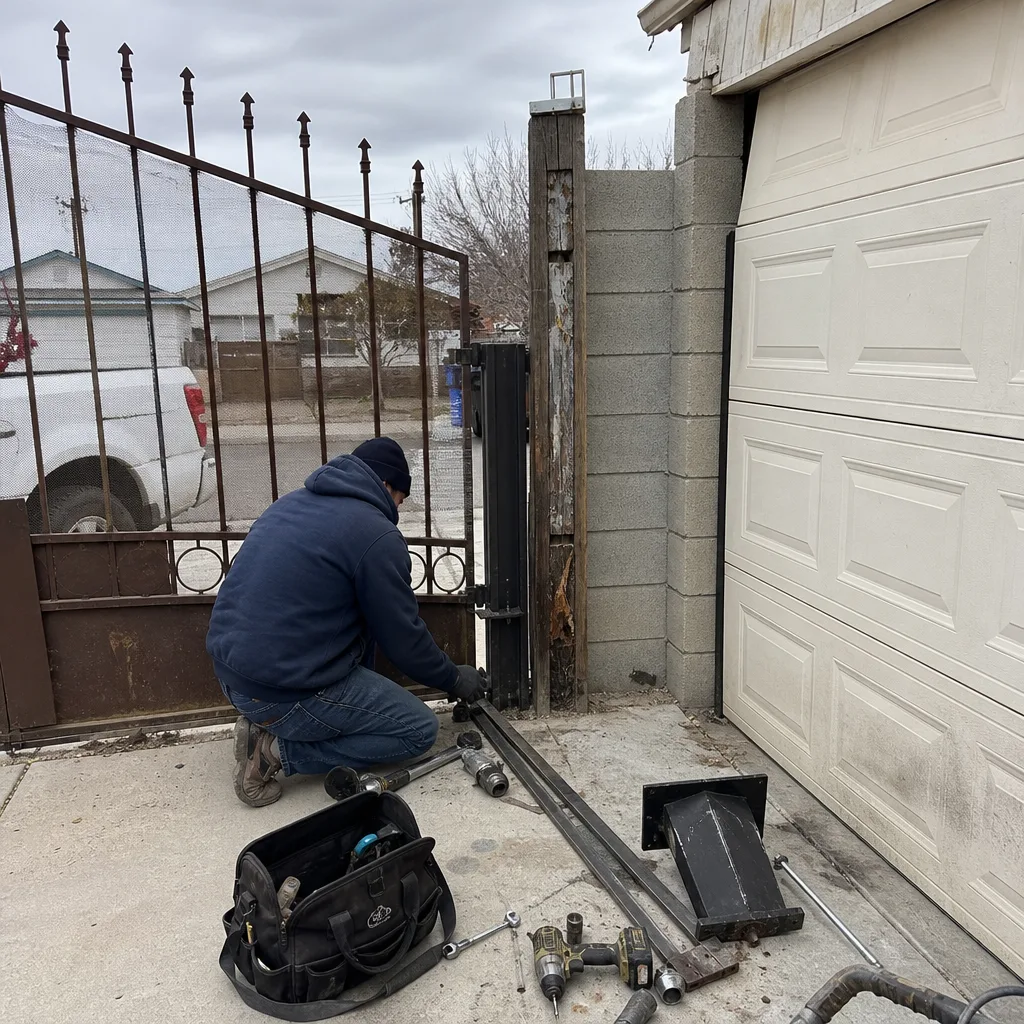 Before
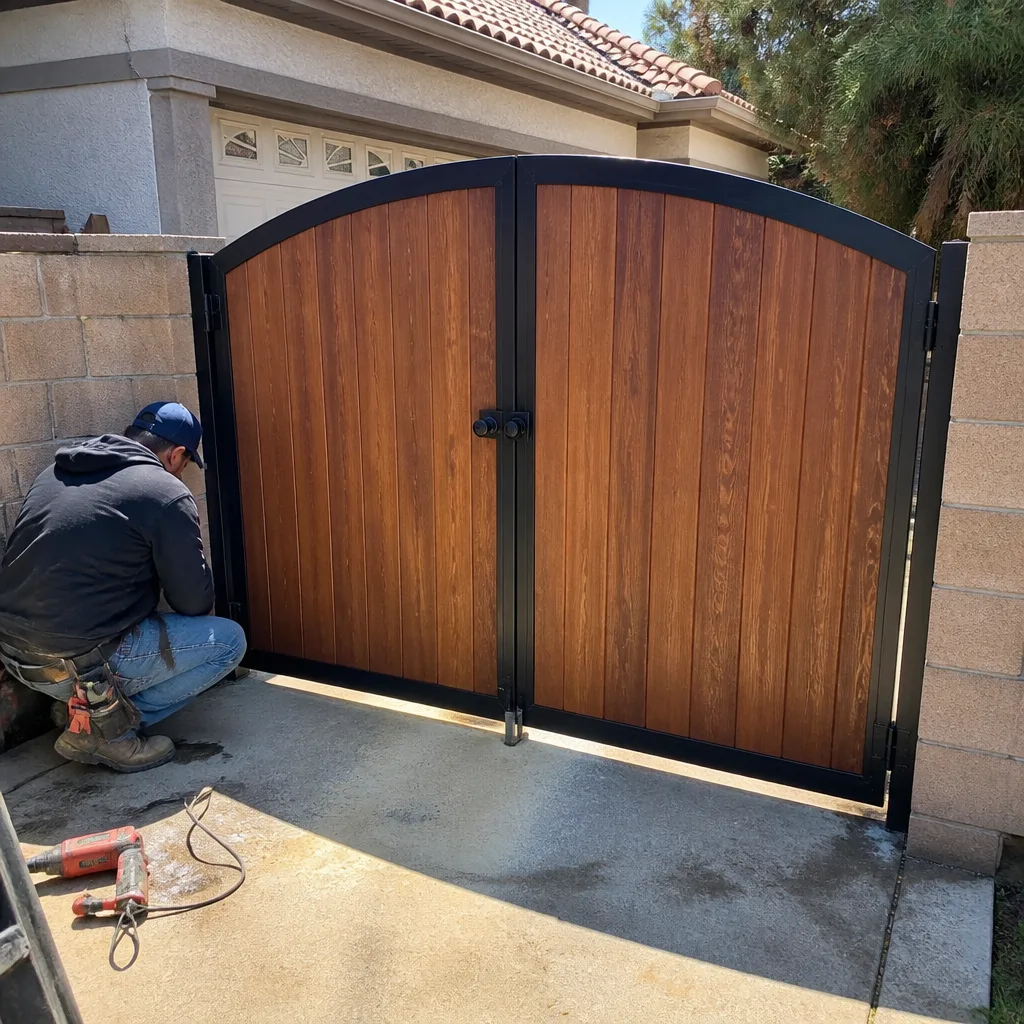 After
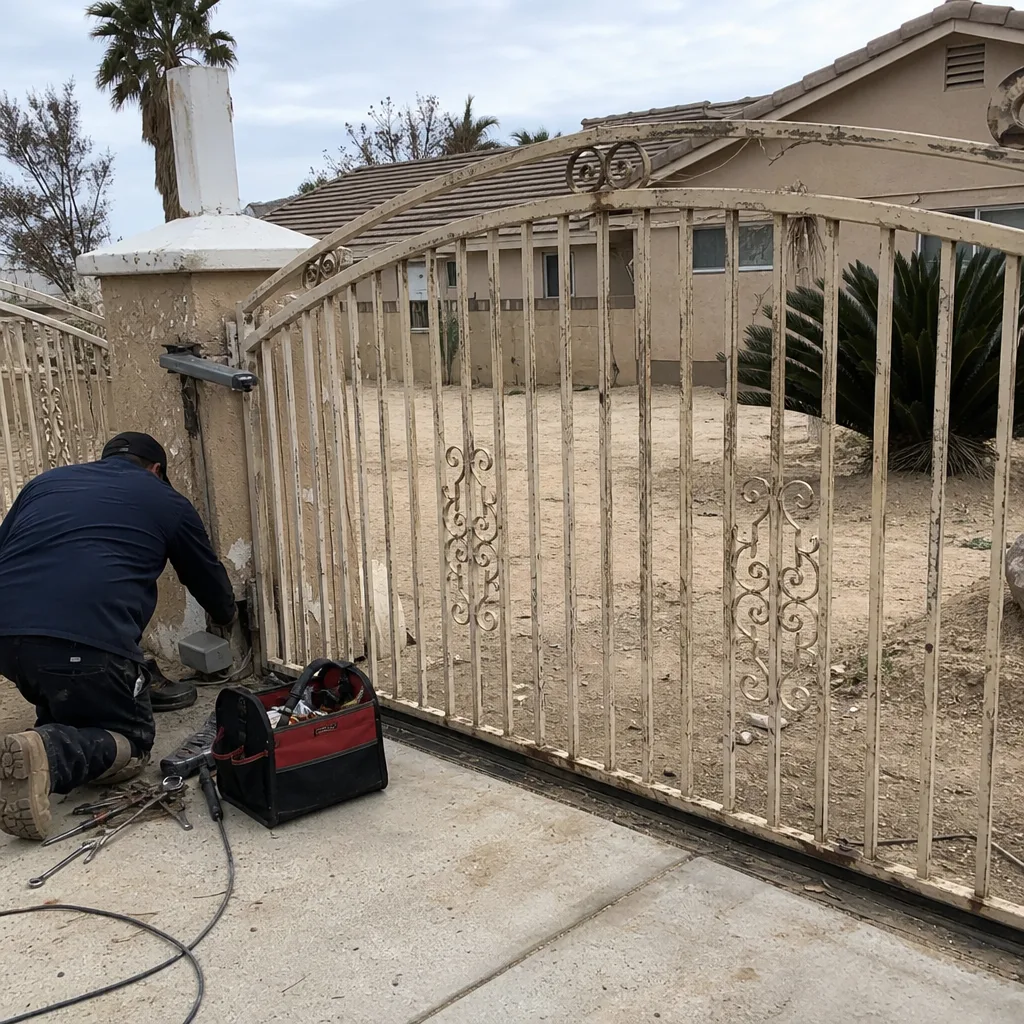 Before
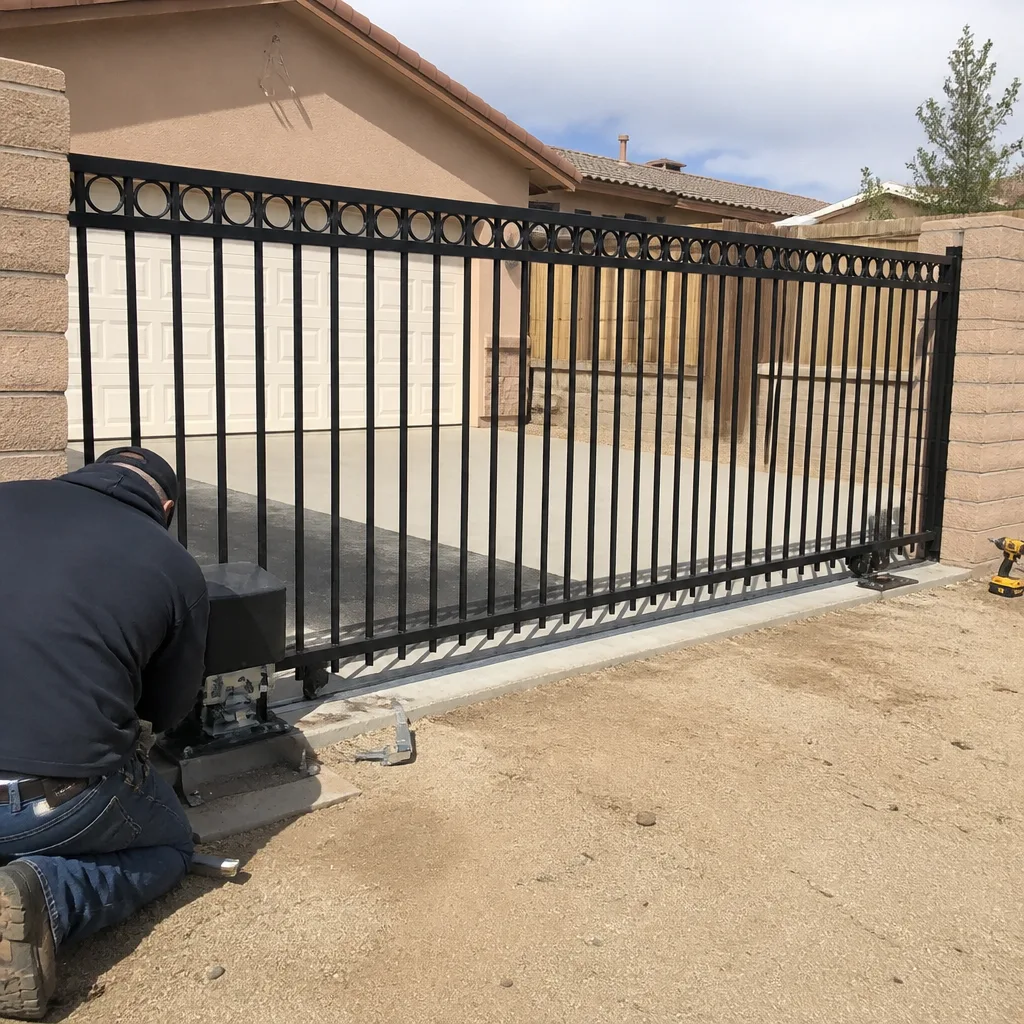 After
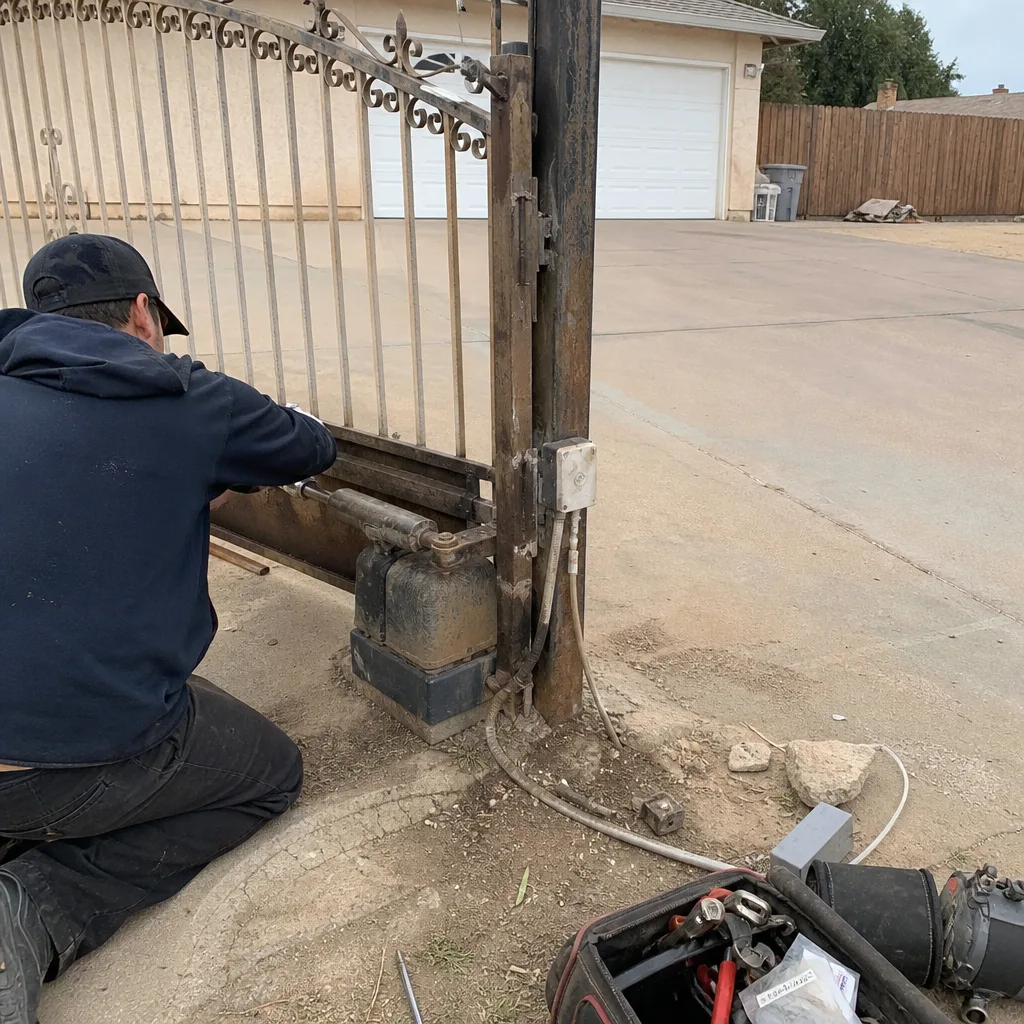 Before
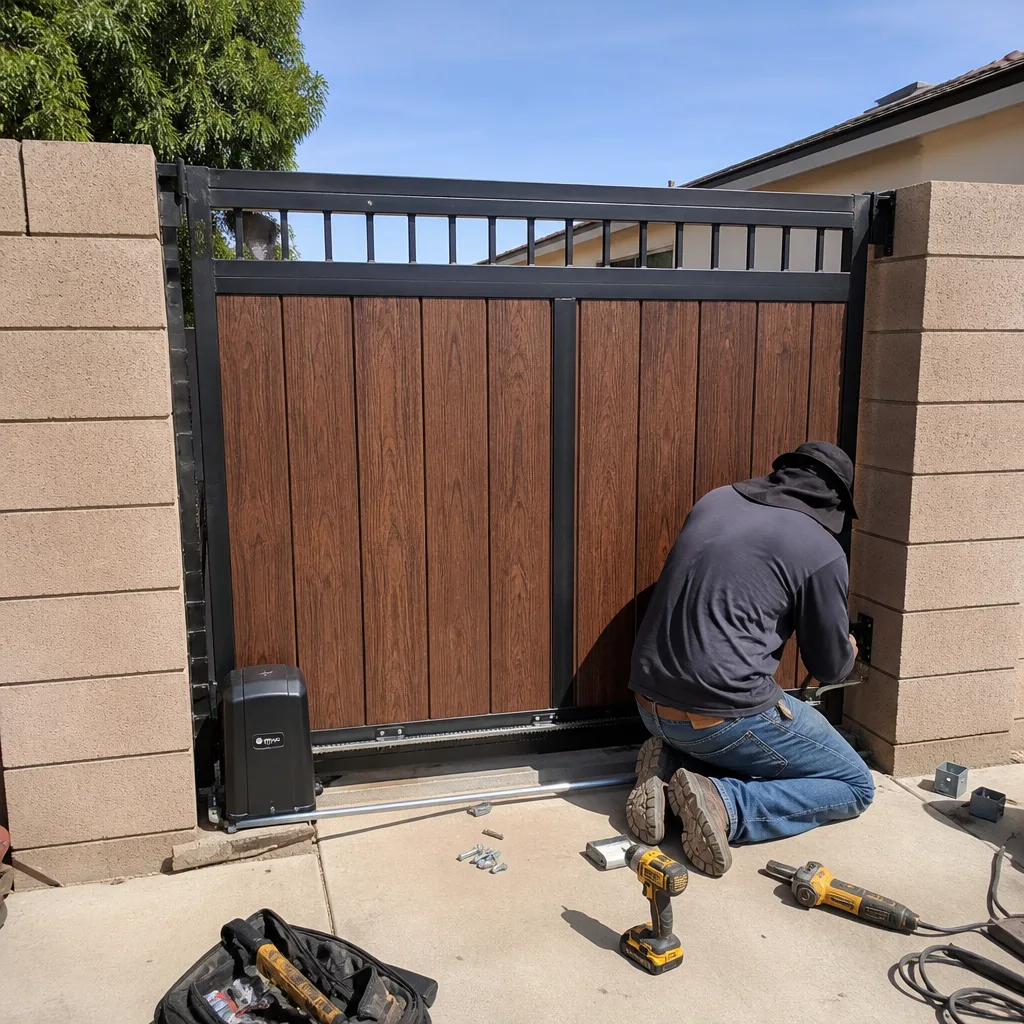 After