
Last updated November 2, 2026
 Wrought iron
 Wood & steel frame
 Farm & ranch
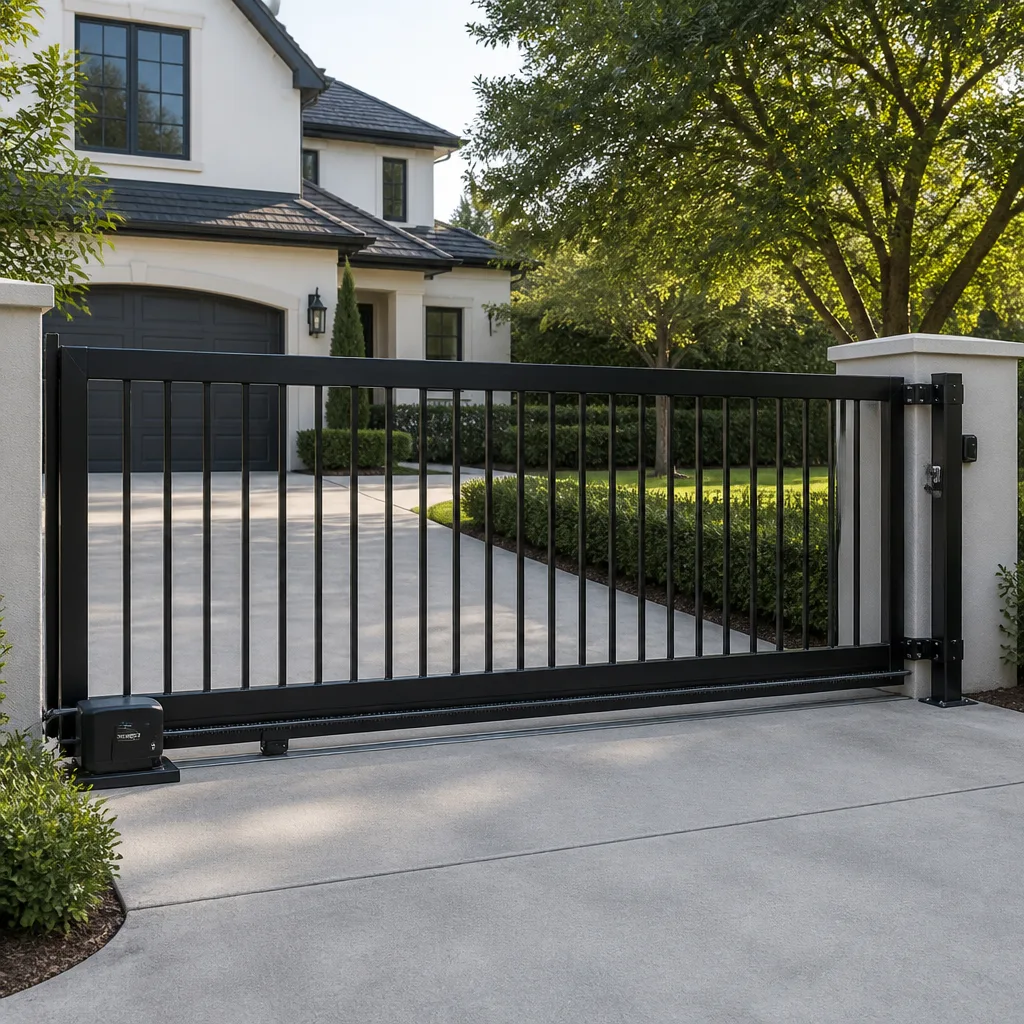 Sliding driveway gates
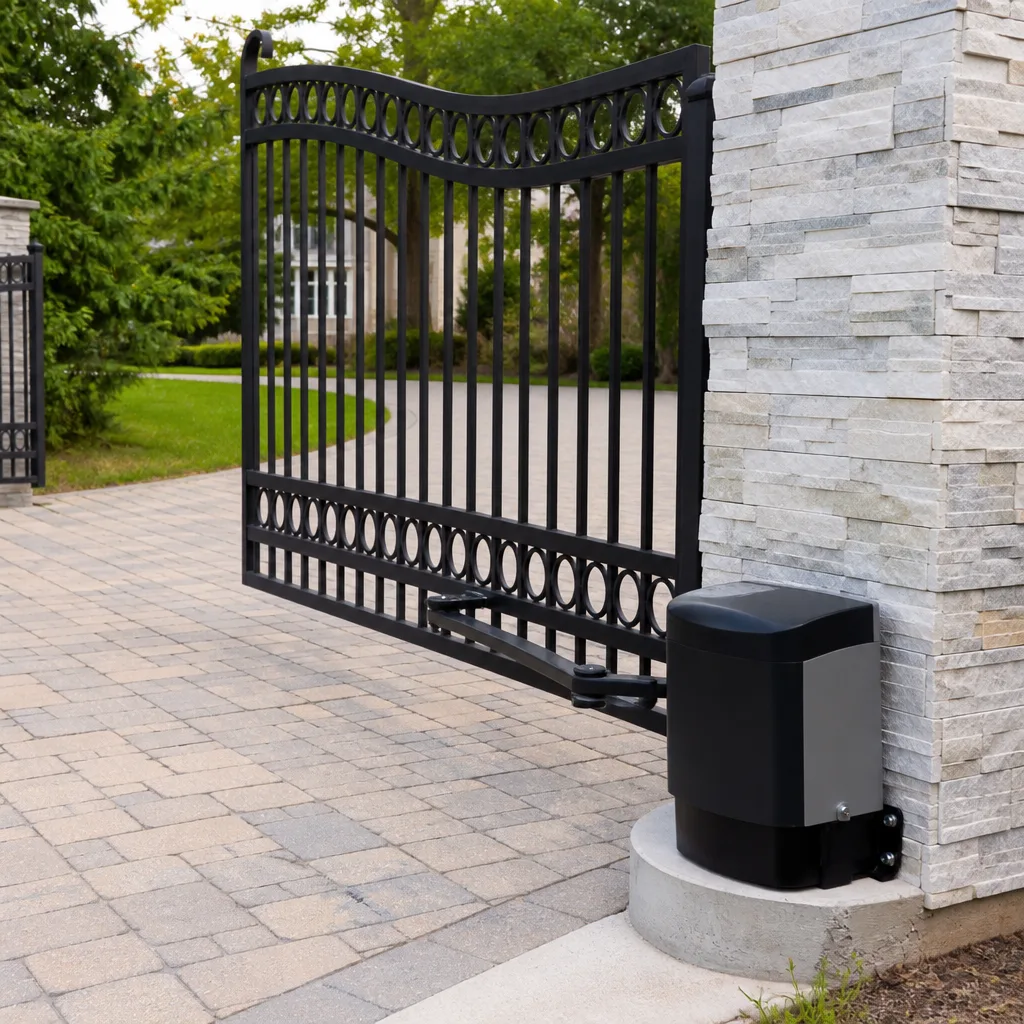 LiftMaster operators
Free on-site gate assessment - hinges, posts, and your LiftMaster or Nice gate operator checked before anything is quoted
The assessment is free and the quote is the invoice.
Get your free estimateGate Repair Permits, Codes & Inspections in CA: What You Need to Know
An automatic gate operator installed without a permit in California doesn’t just risk a fine. It can surface as an unpermitted improvement on a property disclosure report years later and derail a home sale at the last minute. Buyers’ agents in Victorville regularly flag unpermitted gate work during escrow, and the seller ends up either paying retroactive permit fees or delaying closing. This guide walks through the exact line between repair work and improvement work under California Building Code, how San Bernardino County handles gate permits for Victorville and Hesperia parcels, what UL 325 compliance actually requires, and what an inspector looks for when they show up at your driveway.
Quick Answer
Minor gate repairs in California, like replacing a hinge, welding a broken joint, or swapping a keypad, do not require a permit. But installing a new automatic gate operator, pouring new concrete footings for gate posts, or altering a fence line along a property boundary does trigger permit and inspection requirements in most jurisdictions, including the City of Victorville and San Bernardino County. The permit is tied to the structure and the operator, which means unpermitted work can follow the property through a sale and create title complications.
Styles & brands we work with
- Wrought iron
- Wood & steel frame
- Farm & ranch
- Sliding driveway gates
- LiftMaster operators
Table of Contents
- Repair vs. Improvement: Where the Permit Line Actually Sits
- San Bernardino County Jurisdiction: Victorville and Hesperia Parcel Rules
- UL 325 Compliance and Automatic Gate Operator Safety
- HOA Gate Modification Rules: When Private Rules Override Municipal Code
- What a Permitted Gate Installation Inspection Actually Checks
- Permit Costs and Typical Turnaround Times in Victorville
- Common Mistakes to Avoid
- When to Call a Professional
- Frequently Asked Questions
Repair vs. Improvement: Where the Permit Line Actually Sits
California Building Code draws a legal line between maintenance work and construction that alters a structure. Most homeowners never need to think about this line until something goes wrong at closing or a neighbor complains to code enforcement. The rule is straightforward: repair work keeps an existing gate functioning as originally installed. Improvement work changes the structure, the operator, or the footprint.
Here’s the practical breakdown for Victorville homeowners:
Repair work that does NOT require a permit:
- Replacing a bent hinge or a worn gate wheel
- Welding a cracked steel frame or reinforcing a sagging section
- Swapping out a keypad, remote receiver, or loop detector that’s wired to the existing operator
- Replacing a photocell or safety edge that’s failed
- Adjusting the open and close limits on an operator that’s already permitted and installed
- Lubricating the chain drive or replacing a belt on the same model operator
Improvement work that DOES require a permit:
- Installing a new automatic gate operator where none existed before
- Replacing a poured concrete footing for a gate post, or setting new posts for a gate that didn’t have them
- Adding a second gate leaf that changes the width of the opening
- Moving the gate line closer to a property boundary, sidewalk, or public right-of-way
- Running new electrical conduit from the house to the gate for operator power
We’ve walked into Victorville properties where a previous owner installed a Viking operator on a hand-built gate, never pulled a permit, and then listed the house. The gate worked fine. The problem only appeared when the buyer’s home inspector flagged the operator as unpermitted electrical work. That’s a $400 repair turned into a $1,800 retroactive permit headache plus a two-week closing delay.
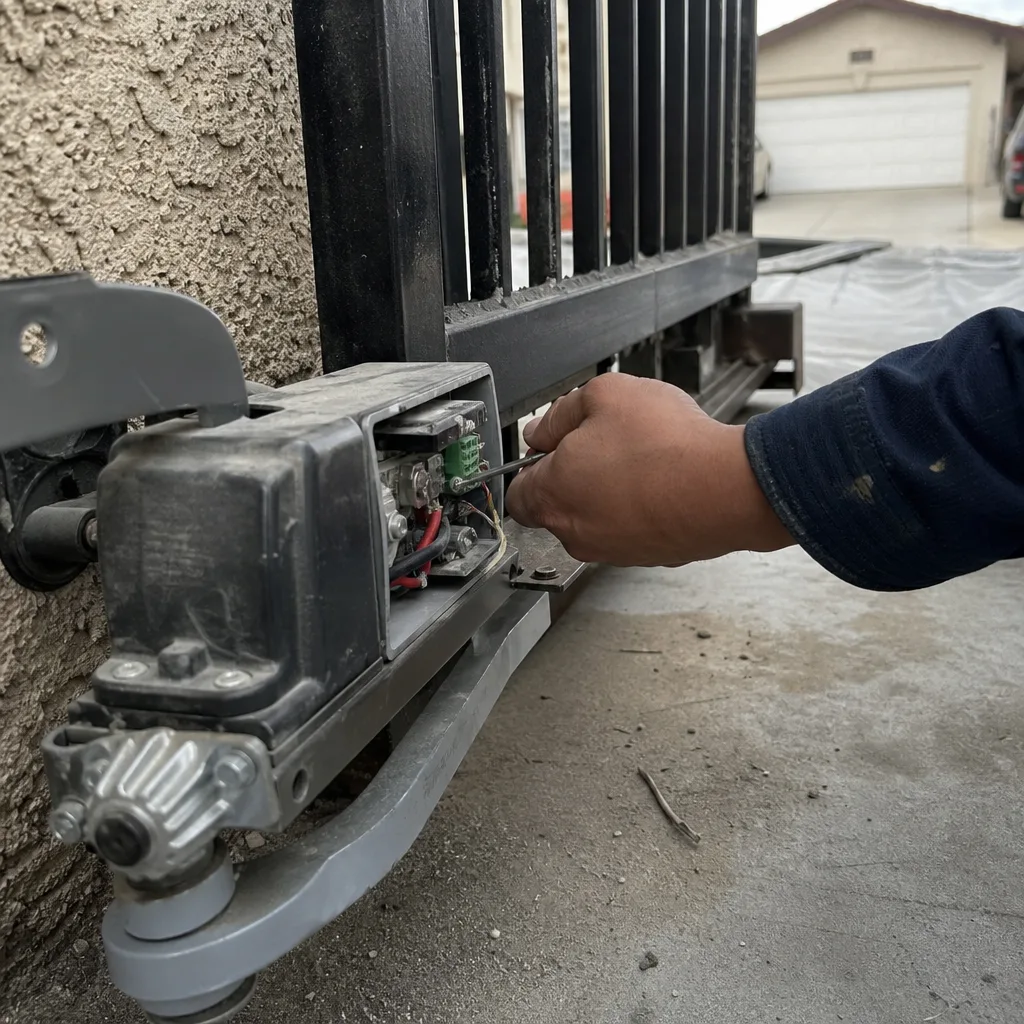
If your gate needs operator wiring fixed or a control board replaced, that’s electric gate repair in Hesperia or Victorville territory, and it’s almost always a repair, not an improvement. The permit trigger is the installation of the operator itself, not servicing one that’s already there.
San Bernardino County Jurisdiction: Victorville and Hesperia Parcel Rules
Victorville and Hesperia are both incorporated cities in San Bernardino County, which means two layers of jurisdiction can apply depending on the parcel. City of Victorville Building and Safety handles permits for parcels inside city limits. San Bernardino County Land Use Services handles parcels in unincorporated county pockets, some of which sit between Victorville and Hesperia and cause confusion for homeowners who just assume they’re in one city or the other.
Here’s how to figure out which office handles your gate permit:
- Pull up your property tax bill or look at your assessor’s parcel number (APN). If the APN starts with a City of Victorville designation, you’re under Victorville Building and Safety.
- If your mailing address says Victorville but your parcel sits in an unincorporated pocket, San Bernardino County is your permitting authority.
- Call the permitting office with your APN before starting any gate project. Both offices can confirm jurisdiction in under five minutes.
City of Victorville specifics: The Building and Safety division requires a permit for any automatic gate operator installation, regardless of whether the gate itself is new. The permit application needs a site plan showing the gate location, existing fence lines, and setback distances from sidewalks and utilities. Most Victorville gate permits are processed as “over the counter” if the plans are simple, meaning you walk in with a drawing and walk out with a permit the same day. More complex projects, like a commercial FAAC operator with vehicle loop detectors, may require plan review and take a week or two.
San Bernardino County specifics: County permits for gate operators follow the same California Building Code requirements but route through the county’s Land Use Services department. Turnaround times in our experience run three to five business days for simple residential applications. County inspectors also tend to be stricter about setback requirements from public right-of-way, especially on corner lots where a gate swings toward a sidewalk.
If the permit conversation feels overwhelming, remember that a licensed gate contractor can pull the permit on your behalf. We handle gate installation in Hesperia and Victorville with permits included in the scope of work, which shifts the paperwork burden off the homeowner.
UL 325 Compliance and Automatic Gate Operator Safety
UL 325 is a safety standard published by Underwriters Laboratories that governs the design and installation of automatic gate operators. It’s not a building code in the traditional sense, but California has adopted it by reference into the building code, which makes it enforceable by local inspectors. If your gate operator installation doesn’t meet UL 325, you can be cited for a code violation even if the gate functions correctly.
The standard exists because automatic gates have killed people. A gate closing with enough force can crush a child, pin an adult, or trap someone between the gate leaf and the post. UL 325 requires that gate systems include redundant safety mechanisms to prevent these accidents. A compliant system needs at least two independent layers of entrapment protection.
What UL 325 requires on a typical Victorville residential gate:
- A primary entrapment protection device, usually a set of photocell sensors mounted across the gate opening
- A secondary device, which is typically a reversing mechanism built into the operator that detects resistance and reverses direction
- Contact sensors (safety edges) on the leading edge of the gate and the hinge side for swing gates
- Warning signage posted on both sides of the gate
- Proper distance between the gate and adjacent posts or walls, specifically designed to prevent finger and hand entrapment
Many residential operators sold in big-box stores, like Ghost Controls and some Mighty Mule models, are UL 325 compliant as manufactured. The compliance fails at installation when a homeowner skips the photocells because they look ugly, or mounts the operator too close to a wall, or never bothers with the warning signs. That’s the kind of shortcut that an inspector will catch, and it’s also the kind of shortcut that creates real liability for the homeowner if someone gets hurt.
We service every major operator brand and our technicians check UL 325 compliance on every our Gate Repair services call, because a functioning gate isn’t the same thing as a safe gate. That includes Linear, Viking, DoorKing, and Ghost Controls systems. If a previous installation cut corners on safety, we flag it and correct it before calling the job done.
HOA Gate Modification Rules: When Private Rules Override Municipal Code
In communities across Victorville and Hesperia, you’re dealing with two sets of rules that don’t always agree. HOA covenants, conditions, and restrictions (CC&Rs) are private contracts between the homeowner and the association. Municipal code is public law. When they conflict, neither one simply overrides the other. You have to satisfy both, and the failure to satisfy either one causes a different kind of problem.
Here’s the hierarchy that actually applies:
- Municipal code and building permits govern safety and structural legality. If city code says you need a permit for the operator, the HOA can’t waive that requirement.
- HOA CC&Rs govern aesthetic and architectural approval. If the HOA says gate must be wrought iron painted black, that’s enforceable as a private contract even if city code doesn’t care what color the gate is.
- When HOA rules are more restrictive than city code, the HOA rule applies on top of city requirements. You need both approvals.
- When HOA rules are less restrictive, city code still applies. A permissive HOA cannot exempt you from a building permit.
- Permit documentation: The permit card must be posted at the job site, and the inspector verifies the permit number matches the address and the scope of work described.
- Post and footing depth: The inspector checks that gate posts are set to the depth shown on the approved plans. In this region, that’s usually 36 to 42 inches for a swing gate post, deeper for a heavy automatic gate.
- Operator mounting and wiring: The operator must be mounted correctly and the electrical conduit run through approved materials. Exposed Romex stapled to a fence post fails immediately.
- UL 325 safety devices: Photocells must be mounted at the correct height and angle, safety edges installed where required, and the operator’s reversing mechanism must demonstrate it can detect an obstruction.
- Setback from right-of-way: The inspector checks the gate swing arc against the property line and sidewalk. A gate that swings over a public sidewalk without proper clearance fails.
- Warning signage: UL 325 signage must be present on both sides, mounted at the required height.
- Final operation test: The inspector cycles the gate open and closed, tests the safety reversal, and confirms the manual release works.
- Operator-only permit (automatic operator added to an existing gate): $75 to $150, depending on jurisdiction. This is the most common permit pulled for residential gates.
- New gate with footings (no operator): $100 to $180. The permit covers the structural work and inspections.
- Full automatic gate installation (new gate, posts, operator, and electrical): $150 to $300, sometimes more if the project requires plan review.
- Retroactive permit (for previously unpermitted work): Expect to pay double the standard fee in most jurisdictions. San Bernardino County explicitly charges a penalty multiplier for retroactive permits.
- Skipping the permit because “it’s just a gate.” Automatic gate operators are covered by California’s electrical code, not just the building code. An unpermitted operator is unpermitted electrical work, and that’s the exact phrase that triggers problems at closing.
- Assuming HOA approval replaces a city permit. HOA architectural review and municipal building permits serve different legal functions. Getting one doesn’t satisfy the other, and neither one protects you from the other’s enforcement.
- Buying a big-box operator and treating it as a DIY weekend project. Ghost Controls and Mighty Mule units are designed for DIY, but the electrical connection and safety device installation still need to meet code. We’ve corrected more than one DIY install where the photocells were never wired.
- Not checking jurisdiction before applying. Victorville addresses don’t all fall under Victorville Building and Safety. If your parcel is in a county pocket, you’ll get turned away from the wrong office and lose a week.
- Mounting a swing gate so it swings over a public sidewalk. This fails inspection and creates a public safety liability. The gate swing arc must stay within the property line.
- Using a handyman who doesn’t know UL 325. The operator may work, but the inspector will catch missing safety edges or non-compliant mounting clearances. Then you pay twice: once for the handyman’s work and again to have it corrected.
- Waiting until the home is under contract to address a known unpermitted gate. Retroactive permits take time, and real estate deadlines don’t move. The time to permit a gate is when it’s installed, not when a buyer’s inspector flags it.
In our Victorville service area, we see this play out most often in gated communities and planned developments like Spring Valley Lake, which has its own architectural review process. A homeowner gets city approval for a new gate, installs it, and then gets a violation letter from the HOA because the gate height or style doesn’t match the community standards. The fix usually involves modifying or replacing the gate at significant cost.
The practical order of operations is: check HOA rules first, because they’ll reject a design that doesn’t match their standards, then submit the approved design to the city for a permit. Doing it in reverse wastes weeks and risks an installation that has to be torn out.
If the whole process sounds bureaucratic, that’s because it is. But a Gate Repair Victorville specialist who’s worked in these specific communities can tell you in one phone call whether your planned gate change will trigger HOA review and city permit requirements. We’d rather have that conversation before you order a gate than after it’s welded in place.
What a Permitted Gate Installation Inspection Actually Checks
When you pull a permit for a gate operator or a new gate with footings, the city or county sends an inspector to verify the work before closing the permit. Many Victorville homeowners assume the inspection is a formality. It’s not, and failed inspections are common when the work was done by a handyman who doesn’t know what the inspector will look at.
Here’s what a typical gate inspection covers, in the order the inspector usually walks the site:
The most common failure point we see is missing or misaligned photocells. The second is improper conduit for electrical runs. Both are easily avoidable when the person doing the installation knows what code requires.
This is also where hiring a gate specialist instead of a general handyman makes a concrete difference. Our technicians install to code as a matter of habit, not as a scramble before inspection day. When you’re comparing bids for gate repair in Hesperia or a new installation in Victorville, ask the contractor which code sections they’ve pulled permits under recently. The answer tells you more than the price.
Permit Costs and Typical Turnaround Times in Victorville
Gate permit fees in Victorville and San Bernardino County are modest compared to the cost of the gate itself, but they vary based on the scope of work. Here’s what you should budget based on the project type:
Turnaround times run one to five business days for a simple over-the-counter permit in Victorville. San Bernardino County unincorporated parcels run three to seven business days for residential gate permits. Commercial access gates using heavy-duty operators like DoorKing or BFT can take two to four weeks because they require plan review and possibly a traffic study if the gate controls access to multiple units.
Inspection scheduling in Victorville typically runs one to three business days after you call to schedule. The inspector’s visit itself takes 20 to 40 minutes.
The permitting cost is never the expensive part of gate work. The expensive part is doing the work twice because the first installation failed inspection or because a retroactive permit became necessary at closing. When we quote a gate project in Victorville, the permit fee is a line item, the scope of work matches the permit application, and the price you’re quoted is the price we agree on before any work starts.
Common Mistakes to Avoid
When to Call a Professional
If you’re replacing a keypad or lubricating a chain, you don’t need us. But if the project involves an automatic operator, new footings, property line setbacks, or anything that triggers a permit, the value of a specialist is concrete: we know which code sections apply, which office has jurisdiction over your Victorville parcel, and what the inspector will check before they arrive. We service all nine major operator brands, which means we’re not going to tell you to replace a Viking with a brand we happen to sell. We’ll tell you what your existing system needs and fix it right the first time. Gate Repair Victorville offers free estimates in Victorville, call (833) 589-9763.
Frequently Asked Questions
No, most repairs to an existing gate, like replacing hinges, welding cracks, or swapping out a keypad, don’t require a permit. The permit requirement kicks in when you install a new automatic operator, set new posts with concrete footings, or move the gate line closer to a property boundary. If you’re unsure whether your specific repair crosses that line, call (833) 589-9763 and we’ll tell you straight.
You won’t get fined the day after installation. The problem typically surfaces when you sell the property, and the unpermitted operator appears on a disclosure report or home inspection. At that point you either delay closing to pull a retroactive permit or agree to a price reduction. The fix is a retroactive permit through Victorville Building and Safety or San Bernardino County, whichever has jurisdiction over your parcel. See Gate Repair Warning Signs: A Victorville Homeowner’s Reference Guide for earlier indicators that your gate needs professional attention.
For a typical residential automatic gate operator, expect $75 to $150 in Victorville and $100 to $200 in county jurisdiction, plus double fees if you’re paying retroactively for previously unpermitted work. A full new gate installation with an operator and new footings runs $150 to $300. Get exact numbers by calling the permitting office with your APN.
Repairs that match the existing gate typically don’t need HOA approval. Installations, modifications, style changes, or anything visible from the street almost always do. Check your CC&Rs before you order any materials, because HOAs in communities like Spring Valley Lake enforce specific gate height, material, and color standards that city code doesn’t address.
UL 325 is the safety standard for automatic gate operators that California enforces through the building code. It requires entrapment protection devices like photocells and safety edges, proper mounting clearances, and warning signage. It applies to every automatic gate, including DIY residential systems. A non-compliant installation is a code violation and a liability risk.
Yes, we pull permits for gate installations throughout Victorville and Hesperia as part of the project scope. The permit fee is a line item on a written quote, and the price is agreed before any work starts. Call (833) 589-9763 for a free estimate and we’ll confirm which jurisdiction applies to your parcel.
The Bottom Line
The permit question for California gate work comes down to one distinction: repair stays legal without paperwork, improvement requires it. Installing a new automatic operator, setting new footings, or changing a gate’s relationship to a property line all trigger permit requirements in Victorville and San Bernardino County. Ignoring that requirement doesn’t disappear; it resurfaces at closing, during an HOA dispute, or after an accident. UL 325 compliance adds a safety layer that inspectors enforce and homeowners ignore at their own risk. Check your jurisdiction, get HOA approval first, pull the permit before the work starts, and hire someone who already knows these rules. For ongoing maintenance advice, explore more guides & resources from our team. The permit costs less than the alternative.
Written by the team at Gate Repair Victorville, serving Victorville since 2013.
See the difference
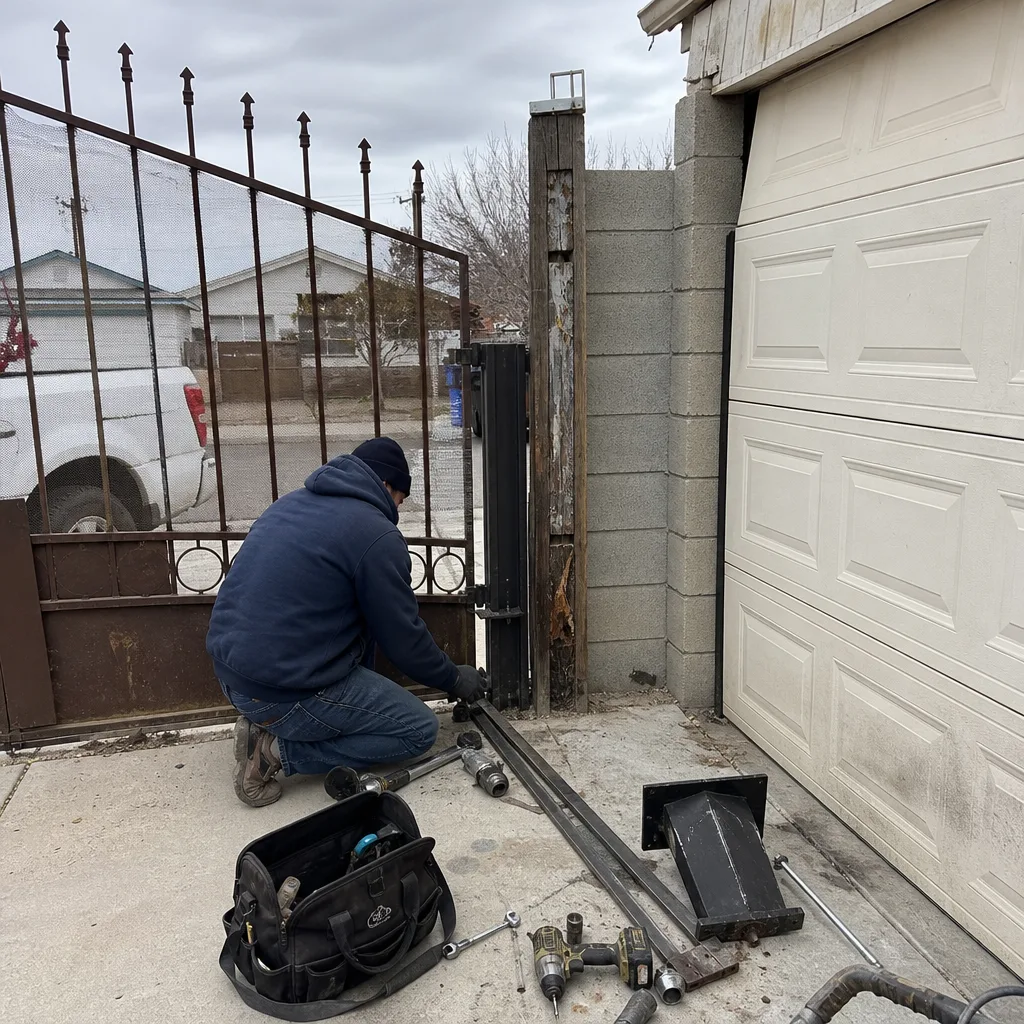 Before
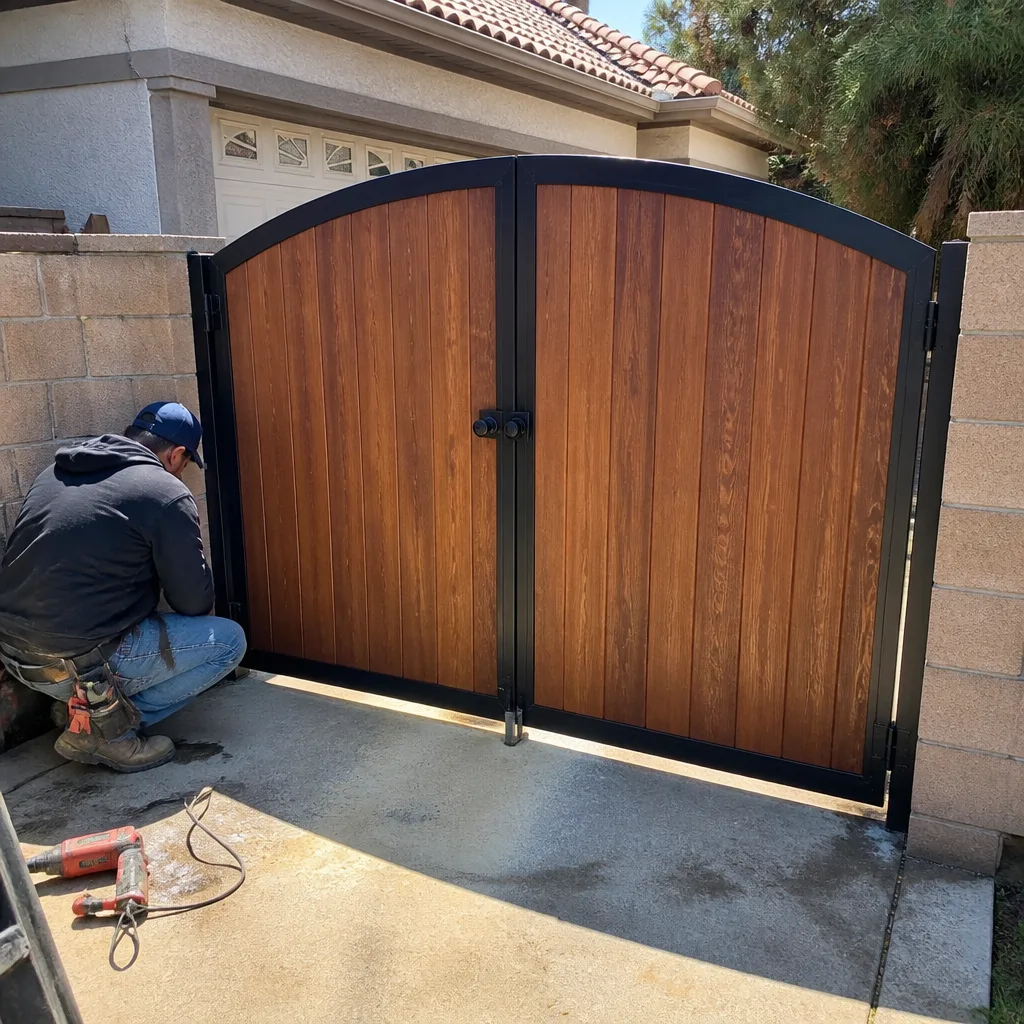 After
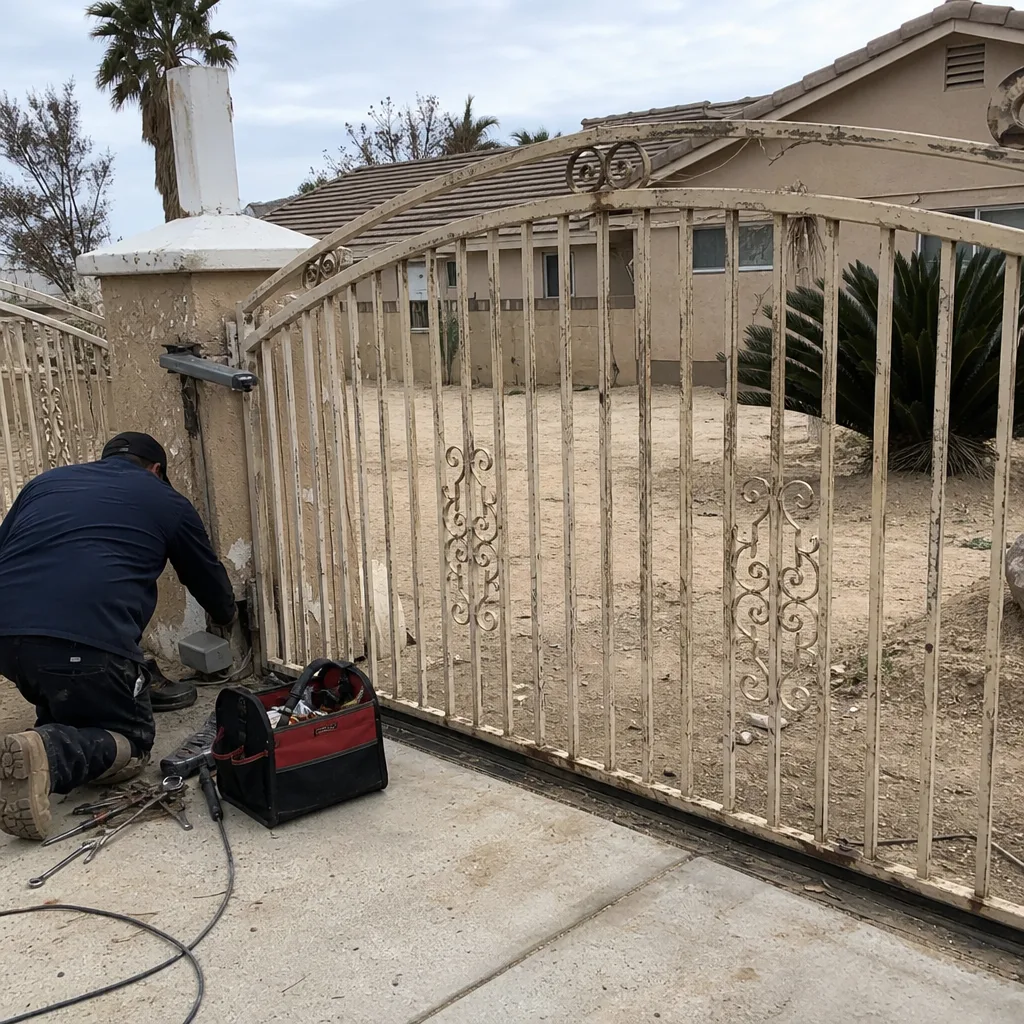 Before
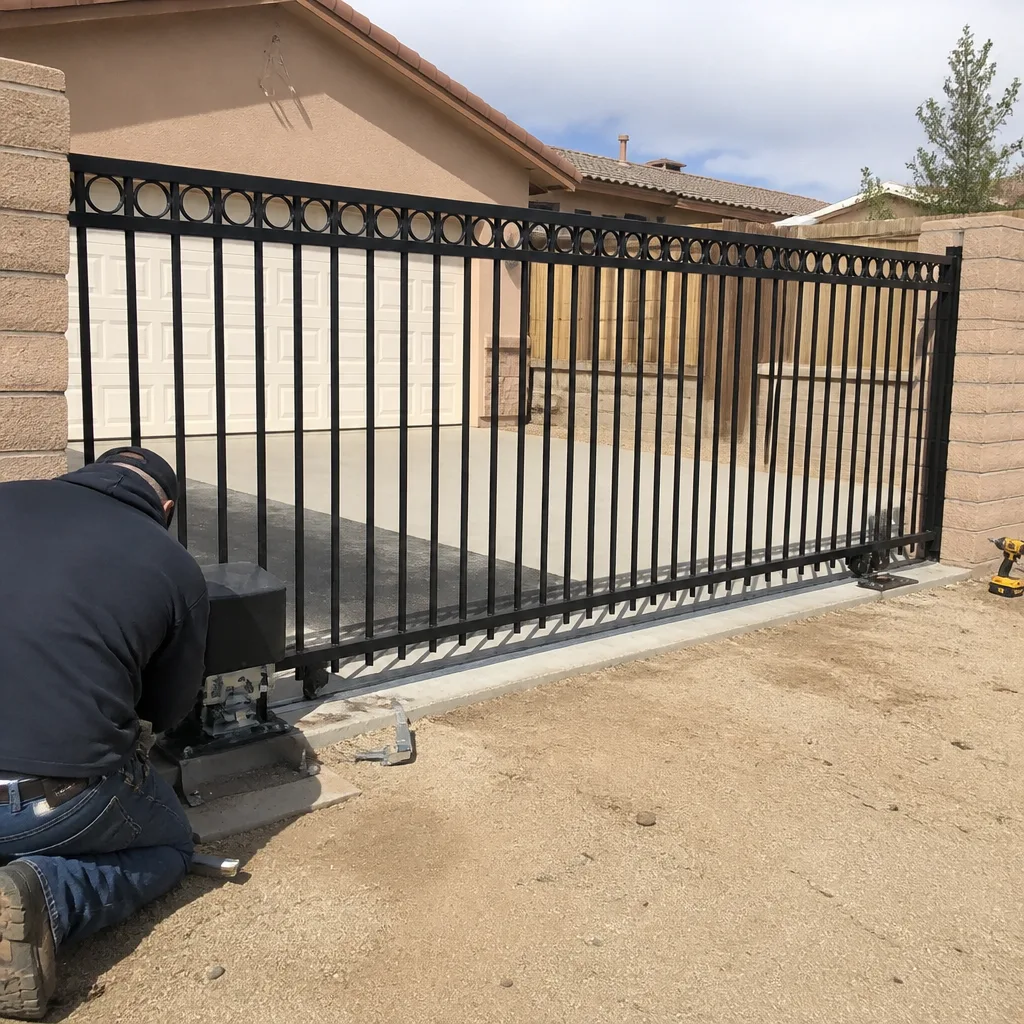 After
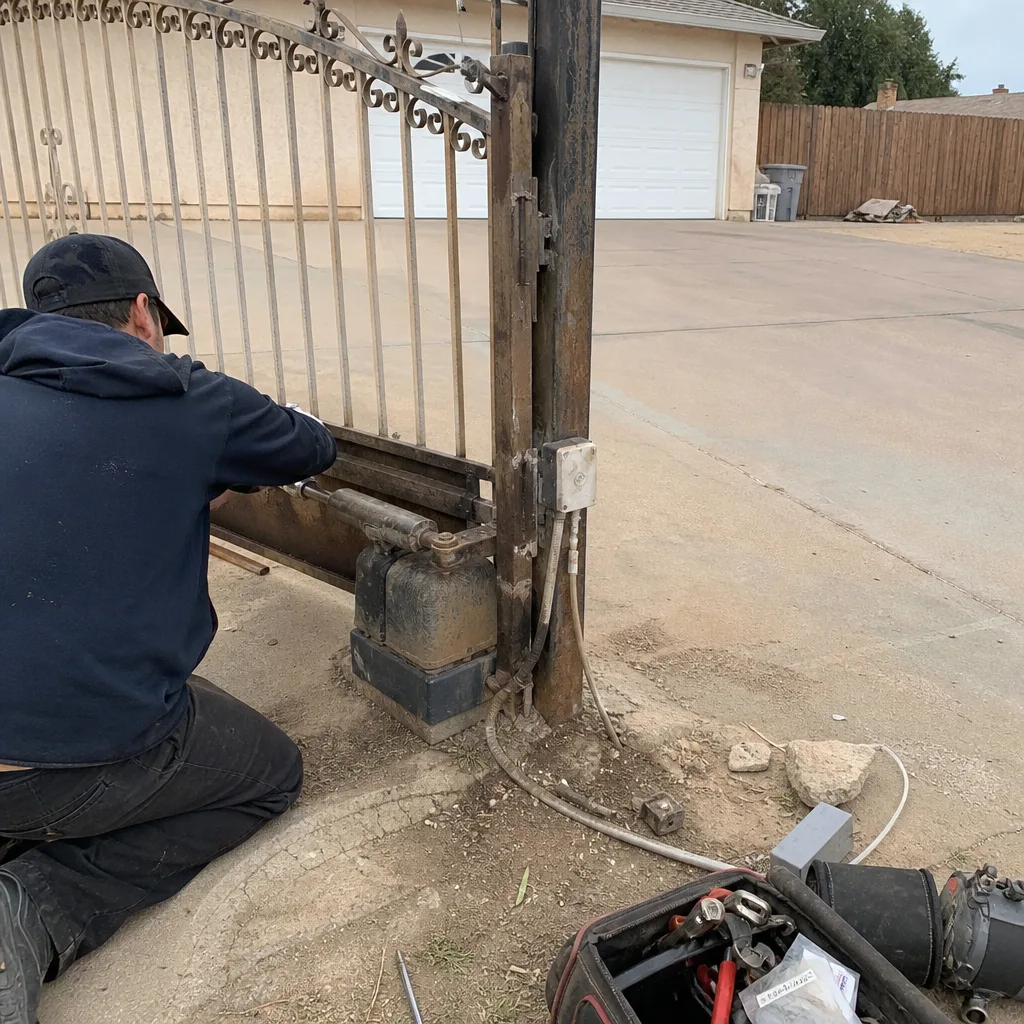 Before
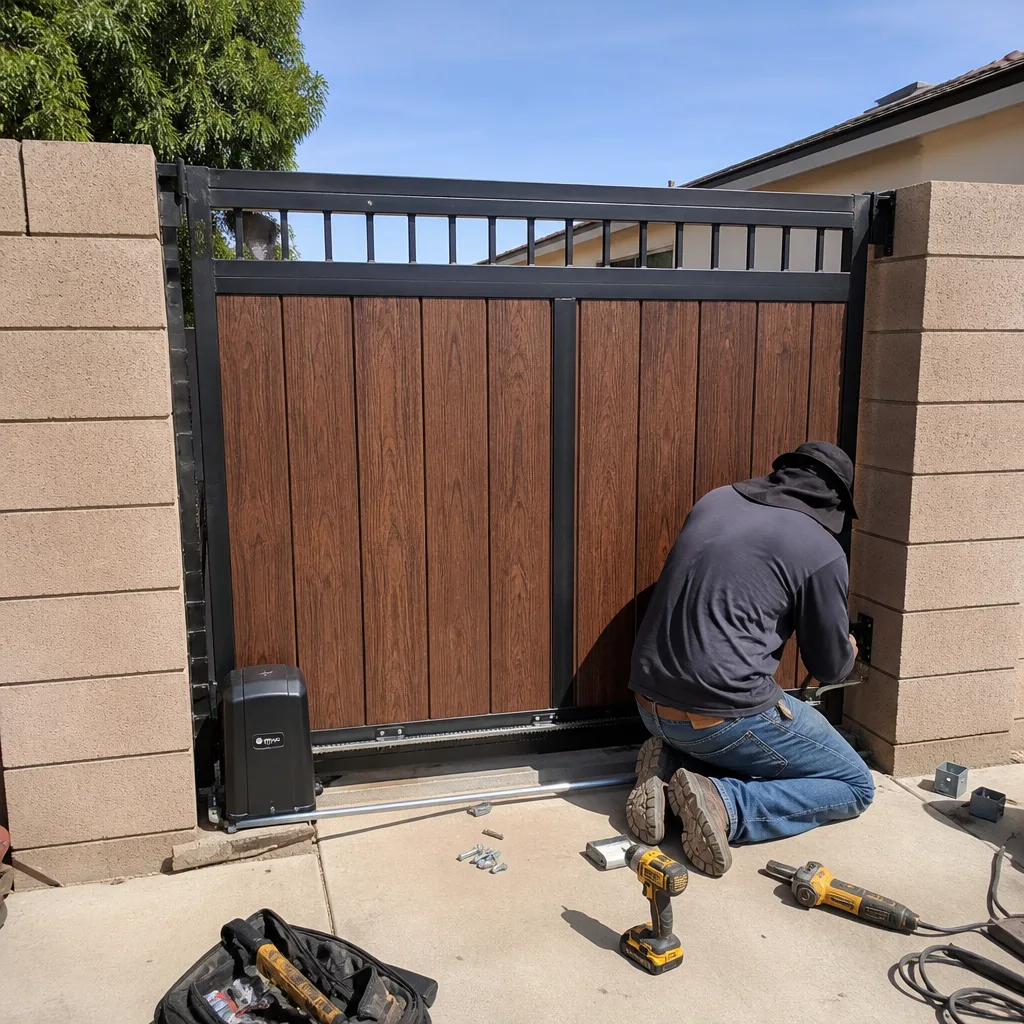 After