
Last updated November 2, 2026
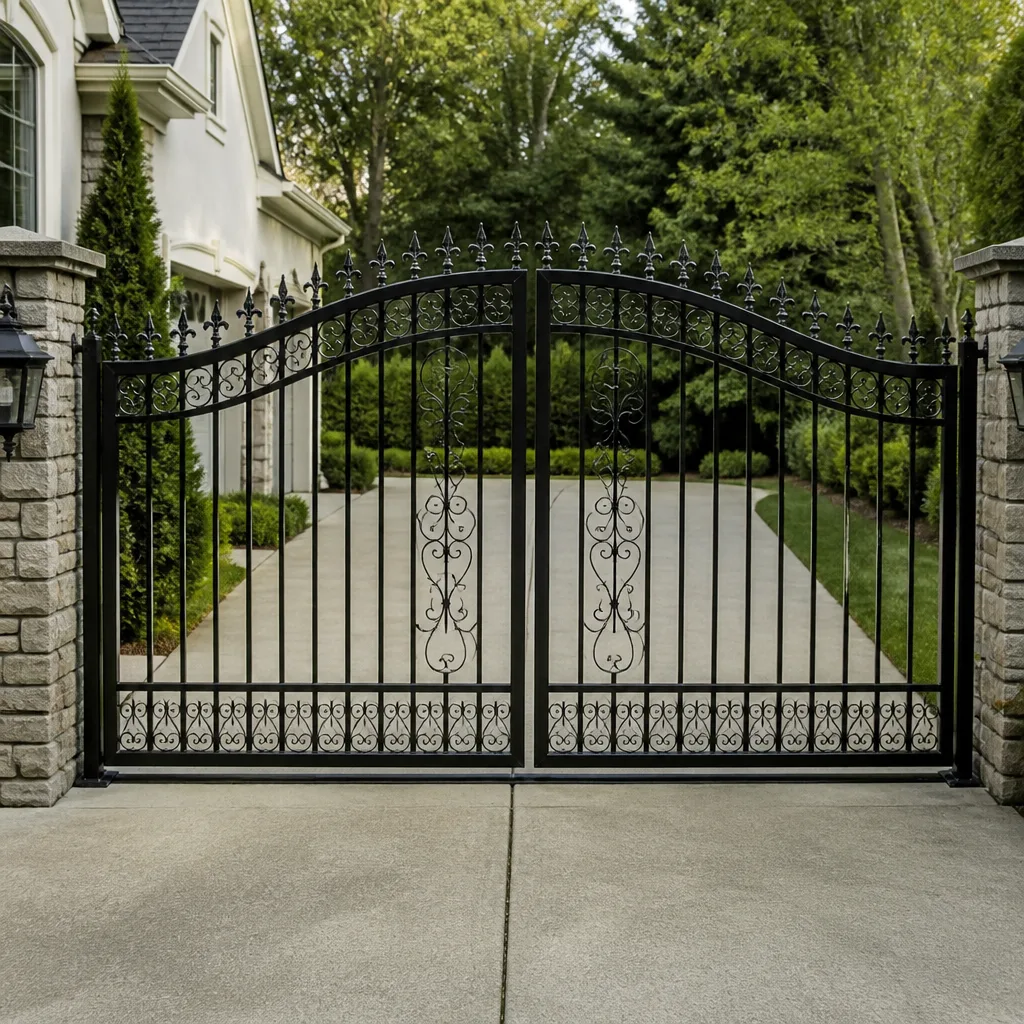 Wrought iron
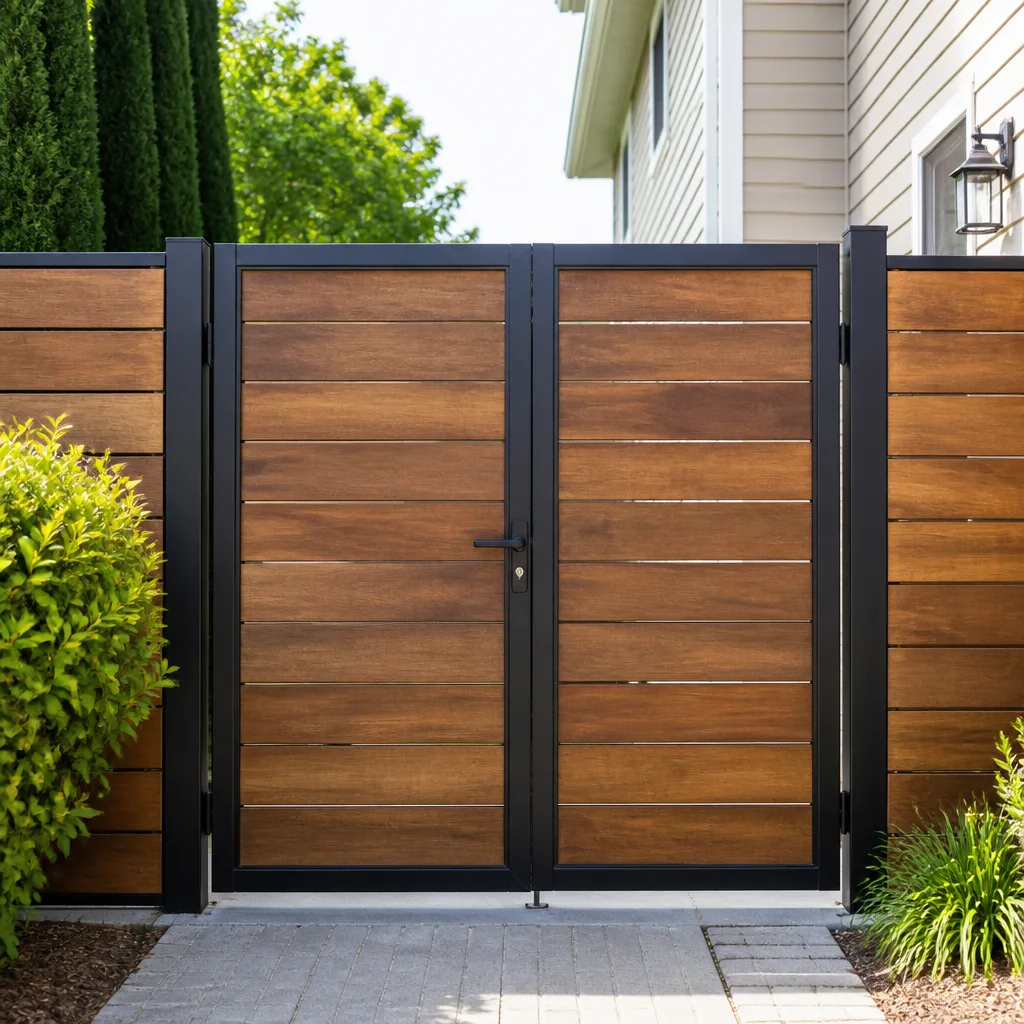 Wood & steel frame
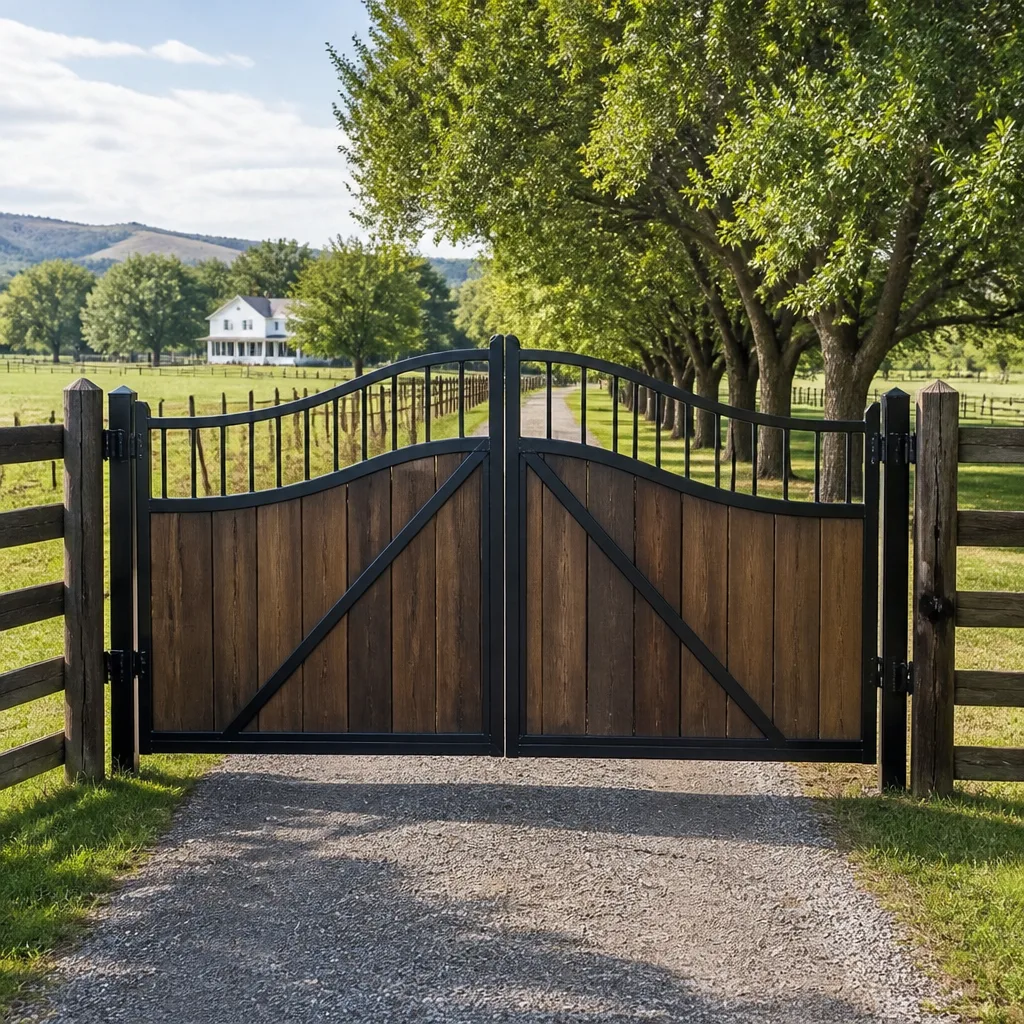 Farm & ranch
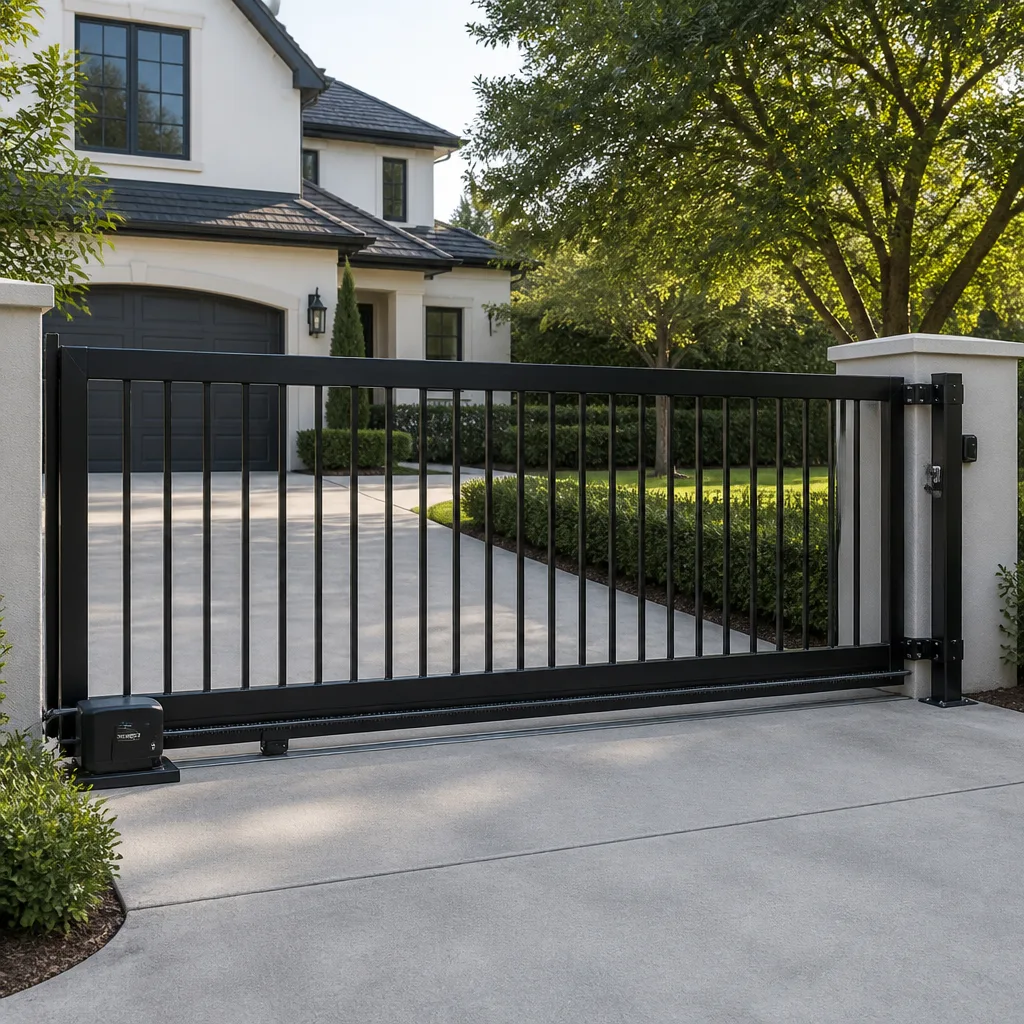 Sliding driveway gates
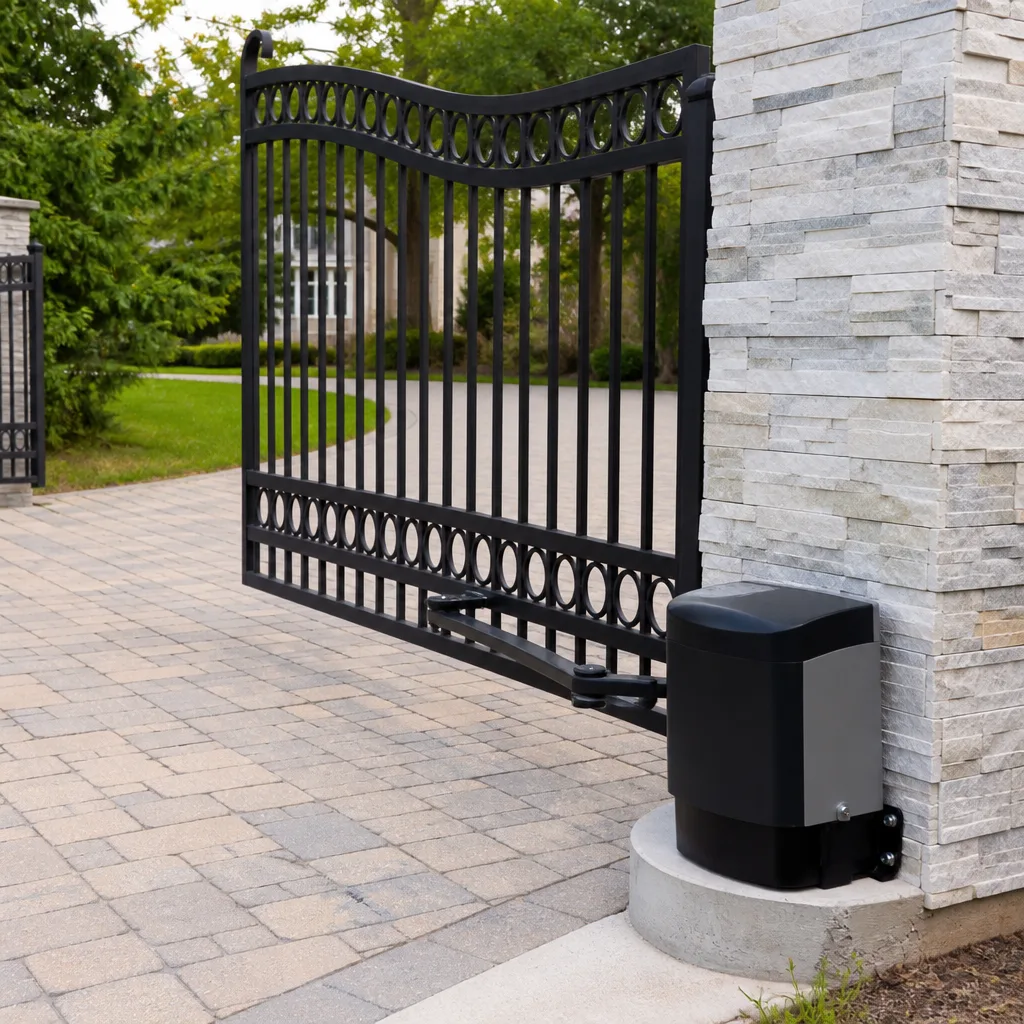 LiftMaster operators
Free on-site gate assessment - hinges, posts, and your LiftMaster or Nice gate operator checked before anything is quoted
The assessment is free and the quote is the invoice.
Get your free estimateGate Repair Warning Signs: A Victorville Homeowner’s Reference Guide
A gate that hesitates for two seconds before moving isn’t “warming up.” It’s a safety loop detecting a partial obstruction, and ignoring it means the next stage is an operator that traps a vehicle or produces an injury claim. In Victorville, where wind-blown sand, extreme summer heat, and hard water all work against gate hardware, early detection isn’t just about saving money. It’s about preventing a 400-pound gate leaf from failing at the worst possible moment. This guide gives you a triage system for every warning sign a gate can produce, from cosmetic noise to structural failure, so you know what to schedule and what to call in immediately. For professional help, see our Gate Repair services.
Styles & brands we work with
- Wrought iron
- Wood & steel frame
- Farm & ranch
- Sliding driveway gates
- LiftMaster operators
Quick Answer
Gate repair warning signs fall into three categories: safety-critical signals that need same-day service (gate reversing on its own, failing to stop on obstruction, structural lean, loose hinge welds), mechanical warnings that can wait a few days (grinding, intermittent stalling, slow movement), and cosmetic annoyances that can be scheduled at your convenience (surface rust, minor paint wear, slight chain rattle). The rule: anything that affects how the gate stops, reverses, or holds position is urgent. Everything else can be planned.
Table of Contents
- Safety-Critical Warning Signs: Same-Day Service Required
- Mechanical Warning Signs: Schedule Within the Week
- Cosmetic Warning Signs: Plan When Convenient
- Operator-Specific Warning Signs by Brand
- Structural Warning Signs Most Homeowners Miss
- Electrical Warning Signs in Access Control
- How to Document Warning Signs Before Calling a Technician
- How Victorville’s Climate Accelerates Gate Wear
- Common Mistakes to Avoid
- When to Call a Professional
- Frequently Asked Questions
- The Bottom Line
Safety-Critical Warning Signs: Same-Day Service Required
These are the symptoms that demand immediate attention. A gate that fails in any of these ways can cause serious injury or property damage, and in Victorville, where many homes sit on larger lots with longer gate runs, the force involved is substantial. Here’s what we mean by safety-critical.
The gate reverses direction on its own without hitting anything. This is not a glitch. The gate’s control board is receiving a false obstruction signal, usually from a failing safety loop, a dirty photo eye, or a damaged edge sensor. Every time this happens, the system is essentially crying out that it cannot trust its own safety inputs. A gate that reverses unpredictably can easily catch a vehicle mid-pass.
The gate fails to stop when it meets resistance. Electric gate operators are required to have obstruction detection. If you can push against the gate while it’s moving and it keeps pushing back instead of reversing, the force setting is wrong or the safety circuit has been bypassed. This is the most dangerous condition a gate can be in, and in our experience, it’s most common on older operator boards where a previous tech disabled a nuisance-tripping sensor rather than fixing the underlying issue.
You see visible cracks at the hinge welds or hinge mounts. Gates are heavy. A single-leaf steel gate can weigh 300 to 600 pounds. When weld cracks appear at the hinge point, the entire load is being carried by less material than designed. The failure mode is sudden and violent. Wind loading in Victorville, especially during spring gusts, adds cyclic stress that turns a small crack into a complete separation faster than most homeowners expect.
The gate leans visibly to one side when open. This often indicates a failing hinge bearing or a post that’s pulling out of its footing. It may seem like a cosmetic issue today, but the extra load transfers to the operator, forcing the motor to work harder, and the lean can progress to the point where the gate drops off its hinges entirely.
If you’re seeing any of these signs, stop using the gate and call for service. This is a gate repair in Victorville situation that cannot wait.
Mechanical Warning Signs: Schedule Within the Week
Mechanical problems are less immediately dangerous but will get worse with every cycle. Ignoring them converts a $250 repair into a $1,800 operator replacement. Here’s what falls into this category.
Grinding or metallic scraping during operation. This is almost always a bearing or a chain tension issue. Electric gate operators drive the gate through a drive mechanism, and when a bearing starts to fail, the sound is unmistakable. Left alone, the failed bearing puts load on the motor shaft, and electric motors do not tolerate side loading well. Motor replacement is far more expensive than bearing replacement.
Intermittent stalling halfway through travel. A gate that stops partway and then resumes, or one that needs a second button press to finish its cycle, has a power delivery problem. This could be a failing capacitor, a weak battery in a solar system, or a control board that’s overheating. In Victorville summers, board overheating is common, especially for operators mounted in direct sunlight on south-facing walls without shade.
Slow operation that gets progressively worse. Gates that move slower than they did six months ago are telling you something. It might be low hydraulic fluid, worn gears, a dragging wheel, or an underpowered motor. A slower gate also means more time exposed to whatever is failing, accelerating all related wear.
Loud clunking at the start or stop of travel. This is often a worn chain or a loose drive sprocket. The clunk is slack being taken up suddenly. Over time, that shock load cycles through the entire drive train and can break a chain or shear a sprocket key.
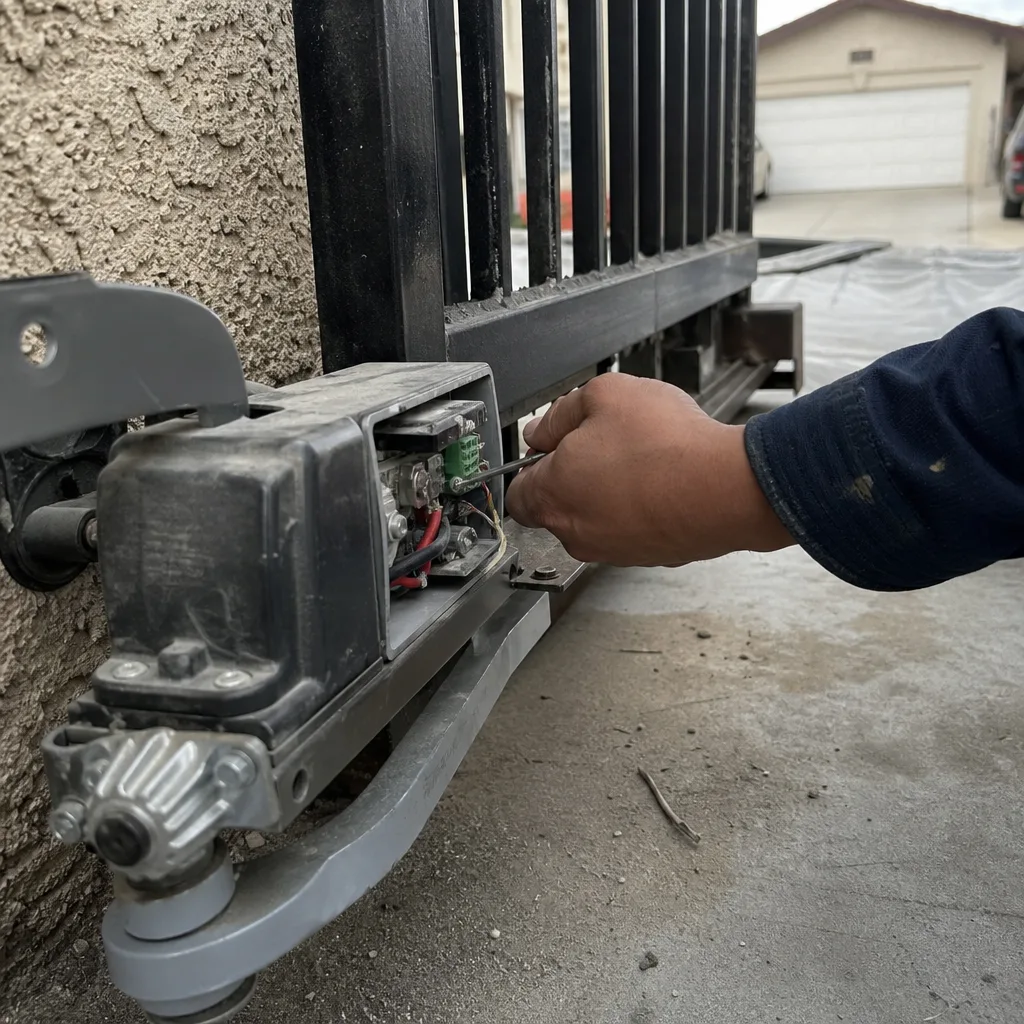
These mechanical issues are the core of what we do. As electric gate repair specialists serving the High Desert, we diagnose these issues based on the specific operator already on the property, whether it’s a residential Mighty Mule or a commercial FAAC system. We’re not trying to sell you a new gate; we fix what’s there first.
Cosmetic Warning Signs: Plan When Convenient
Some warning signs are genuinely just appearances, and it’s useful to know which ones you can safely defer. The distinction matters because a homeowner who treats every scratch as an emergency is either going to overspend on service or start ignoring real problems because they can’t tell the difference.
Surface rust on non-structural components. Light rust on decorative ironwork, the gate’s outer frame, or hinges that are still solid is a cosmetic issue that can be addressed with wire brushing and repainting. It becomes structural when the rust flakes off in layers or you can push a screwdriver through the metal. High Desert air is dry most of the year, so surface rust progresses slowly compared to coastal areas.
Fading paint or powder coat. The Victorville sun is brutal on finishes. Fading is inevitable and has no functional impact. Repainting or re-coating is a maintenance item, not a repair.
Minor chain rattle on a slide gate. Some chain noise is normal, especially on older installations. If the chain is properly tensioned and there’s no visible wear on the sprocket teeth, light rattle is acceptable. It becomes a mechanical issue when the rattle is accompanied by visible chain sag or the gate jerks during travel.
Cosmetic scratches on the gate leaf. These happen. Unless the scratch is deep enough to expose bare metal to repeated moisture, it’s a non-issue for function.
Understanding this triage prevents two common failures: panicking over nothing and ignoring everything. The goal is to know the difference. For more help, check out our How to Hire a Gate Repair Contractor in Victorville: A Step-by-Step Guide.
Operator-Specific Warning Signs by Brand
Different gate operators signal problems differently. Knowing what your specific brand does when it’s unhappy cuts diagnostic time dramatically, because the symptom maps to a likely cause much faster. Here’s how to read a few of the most common brands we see installed in Victorville driveways.
LiftMaster fault code patterns. LiftMaster residential and light commercial operators communicate through LED blink codes on the control board. A single repeating blink often points to a limit switch issue. Two or three blinks typically indicate an obstruction detection problem or a failed safety sensor. Four or five blinks commonly mean a motor overheat condition or a thermal shutoff, which in Victorville’s summer is especially common on operators without shade. The key with LiftMaster is that the blink pattern is the diagnostic, and writing it down before calling saves a service tech real time.
How a Viking operator signals a failing control board. Viking operators are heavy-duty units often used on commercial and large residential gates. They tend not to have consumer-friendly blink codes in the same way. Instead, a failing Viking board usually manifests as intermittent operation: the gate works fine for days, then refuses to respond for an hour, then works again. Alternately, the board may fail to hold its limit settings, requiring re-setting after every power cycle. If a Viking operator needs its limits reprogrammed repeatedly, the board is failing, not the limits themselves.
FAAC and BFT: hydraulic and electromechanical symptoms. FAAC operators, especially the hydraulic models used on commercial gates in the High Desert, signal problems through changed behavior rather than codes. Slow or jerky movement on a FAAC hydraulic unit suggests low fluid or a failing pump. On BFT electromechanical units, a gate that starts strong but bogs down mid-travel points to capacitor degradation. Both of these are repairable by a technician who knows the brand. General handymen misdiagnose these constantly, which is why we cover all nine major operator lines rather than one or two.
Ghost Controls and Mighty Mule: DIY-tier tells. These residential brands are popular because they’re affordable, but their failure modes are recognizable. A Ghost Controls unit that beeps but doesn’t move often has a battery issue in solar installations. A Mighty Mule that moves a few inches and stops is usually hitting its stall force threshold, typically from gate friction or a weak battery, not a failed motor. Understanding these patterns means the difference between a $40 fix and incorrectly condemning the whole operator.
Structural Warning Signs Most Homeowners Miss
The most expensive gate repairs in Victorville are structural ones, and they usually start with warning signs that get dismissed because they seem too subtle to matter. Here’s what to look for.
Minor gate lean that’s only visible when the gate is closed. When a gate is open, its weight distribution is different. A hinge post that’s starting to lean may only show it when the gate is closed and the full weight hangs from the post. Stand at the latch post and sight down the top rail. If the top rail at the latch end is more than half an inch lower than at the hinge end, something is moving that shouldn’t be.
Ground scraping on only one side of the gate. This is a classic indicator of a twisted gate frame. If the latch-side bottom corner scrapes but the hinge side sits fine, the frame has twisted slightly. This happens over years of thermal cycling and repeated opening force. The fix is often a turnbuckle adjustment or a frame reinforcement, but left alone, the scraping corner acts as a lever that increases hinge stress with every cycle.
Uneven gap at the latch post from top to bottom. When a gate is closed, the gap between the gate and the latch post should be roughly parallel. If it’s wider at the top than the bottom, the gate is sagging. If it’s wider on one side, the post is moving. Both are structural indicators, and both get worse.
Loose or ovalized hinge pin holes. If you can lift the gate slightly and feel play at the hinges, the hinge pin holes are wearing. Round holes become oval under load, and oval holes create slop that hammers the hinge pins with every cycle. This is often repairable with new bushings or hinge replacement if caught before the holes grow too large.
In Victorville, the freeze-thaw cycle is less of a factor than in mountain communities, but high winds and expansive clay soils do shift gate posts. If you’ve noticed that your gate seems to fit differently than it did a year ago, it’s not your imagination. It’s the ground moving, and the gate responding. If you’re in the Hesperia area, we handle the same structural issues with our gate repair service in Hesperia.
Electrical Warning Signs in Access Control
Access control problems are some of the most misdiagnosed issues in gate repair because the symptom often appears random. But there are patterns that point to specific causes.
Remote range degradation. If you used to open the gate from 100 feet away and now you have to be 20 feet from the receiver, something has changed. The most common causes are a failing receiver board, antenna corrosion, or new interference from nearby electronics. In Victorville, another factor is simply solar panel efficiency loss on solar-powered operators: as the panel degrades, the receiver gets marginal voltage, and marginal voltage means shorter effective range. A technician who assumes it’s just the remote battery without checking the receiver input voltage is guessing.
Erratic keypad response. A keypad that works intermittently, or that registers some presses and not others, may have a failing membrane, but it’s worth checking the wiring first. Keypads mounted on metal posts can develop ground faults, especially after rain. A keypad that works only when touched lightly suggests a grounding issue. These symptoms point to power supply problems as often as keypad failure.
What these signs indicate about power supply vs. receiver board health. The general rule is this: if every access device degrades together (keypad, remote, and loop detector all become sluggish or intermittent), the problem is the power supply or the main control board. If only one access device is misbehaving while others work fine, the problem is that device or its wiring. Too many home or property managers replace a keypad, then a receiver, then a control board, chasing a symptom that was always a failing transformer. A specialist knows how to isolate the circuit before replacing parts.
This is the kind of diagnostic discipline that separates a gate specialist from a generalist. We service the operator already on your gate, whether that’s a residential system or a commercial DoorKing running a high-cycle entrance. No brand switch required, no upsell to a system you don’t need.
How to Document Warning Signs Before Calling a Technician
The single most effective thing a homeowner can do to reduce service call time is to document the warning signs before making the call. Good documentation means a faster diagnosis, fewer visits, and a lower total bill. Here’s the system we recommend.
- Write down the exact symptom in plain words. “Gate makes a grinding sound on the way open but not on the way closed” is far more useful than “gate is making noise.” Note whether the symptom occurs at the same point in travel every time or varies.
- Count the blink code if your operator has one. For LiftMaster and several other brands, blink codes are the fastest route to diagnosis. Count the blinks, write down the pattern (e.g., “three blinks, pause, repeat”), and share that with the tech when you call.
- Record a short video on your phone. A 10-second clip of the gate misbehaving is worth more than a paragraph of description. It captures sound, timing, and behavior exactly as it happens.
- Note the time of day and weather conditions. Some failures are temperature-dependent. A gate that stalls only in the late afternoon heat of a Victorville summer is a different diagnosis than one that stalls in the early morning.
- Check the power source. If your operator is solar-powered, note the panel condition and whether it’s been cleaned recently. If it’s on AC power, check the breaker. A tripped breaker is the first thing the tech will check anyway.
- Write down the operator brand and model if you can find it. The model plate is usually on the side of the operator housing. Knowing you have a FAAC 400 rather than a FAAC 390 changes the diagnostic conversation immediately.
This level of documentation takes ten minutes and routinely saves an hour of diagnostic time on site. When you call us, share what you’ve observed. It makes the whole repair faster and less expensive.
How Victorville’s Climate Accelerates Gate Wear
Gates in Victorville don’t fail the same way gates fail in coastal California. The High Desert has three specific environmental factors that accelerate wear in predictable ways, and understanding them helps you anticipate problems before they happen. See our Seasonal Gate Repair Care for Victorville: Year-Round Homeowner’s Guide for maintenance tips.
Extreme summer heat. Victorville regularly sees summer days above 100°F, and surface temperatures on metal gates and operator housings run even hotter. Control boards, capacitors, and batteries all have reduced lifespans in sustained heat. A control board that would last 15 years in a coastal climate may fail in eight to ten years here, especially if the operator housing is in direct afternoon sun. This is why we see more board failures in Victorville in August than we do in January.
Wind-blown sand and dust. The High Desert is windy, and fine dust gets into everything. Chain drives, hinge bearings, and limit switches all collect grit. That grit accelerates wear on moving parts and can foul optical safety sensors. Photo eyes that are dusty or sand-blasted produce false obstruction signals, which is why the “gate reverses for no reason” complaint is so common in this area.
Hard water and mineral deposits. Victorville’s water is hard, and mineral buildup affects anything exposed to irrigation overspray or regular hosing. Mineral deposits on hinges and locks make them stiff, and stiffness at the hinge translates directly to increased motor load. A gate that used to glide now strains because the hinges have collected a decade of mineral scale.
None of these factors are emergencies by themselves. But they mean that a gate in Victorville needs more regular inspection and earlier intervention than the same gate in a milder climate. If you’re in the Hesperia area and need a full system replacement rather than a repair, our gate installation service in Hesperia covers both residential and commercial builds.
Common Mistakes to Avoid
- Ignoring a gate that reverses on its own. This is the most common and most dangerous mistake. A reversing gate is a broken safety circuit, and every cycle you run with a broken safety circuit is a gamble you don’t know you’re making.
- Disabling safety sensors to “fix” a nuisance-tripping gate. We see this regularly: a previous owner or handyman got tired of the gate reversing, so they disconnected the photo eyes or bypassed the edge sensor. The gate works now, but it’s an accident waiting for a victim.
- Lubricating a hinge that’s actually failing. Grease masks the symptom of a worn bearing for a week or two, but the bearing keeps wearing underneath. Grease is maintenance. It is not repair.
- Assuming a “slow gate” is just normal aging. Gates don’t naturally get slower. Reduced speed means increased friction or decreased power delivery. The cause is findable.
- Calling a generalist who doesn’t know the operator brand. In Victorville, we see gates from every major brand, plus older units no longer manufactured. A tech who only knows one brand will often recommend replacement because they can’t diagnose what they don’t know. A brand-agnostic specialist fixes what’s there.
- Deferring structural repairs until the gate “actually breaks.” Structural failures are sudden, expensive, and often happen to a vehicle or person. A $400 hinge repair today prevents a $3,000 gate replacement and a possible injury claim later.
- Replacing a remote before checking the receiver. Homeowners replace remotes all the time when the real problem is the receiver board or antenna. A simple signal check distinguishes the two in minutes.
When to Call a Professional
Call a professional the moment you observe any safety-critical sign: the gate reversing unexpectedly, failing to stop on obstruction, or showing visible weld cracks at the hinges. Those conditions cannot be safely deferred. Call within a week for mechanical symptoms like grinding, stalling, or slow travel, because the cost of delay is real and compounding. And call for a diagnostic visit if you’re not sure which category a symptom falls into. A professional can tell you, sometimes over the phone, whether you’re dealing with urgency or routine maintenance. Gate Repair Victorville offers free estimates and brand-specific diagnosis for every operator we service, from residential Mighty Mule units to commercial FAAC and DoorKing systems. Call (833) 589-9763 and describe what you’re seeing. We’ll tell you straight whether it’s urgent or schedulable, and quote you a price before any work starts.
Frequently Asked Questions
The most common warning sign we see in Victorville is a gate that reverses direction mid-travel without contacting anything, which is almost always a failing safety loop or dirty photo eye causing false obstruction signals. This is especially common here due to wind-blown dust accumulating on optical sensors. If your gate reverses on its own, call us and describe the pattern so we can pinpoint the cause quickly. You can also explore more guides & resources on our blog.
Gate repair costs in Victorville typically range from $150 for simple sensor cleaning and alignment to $400 – $900 for control board replacement or hinge repair, with full operator replacement running $1,200 – $2,800 depending on brand and power source. The exact quote depends on your operator brand and the specific failure, which is why we verify the price with you before any work begins. Call (833) 589-9763 for a free estimate.
A gate that stops halfway and then resumes is usually experiencing a power delivery problem, most commonly a failing capacitor, a weak battery on a solar system, or a control board overheating in the Victorville summer heat. It can also be caused by a worn drive mechanism that momentarily binds at a specific point in travel. A diagnostic visit will isolate which of these applies to your system.
Yes. We service nine gate operator brands including LiftMaster, FAAC, BFT, Linear, Viking, Ghost Controls, DoorKing, Elite, and Mighty Mule. We don’t sell new units for most of these brands, which means our only incentive is to repair the system you already have. Brand-agnostic service means we diagnose what the gate needs, not what we happen to stock.
Safety-related symptoms are urgent: the gate reversing on its own, failing to stop on obstruction, leaning visibly, or showing weld cracks at the hinges. Mechanical issues like grinding, stalling, or slow operation can typically wait a few days but will get more expensive the longer you defer. If in doubt, call and describe the symptom. We can usually tell you over the phone which category you’re in.
Yes. We work on high-cycle commercial operators including FAAC, BFT, and DoorKing systems used at HOAs, business parks, and industrial entrances across Victorville. Our technicians are factory-familiar with these brands and service them without requiring a brand switch or unnecessary replacement. For commercial access points, call (833) 589-9763 and we’ll get a diagnostic scheduled.
The Bottom Line
Gates do not fail silently. They signal trouble through changed behavior: a hesitation here, a scrape there, a remote that works only from the driveway. The job of a Victorville homeowner is not to fix the gate, but to read the warning signs correctly and get professional help at the right time. Safety-critical signals demand a call today. Mechanical signals demand a call this week. Cosmetic issues can wait until your schedule allows. What you should not do is ignore the signals, disable the safety circuits, or guess. Describe what you’re seeing, document it, and call a specialist who knows your operator brand. The fix is usually smaller than the fear.
Written by the team at Gate Repair Victorville, serving Victorville since 2013.
See the difference
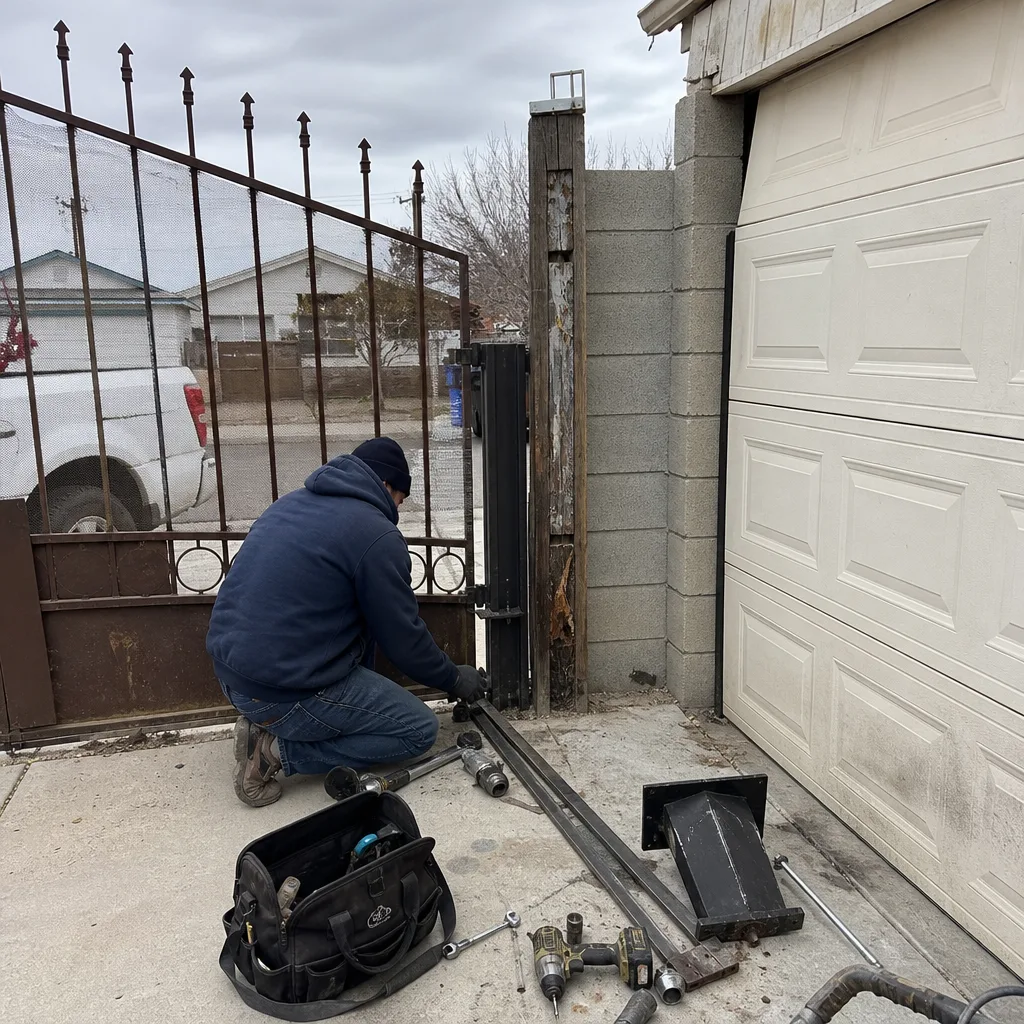 Before
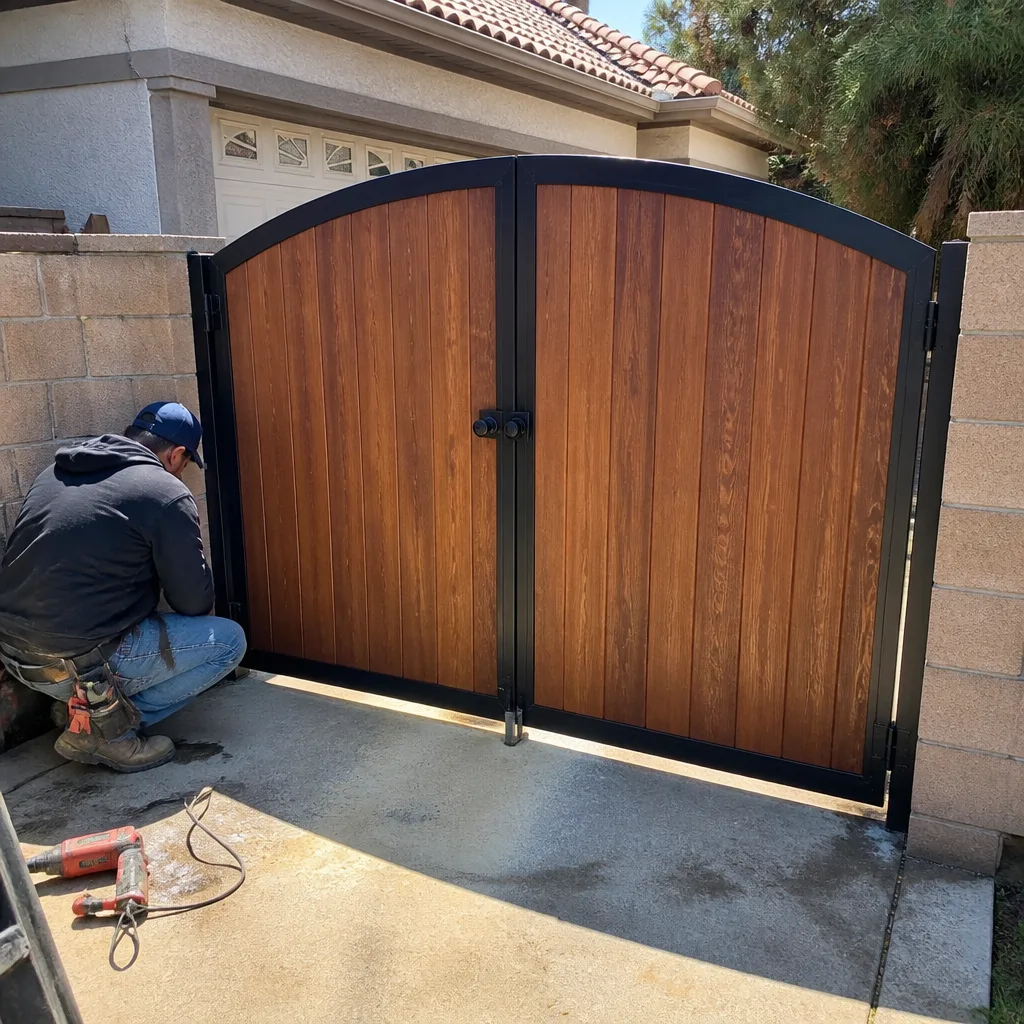 After
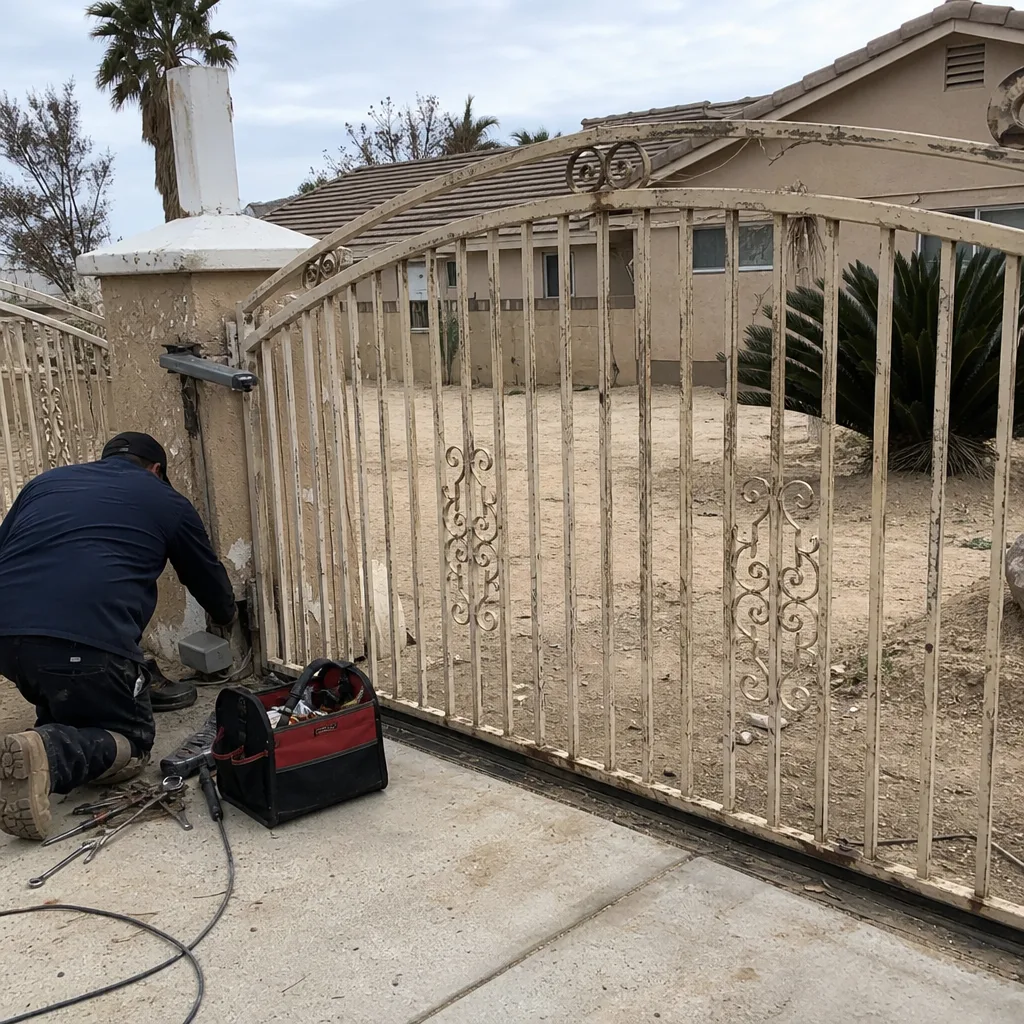 Before
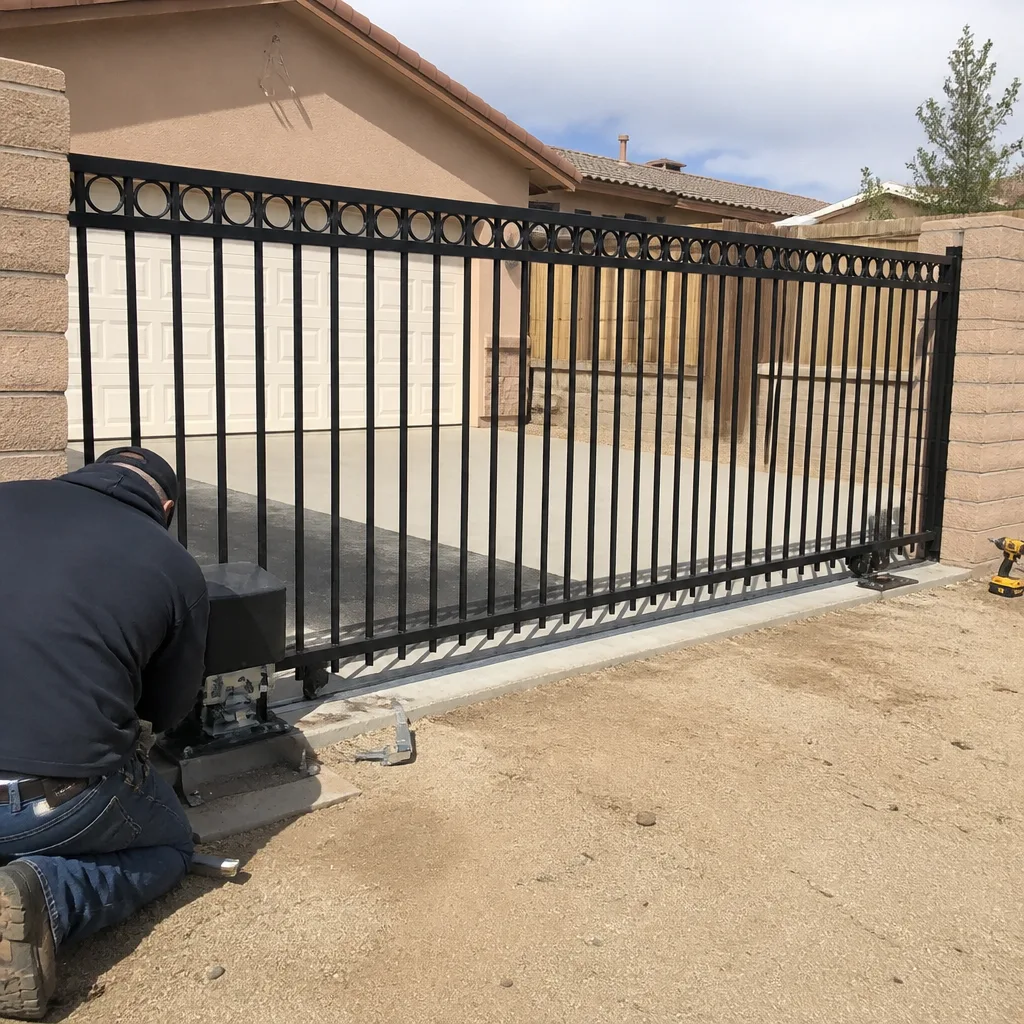 After
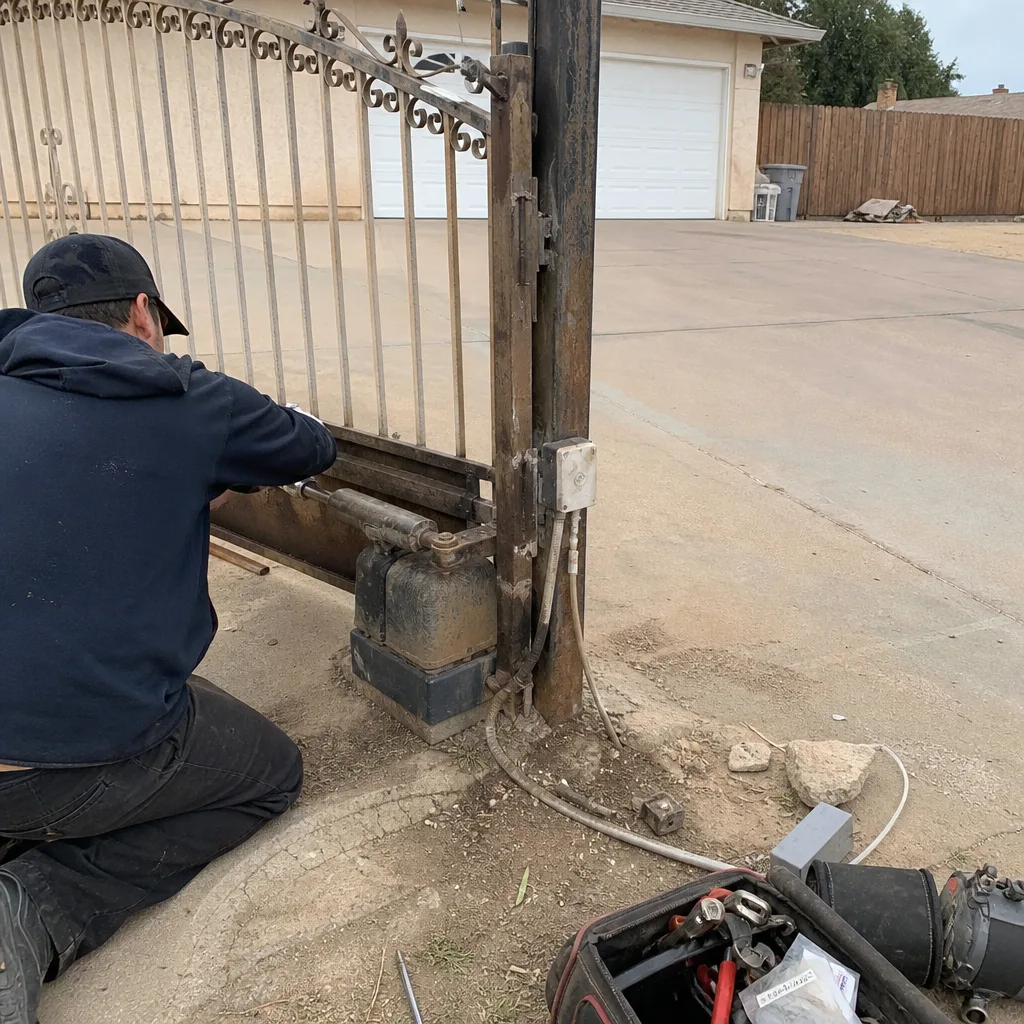 Before
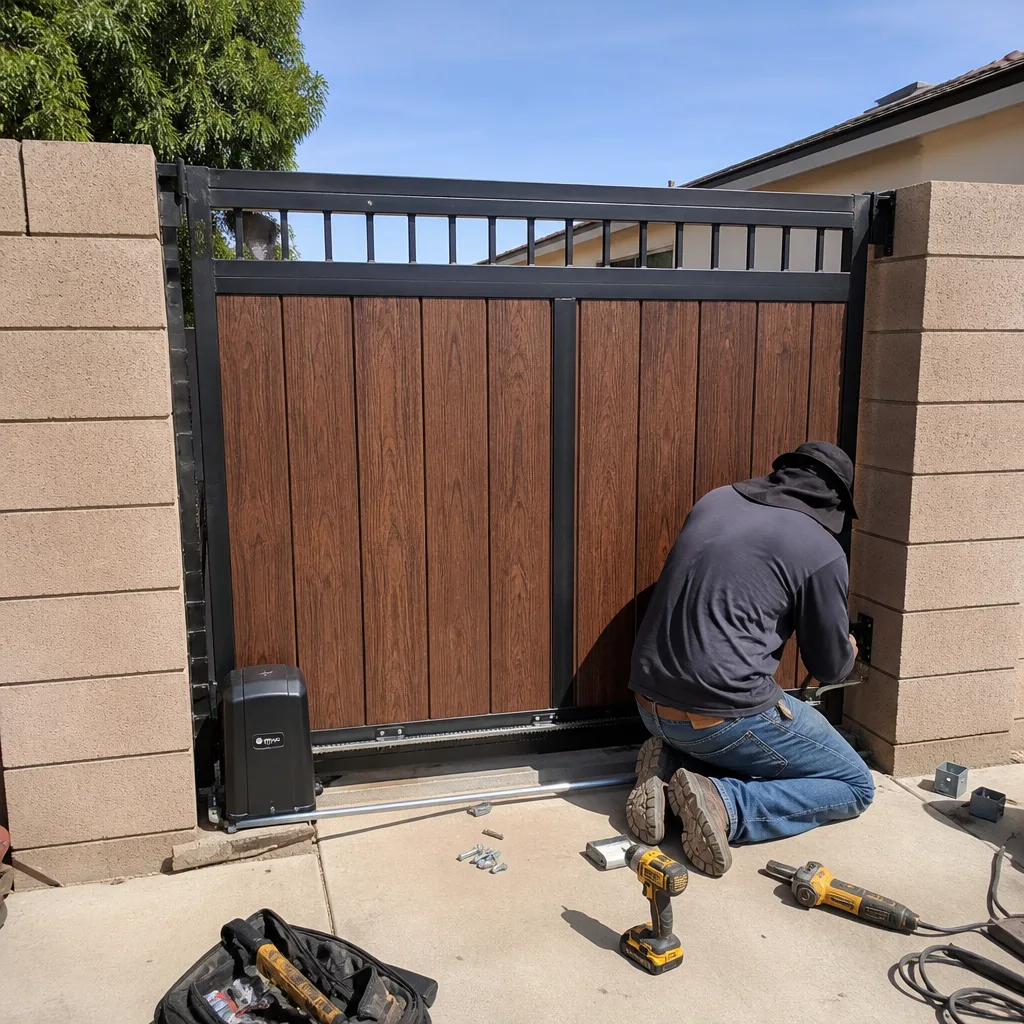 After