
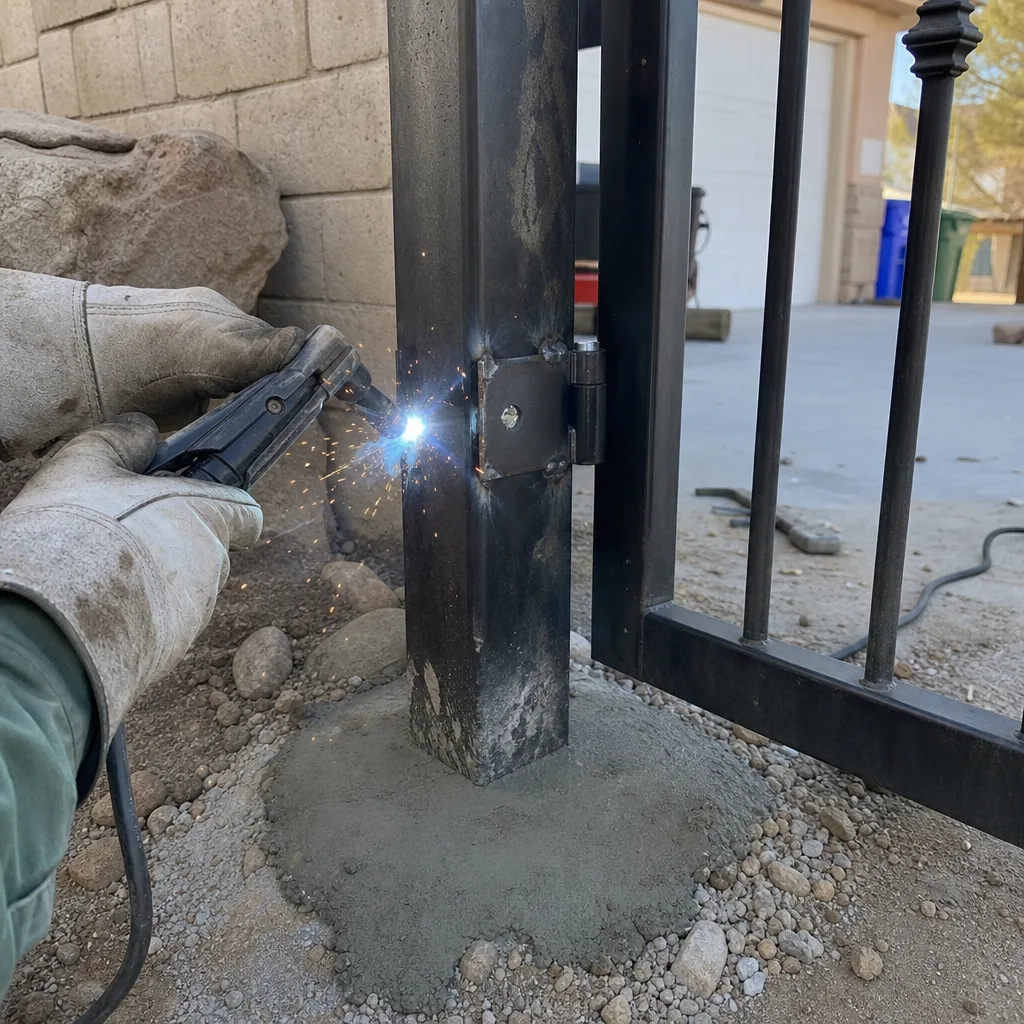
Last updated November 2, 2026
 Wrought iron
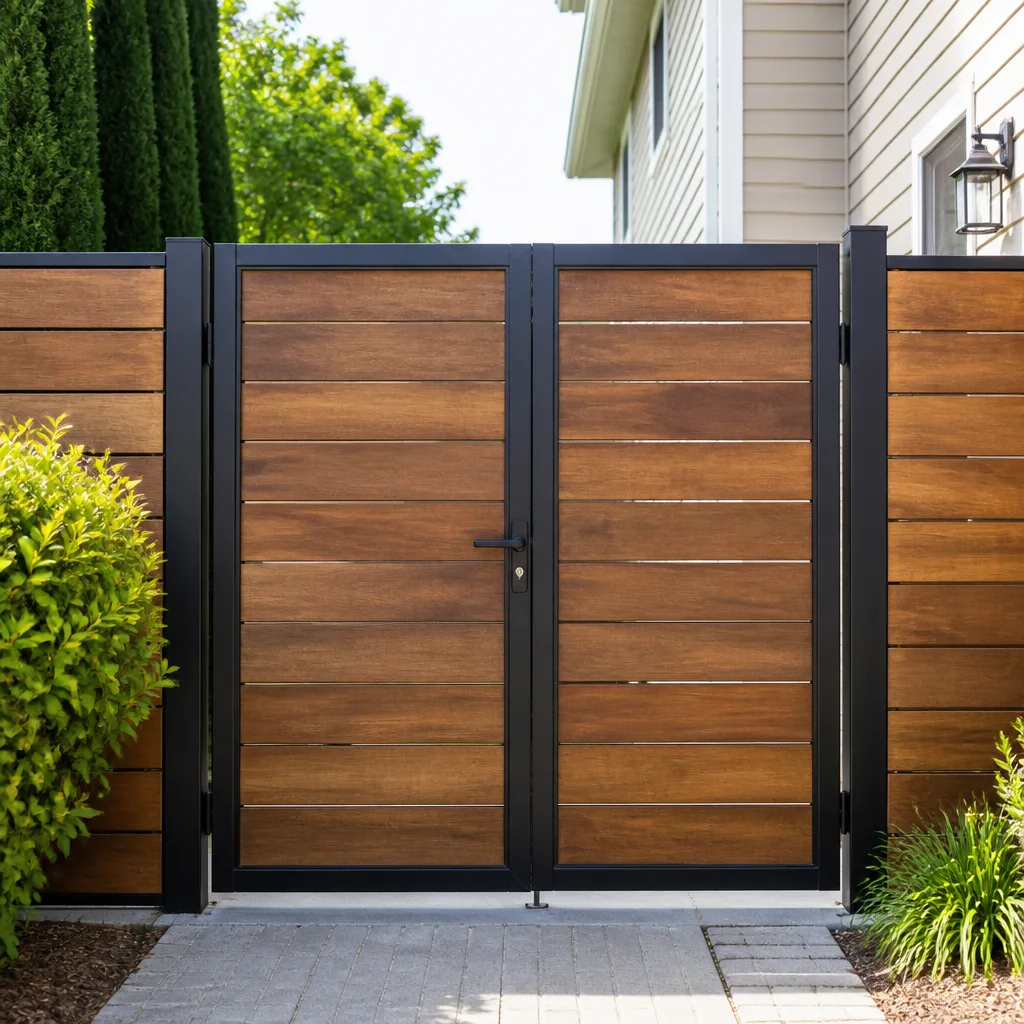 Wood & steel frame
 Farm & ranch
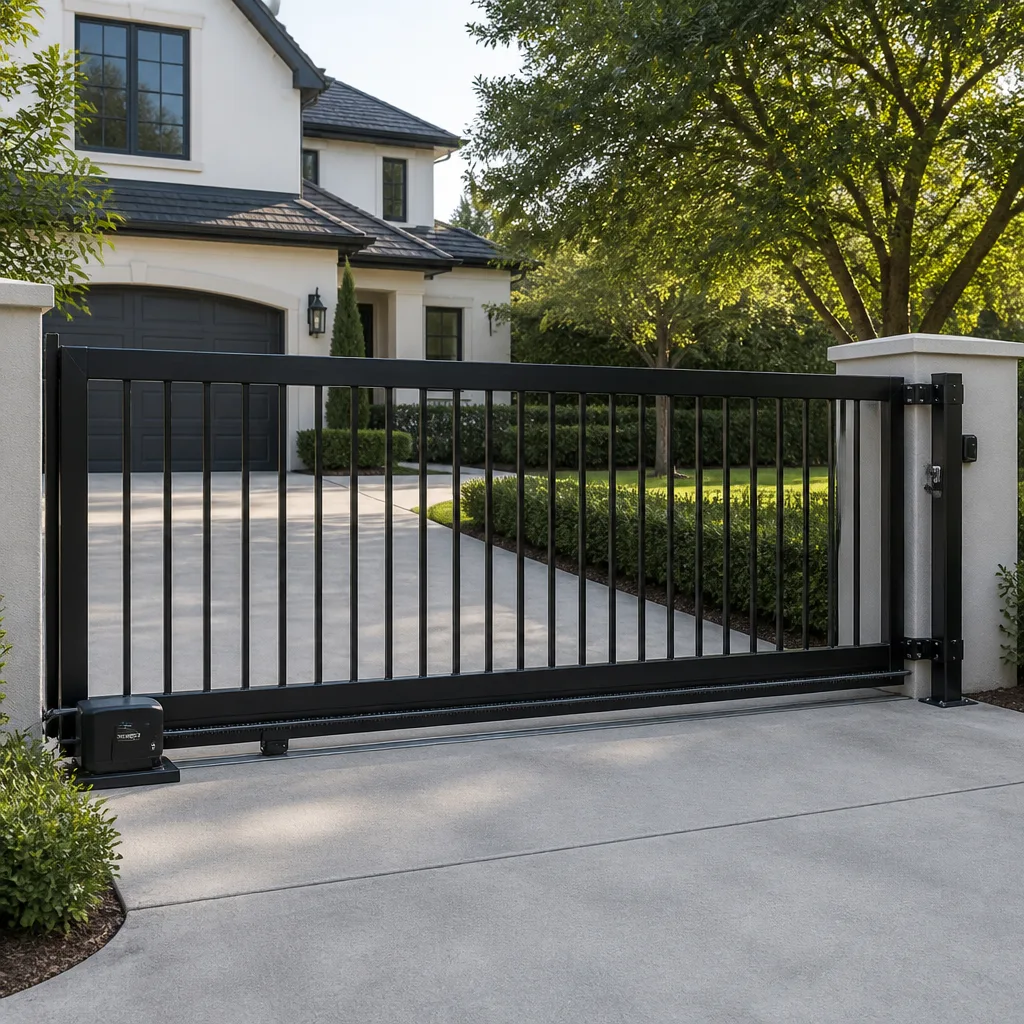 Sliding driveway gates
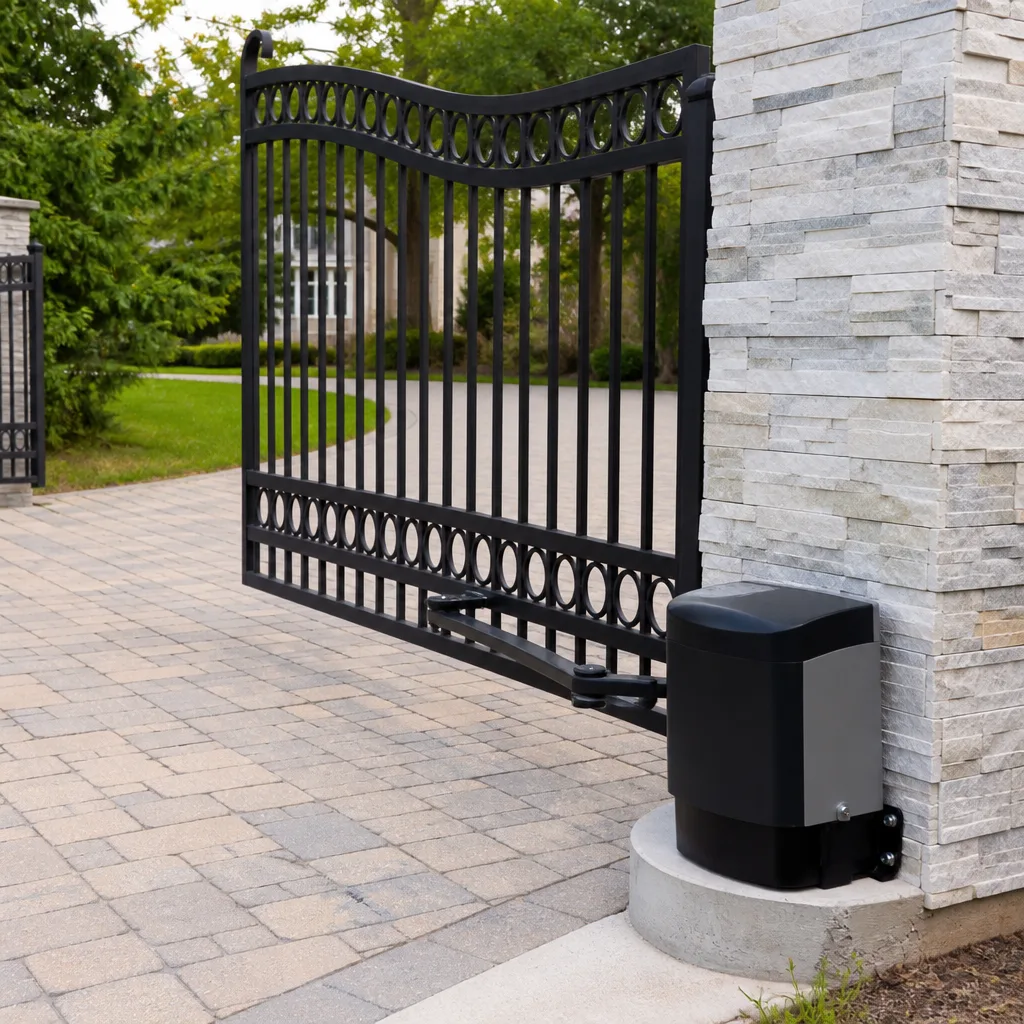 LiftMaster operators
Free on-site gate assessment - hinges, posts, and your LiftMaster or Nice gate operator checked before anything is quoted
The assessment is free and the quote is the invoice.
Get your free estimateGate Repair Troubleshooting: Common Problems and How to Fix Them
Here’s a number most homeowners in Victorville don’t expect: we see roughly six different root causes produce the exact same symptom – “my gate won’t open.” One homeowner has a dead receiver board, another has a tripped safety sensor, a third has a mechanical bind in the hinge. Same complaint, completely different fixes, wildly different costs. The generic advice you’ll find online treats all three as interchangeable. This guide takes a different approach. You’ll learn a decision-tree method that narrows the field before you touch a wire or pick up the phone, and you’ll learn exactly where safe diagnosis ends and our Gate Repair services become necessary.
Quick Answer
Most electric gate failures in Victorville trace to four root causes: a power or receiver issue, a logic board fault, a mechanical bind, or a blocked safety sensor. Start troubleshooting by confirming power at the operator, then test the remote and manual release, then inspect the gate’s physical path and safety edges. If those check out, the problem is almost always the control board or a wiring connection – and that’s where a specialist’s diagnostic equipment pays for itself. For Gate Repair Warning Signs: A Victorville Homeowner’s Reference Guide, see our dedicated resource.
Styles & brands we work with
- Wrought iron
- Wood & steel frame
- Farm & ranch
- Sliding driveway gates
- LiftMaster operators
Table of Contents
- Rule One: Check Power Before Anything Else
- Four Causes That Look Identical (and How to Tell Them Apart)
- Brand-Specific Diagnostics: Why Knowing Your Operator Changes the Playbook
- The Physical Inspection Sequence: What to Check With Your Eyes First
- Intermittent Failures: Why Wiring and Connections Are Almost Always the Culprit
- Safety Sensors and Photo Eyes: The Most Common False Alarm
- Mechanical Binds: When the Motor Is Fine and the Gate Is Fighting Itself
- The Hard Limits of DIY Troubleshooting
Rule One: Check Power Before Anything Else
Every gate troubleshooting sequence starts the same way, and skipping this step wastes more time than any other mistake. Before you assume the operator is dead or the board is fried, confirm the operator actually has power. In Victorville, where summer thunderstorms and high heat can trip breakers or knock out GFCI outlets, a tripped circuit is a common false alarm that gets misdiagnosed as a failed motor.
Here’s the sequence we follow on every service call:
- Check the breaker. Gate operators should be on a dedicated circuit in most installations. If the breaker tripped, reset it once. If it trips again immediately, stop and call a professional – that’s a short, not a nuisance trip.
- Check the GFCI outlet. Many residential operators plug into a GFCI outlet near the gate. Press the reset button. If the GFCI won’t reset, the fault is in the outlet or the operator’s power supply, not the gate itself.
- Look at the operator’s power indicator. Most modern operators from brands like Linear and Ghost Controls have an LED that lights up when the board has power. No LED means no power at the board, regardless of what the breaker says.
- Test the outlet with a known good device. A lamp or phone charger confirms whether the outlet is delivering power. Outlets fail, especially outdoor ones exposed to Victorville’s dust and temperature swings.
- Check for a battery backup. Many operators installed in the last five years have battery backup systems. If the main power died, the gate may limp along on backup until the battery drains. A gate that works intermittently and then stops entirely is often running on a dying backup battery.
If power is confirmed and the operator still won’t respond, you’ve eliminated the cheapest fix and moved into the diagnostic territory that actually requires method. That’s where the next section comes in.
Four Causes That Look Identical (and How to Tell Them Apart)
A gate that won’t open, a gate that opens halfway and reverses, a gate that responds to the remote but not the keypad – these symptoms overlap across four completely different failure categories. In our experience working on gates across Victorville, Hesperia, and the surrounding High Desert, misdiagnosis happens when homeowners (and some general handymen) treat the symptom as the diagnosis. The fix depends on which system inside the gate actually failed.
Here are the four categories and the telltale differences:
1. Power and Receiver Issues
Typical symptom: The gate does nothing. No hum, no click, no movement.
How to identify: Check the operator’s LED indicator. No light means power isn’t reaching the board. If the light is on but the remote does nothing, try the manual push-button on the operator or the wired keypad. If those work but the remote doesn’t, the issue is in the receiver or the remote itself – not the operator motor.
2. Logic Board Fault
Typical symptom: The gate behaves erratically. It opens but won’t close. It closes but won’t open. It stops midway for no reason. Sometimes it works fine for a day, then fails completely.
How to identify: Logic board faults are the hardest to confirm without opening the operator housing. A board can fail from a power surge, heat exposure, or simple age. In Victorville’s summer heat, boards in operators without adequate shade or ventilation fail at higher rates. If the gate’s behavior is inconsistent and the physical gate moves freely by hand, the board is the prime suspect.
3. Mechanical Bind
Typical symptom: The gate strains, moves slowly, or stops partway and reverses. You may hear the motor humming or groaning.
How to identify: Use the manual release to disengage the operator, then push the gate by hand. It should move smoothly with even resistance. If it catches, drags, or requires real muscle, you have a mechanical bind – a hinge problem, a wheel issue on a sliding gate, or a track obstruction. The motor is working. The gate is fighting it.
4. Safety Sensor Block
Typical symptom: The gate refuses to close, or it closes partway and then reverses. It opens fine.
How to identify: This is the most common false alarm in electric gate repair. A photo eye or safety edge that’s dirty, misaligned, or blocked will tell the control board that something is in the gate’s path. The board obeys and refuses to close. Wipe the photo eye lenses, check for weeds or debris growing into the sensor’s field, and confirm the safety edge isn’t damaged. In Victorville, windblown sand and dust coat photo eyes regularly – this single check fixes a surprising number of “broken” gates.
Each of these four causes produces symptoms that overlap heavily. The decision-tree approach – power first, then remote, then manual release, then sensors – eliminates them in order of likelihood and cost.
Brand-Specific Diagnostics: Why Knowing Your Operator Changes the Playbook
Here’s where most generic troubleshooting guides fall apart. A reset procedure that works for a Ghost Controls operator does nothing for a Linear operator. A diagnostic sequence that makes sense on a DoorKing commercial system doesn’t apply to a Viking residential swing gate. The operator brand isn’t a footnote – it changes what the error codes mean, which buttons to press, and whether a particular behavior is a fault or a feature.
We service nine operator brands across residential and commercial tiers – LiftMaster, FAAC, BFT, Linear, Viking, Ghost Controls, DoorKing, Elite, and Mighty Mule – and the differences matter. Here’s what brand-specific troubleshooting looks like for three of the most common residential operators in the Victorville area:
Ghost Controls
Ghost Controls operators use a series of beeps and LED flashes to communicate errors. The most common issue we see is a limit switch that has drifted – the gate overtravels and the operator stops responding. The fix often involves resetting the limits through the operator’s learn mode, which requires holding the set button while cycling the gate. If you’re not familiar with Ghost Controls’ specific sequence, you can easily reprogram the wrong limit and make the problem worse.
Linear
Linear operators, particularly the residential swing gate models common in High Desert communities, are known for sturdy mechanicals and simple board logic. When a Linear gate stops responding, the first thing to check is the transformer and the low-voltage wiring to accessories like keypads and safety loops. A short in an accessory wire can disable the entire system without damaging the board. Disconnecting accessories one at a time and testing the gate between each removal is the fastest path to a diagnosis.
Viking
Viking operators, familiar in both residential and light commercial settings, have a different failure profile. We see more intermittent failures in Viking systems tied to loose wiring harnesses and corroded connections than in other brands. The operator’s diagnostic LEDs will often point toward a general fault category, but confirming a Viking-specific issue usually requires a multimeter and knowledge of which pins should read which voltage. Guessing here can turn a loose wire into a fried board.
This is why electric gate repair is a specialty. A general handyman who fixes garage doors and fence posts doesn’t carry the diagnostic knowledge for nine operator brands – and the operator brand determines the diagnostic path. If you’re evaluating who to trust, read How to Hire a Gate Repair Contractor in Victorville: A Step-by-Step Guide. We service the brand already on your property. We don’t push a replacement or insist you switch to a system we sell. The gate tells us what’s wrong; the brand tells us how to confirm it.
The Physical Inspection Sequence: What to Check With Your Eyes First
Before you touch a wire, before you call anyone, there’s a physical inspection sequence that costs nothing and catches a meaningful percentage of gate failures. In our experience, roughly one in five service calls in Victorville is resolved by something the homeowner could have spotted in five minutes with a flashlight.
Here’s the sequence, in order:
- Walk the full gate path. Look for rocks, branches, dirt buildup, or debris in the gate’s travel path. For sliding gates in particular, gravel and sand from High Desert winds work their way into the track and cause binds.
- Check the hinges and wheels. On swing gates, look at each hinge. Is there visible sag? Rust? A gap between hinge leafs that wasn’t there before? On sliding gates, check the rollers and the V-track. A worn roller can drop the gate enough to drag.
- Inspect the safety edges and photo eyes. Are the photo eye lenses clean? Are they aligned? Is the safety edge intact or is the rubber cracked and peeling? A damaged safety edge sends a constant “obstruction” signal to the board.
- Look at the operator housing. Is it cracked? Is water getting in? Are there signs of rodent activity? Pack rats are a real problem in Victorville – they nest in operator housings and chew through low-voltage wiring.
- Check the chain or belt tension. On sliding gates with chain drives, a loose chain can skip and cause the gate to stop unpredictably. On swing gates with articulated arm operators, check that the arm isn’t bent or binding.
- Look for fresh excavation or landscaping work near the gate. If someone recently ran irrigation lines, planted trees, or trenched near the gate, a cut or nicked underground loop wire is a strong possibility. This is one of the most common causes of sudden, unexplained gate failures in newer Victorville subdivisions.
This sequence doesn’t require tools or expertise. It requires a flashlight and ten minutes. And it eliminates the mechanical and environmental causes before you spend money on a service call or start disassembling electronics.
Intermittent Failures: Why Wiring and Connections Are Almost Always the Culprit
Of every gate problem we see in Victorville, intermittent failures are the most frustrating for homeowners and the most frequently misdiagnosed by non-specialists. The gate works fine for a week, then fails. You call someone. By the time they arrive, the gate is working again. They find nothing. Two days later, it fails again.
Here’s what we know from years of chasing these problems: an intermittent failure is almost never a motor problem or a “dying operator.” It’s a connection problem. A wire that’s loose, corroded, or partially severed makes contact sometimes and loses contact other times. Temperature changes expand and contract connections. Moisture from rain or irrigation creates shorts. Vibration from the gate’s own movement works connections loose over time.
The usual suspects, in order of likelihood:
- Wire nut connections inside the operator housing. These loosen over time from the gate’s vibration. A wire that’s mostly connected but not tight creates an intermittent circuit.
- Underground loop wires. These run across the driveway to detect vehicles. Over time, soil shifts, roots grow, and the wire’s insulation cracks, creating partial shorts that come and go with moisture levels.
- Accessory wiring. Keypads, intercoms, exit wands, and safety devices all run low-voltage wiring back to the board. A single compromised wire can cause the board to behave erratically, even when the gate’s own wiring is fine.
- Battery terminals. On operators with battery backup, corroded battery terminals create intermittent power delivery that mimics a board failure.
- The plug connection at the outlet. Outdoor outlets in Victorville’s dry, dusty climate collect contamination. A plug that’s not fully seated or a receptacle with worn contacts can make and break contact with small movements or temperature shifts.
Tracing an intermittent fault properly requires a multimeter and the patience to test each circuit while the gate is in its failed state – which sometimes means showing up at the exact moment the problem occurs. That’s why we tell homeowners to document everything: what the gate did, what the weather was like, whether the keypad worked when the remote didn’t, whether the gate moved at all or was dead. Those details cut the diagnostic time in half.
Safety Sensors and Photo Eyes: The Most Common False Alarm
If your gate opens fine but refuses to close, or closes partially and then reverses, the most likely culprit in Victorville is not the motor, not the board, and not the remote. It’s a safety sensor doing exactly what it was designed to do – refusing to close when it thinks something is in the way.
Safety systems on electric gates fall into two main categories. Photo eyes are the small sensor pairs mounted on either side of the gate opening that project an invisible beam. A safety edge is a pressure-sensitive strip mounted on the leading edge of the gate itself. If the beam is broken or the edge is compressed, the board receives an obstruction signal and reverses or refuses to close. This is a required safety feature, not a convenience feature – and that distinction matters when homeowners start looking for ways to bypass it. Don’t. UL 325 safety standards exist because gates have killed people, and bypassing a safety sensor creates a genuinely dangerous gate.
What to check, in order:
- Clean the photo eye lenses. In Victorville, dust and fine desert sand accumulate quickly. A thin film is enough to diffuse the beam enough to trigger a fault. Wipe both lenses with a dry cloth.
- Confirm alignment. Photo eyes must point directly at each other. If a weed whacker, a child, or a delivery truck bumped one of the mounting posts, the beam is now aimed at nothing. Most photo eyes have an LED that stays solid when aligned and blinks when not.
- Check for plant growth. Desert shrubs, weeds, and ornamental grasses grow fast after rain and can intrude into the beam path. A plant cutting the beam intermittently is a classic intermittent failure cause in Victorville.
- Inspect the safety edge. Run your hand along the rubber edge strip. Cracks, splits, or areas where the rubber has pulled away from its mount mean the edge is compromised. Some safety edges are pneumatic – if the rubber is cracked, air pressure drops and the sensor triggers falsely.
- Look at the sensor wiring. At the point where the sensor wire enters the gate frame or leaves the photo eye housing, look for exposed wire, cracks in insulation, or corrosion. Outdoor wiring deteriorates in High Desert sun and temperature swings.
If the sensors are clean, aligned, and intact, and the gate still refuses to close, the fault may be in the sensor’s wiring or the board’s sensor input – both of which require a technician with a multimeter and experience across multiple operator brands.
Mechanical Binds: When the Motor Is Fine and the Gate Is Fighting Itself
A gate operator is a motor attached to a mechanical system. When the mechanical system degrades, the motor works harder, runs hotter, and eventually trips its own overload protection or burns out entirely. The operator gets blamed. The real problem is in the gate itself.
Mechanical binds manifest in specific ways. The gate moves slower than it used to. The gate groans or grinds. The gate stops partway and reverses. The gate sags visibly at the free end. Each of these points to a different mechanical failure:
- Swing gate hinge wear: Hinges on a swing gate carry the entire weight of the gate leaf. Over years of opening and closing, the hinge pins wear, the leafs wallow out, and the gate begins to sag. The sag shifts the gate’s weight distribution and makes the motor work against gravity on every cycle. In Victorville’s climate, temperature swings between freezing winter nights and triple-digit summer days accelerate metal fatigue.
- Sliding gate roller and track issues: A sliding gate rides on rollers in a track. Worn rollers drop the gate lower than designed, causing it to drag. Dirt and gravel in the track compound the problem. A gate that’s dragging on its track can draw two to three times the normal current – which the operator’s overload protection eventually interprets as an obstruction or overcurrent condition.
- Ground settling under gate posts: High Desert soil shifts with moisture. In Victorville, where rain is infrequent but sometimes heavy, the ground swells and contracts, and gate posts can shift out of alignment. A post that’s moved even a quarter inch can alter the gate’s swing path or track alignment enough to create a bind.
- Chain and sprocket wear on sliding gates: Chain drive systems stretch over time. A stretched chain skips teeth on the sprocket, which makes the gate jerk, stop in the wrong position, or fail to reach its limit switches reliably.
The diagnostic test is simple. Disengage the operator using the manual release – every electric gate has one – and push the gate through its full travel by hand. A properly functioning gate moves smoothly with moderate, consistent resistance. If you feel catches, hangs, or a point where the gate suddenly gets heavy, that’s a mechanical bind, and no amount of board reprogramming will fix it. The motor is doing its job. The gate is working against it.
Mechanical repairs vary widely in scope. A wheel replacement on a sliding gate is quick. Re-hanging a heavy swing gate or pouring new post foundations is a larger project. Either way, the gate needs to move freely before the operator can function correctly – and that’s a repair a specialist should evaluate in person.
The Hard Limits of DIY Troubleshooting
There’s a line in gate troubleshooting where safe, sensible homeowner diagnosis ends and professional territory begins. Knowing where that line is saves you money, protects your gate, and keeps you out of the hospital.
Here’s where DIY stops:
- Opening the operator housing. Inside an electric gate operator you’ll find exposed line voltage, high-tension springs on some arm models, and a control board that’s easily damaged by static discharge or a slipped screwdriver. We’ve seen homeowners turn a $150 board replacement into a $600 board-and-transformer replacement by probing the wrong thing.
- Testing or replacing the capacitor. Gate operator capacitors store a charge even after power is disconnected. Touching the wrong terminal delivers a shock that can stop your heart. This is not a guess-and-check component.
- Working on the gate itself when it’s under tension. A heavy swing gate or a counterbalanced slider stores energy in its mechanical system. If a hinge lets go or a cable snaps while you’re working on it, a gate that weighs 400 pounds can move fast. We don’t recommend homeowners remove or adjust gate hardware without the right equipment and experience.
- Bypassing safety sensors. Never. Full stop. A gate without functioning photo eyes and safety edges is a lethal machine. The UL 325 safety standards exist because people – including children – have been killed by gates that didn’t reverse. If your gate’s safety system is causing problems, repair it. Don’t disable it.
- Replacing the control board on a brand you don’t know. Control board replacement requires matching the board revision to the operator model, transferring settings, re-learning remotes, and re-setting limits. On a Ghost Controls board, the process differs from a Viking board, which differs from a DoorKing board. Getting it wrong means the gate either doesn’t work or works dangerously – opening when it should stop, or failing to reverse when it detects pressure.
The financial risk matters too. A misdiagnosed board replacement is money spent on a part that wasn’t the problem. A misdiagnosed operator replacement – when the real issue was a mechanical bind or a loop wire – is a multi-thousand-dollar mistake. The diagnostic sequence we outlined earlier exists to prevent exactly that: eliminating the cheap, probable causes before spending money on the expensive, unlikely ones.
Common Mistakes to Avoid
- Replacing the remote batteries first without testing the manual button. If the wired button or keypad also doesn’t work, new remote batteries won’t fix anything. Test the system before buying parts.
- Ignoring the manual release lever. The manual release is the single best diagnostic tool on the gate. If the gate moves freely by hand, the problem is electrical or electronic. If it doesn’t, the problem is mechanical. Skipping this test wastes time and leads to wrong fixes.
- Replacing the operator when the real problem is a $40 photo eye. We’ve arrived at gates in Victorville where homeowners had already purchased a new operator based on internet advice, when the actual problem was a dirty lens and a misaligned beam. The repair-first approach exists for a reason.
- Assuming a tripped breaker is a one-time fluke. Breakers trip for reasons. If it trips again after a reset, the condition that caused it hasn’t changed. A repeated trip is diagnostic information, not an annoyance to work around.
- Letting a minor gate problem ride for months. A gate that slows down, groans, or intermittently fails is telling you something. The longer a mechanical bind goes unaddressed, the more strain it puts on the operator. A $150 wheel replacement becomes a $900 motor replacement if ignored long enough.
- Hiring a generalist who guesses at the operator. Gate operators from Linear, Viking, Ghost Controls, and DoorKing have genuinely different diagnostic procedures, error codes, and failure profiles. A handyman who “works on gates sometimes” is likely to misdiagnose a board issue as a motor issue and sell you the wrong fix. We repair the brand already installed on your property – no unnecessary replacement pitch.
See the difference
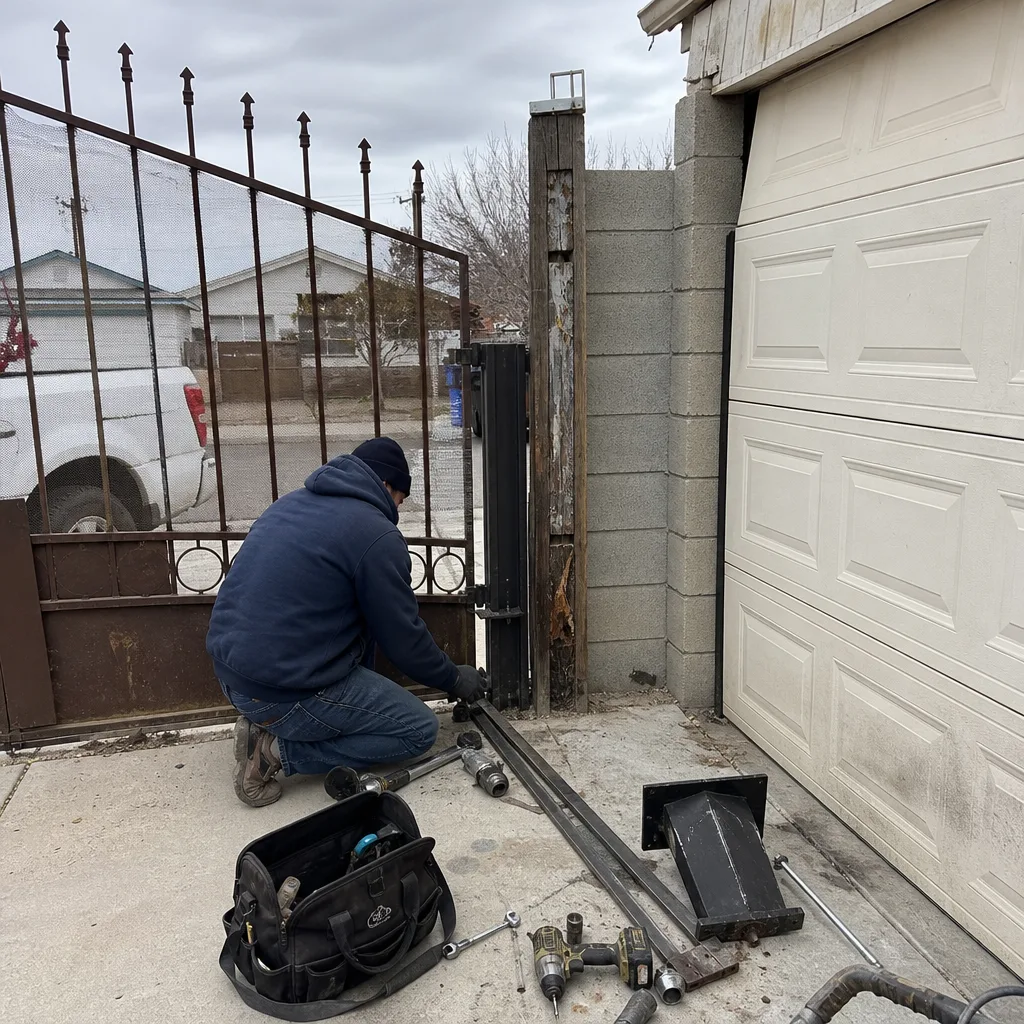 Before
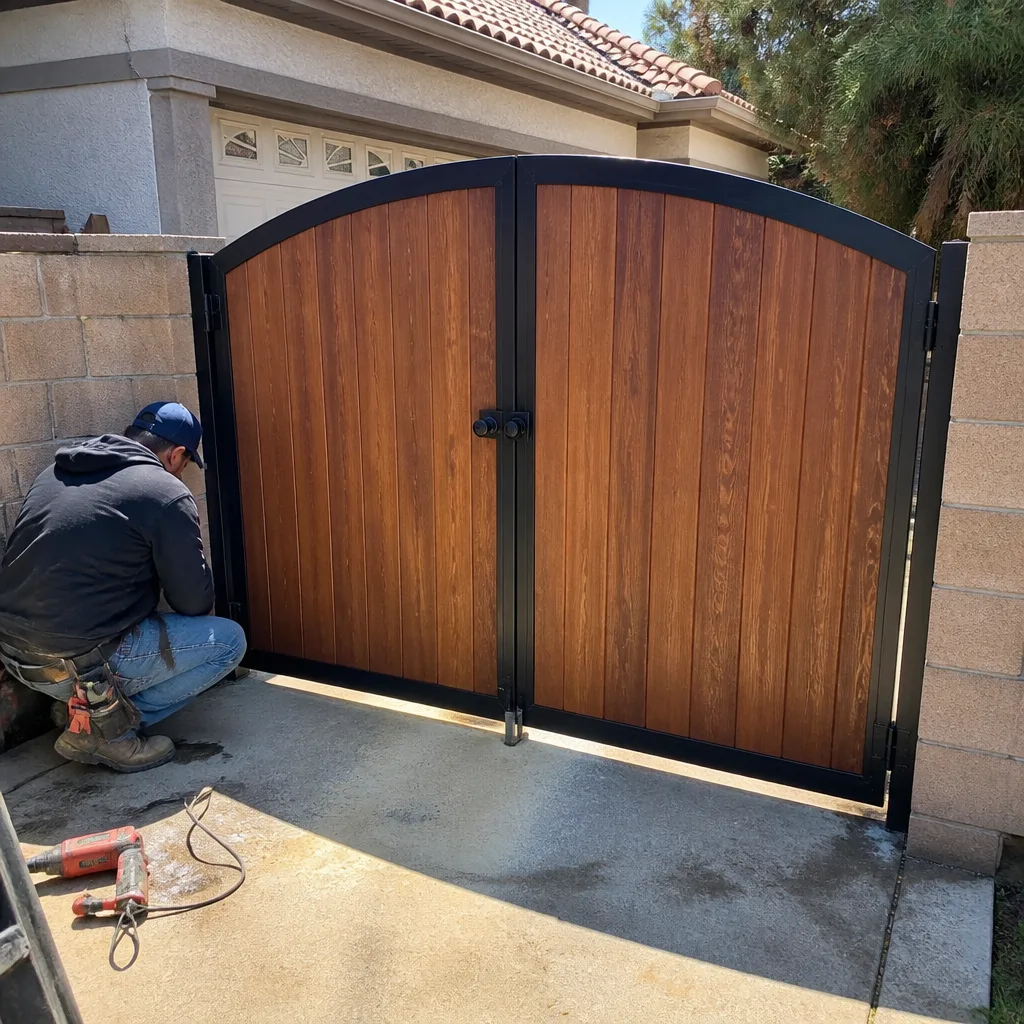 After
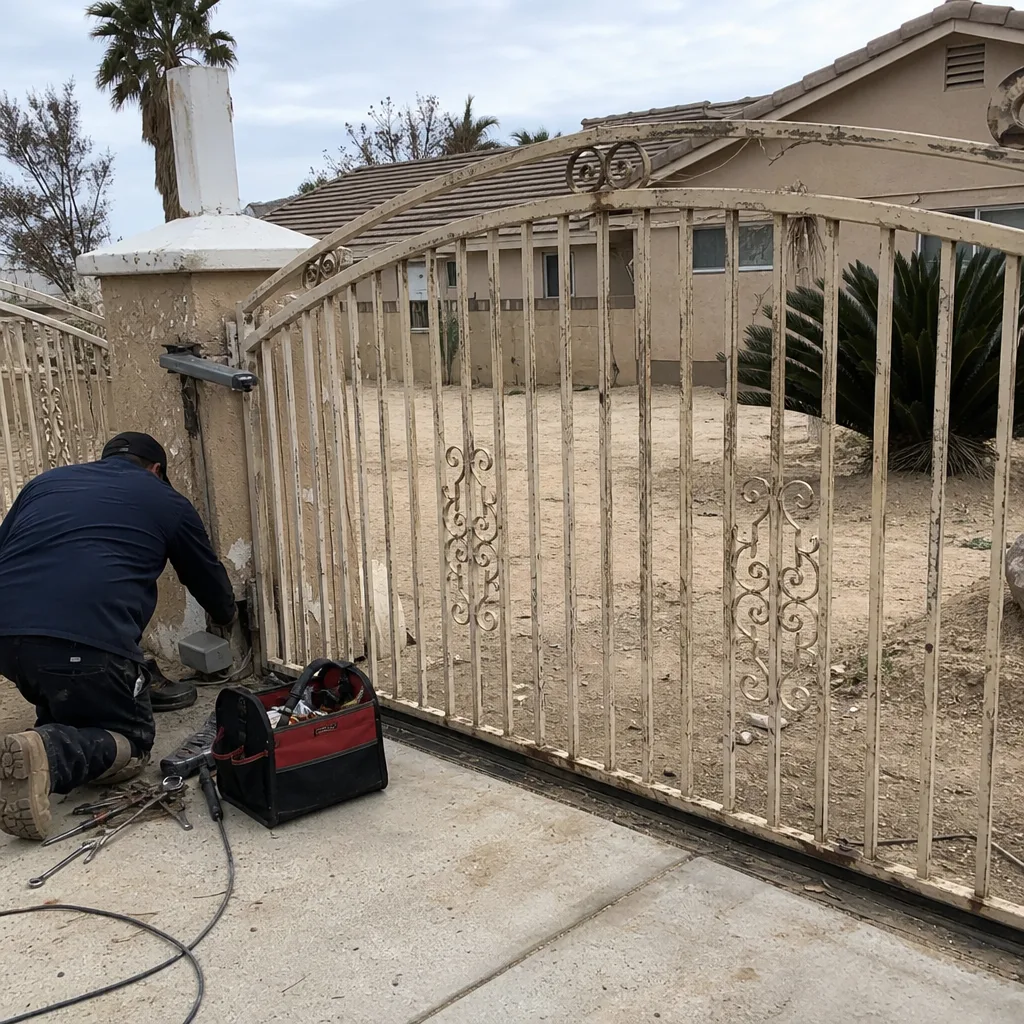 Before
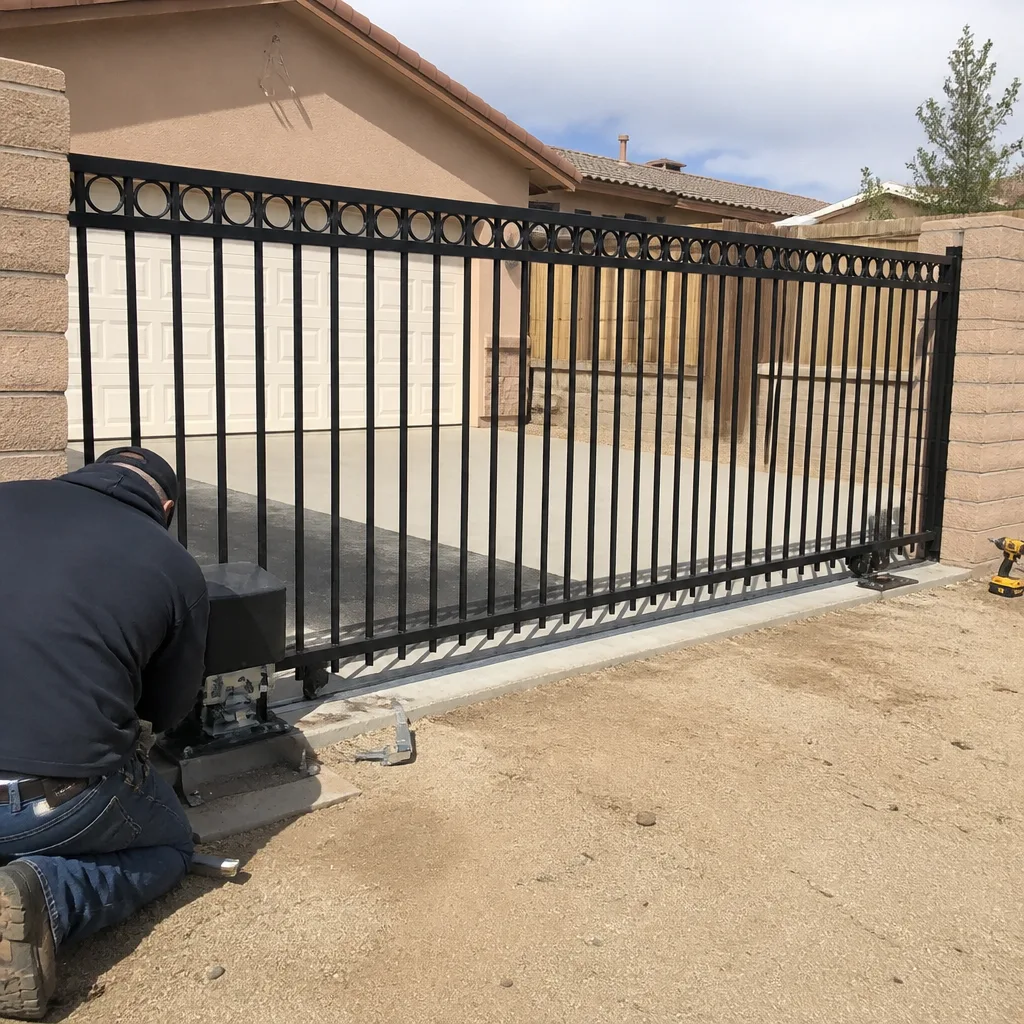 After
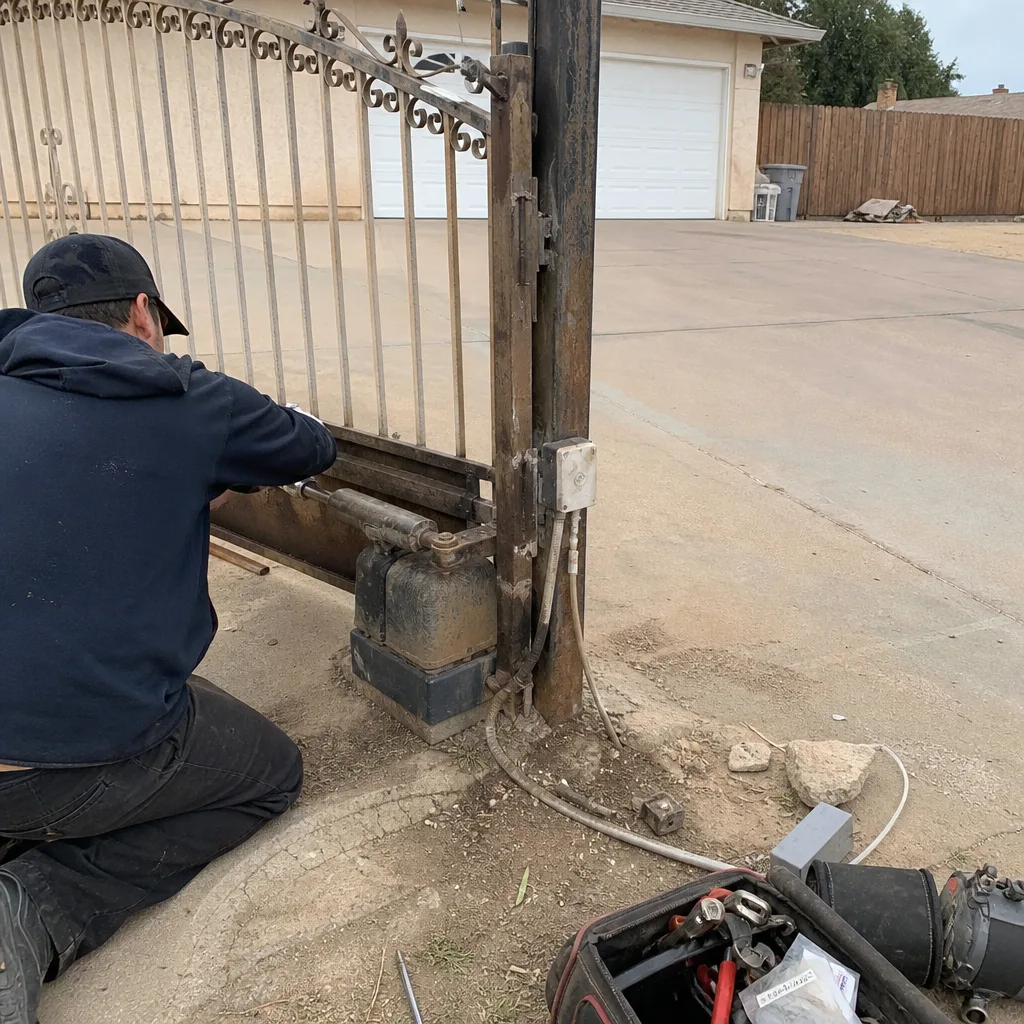 Before
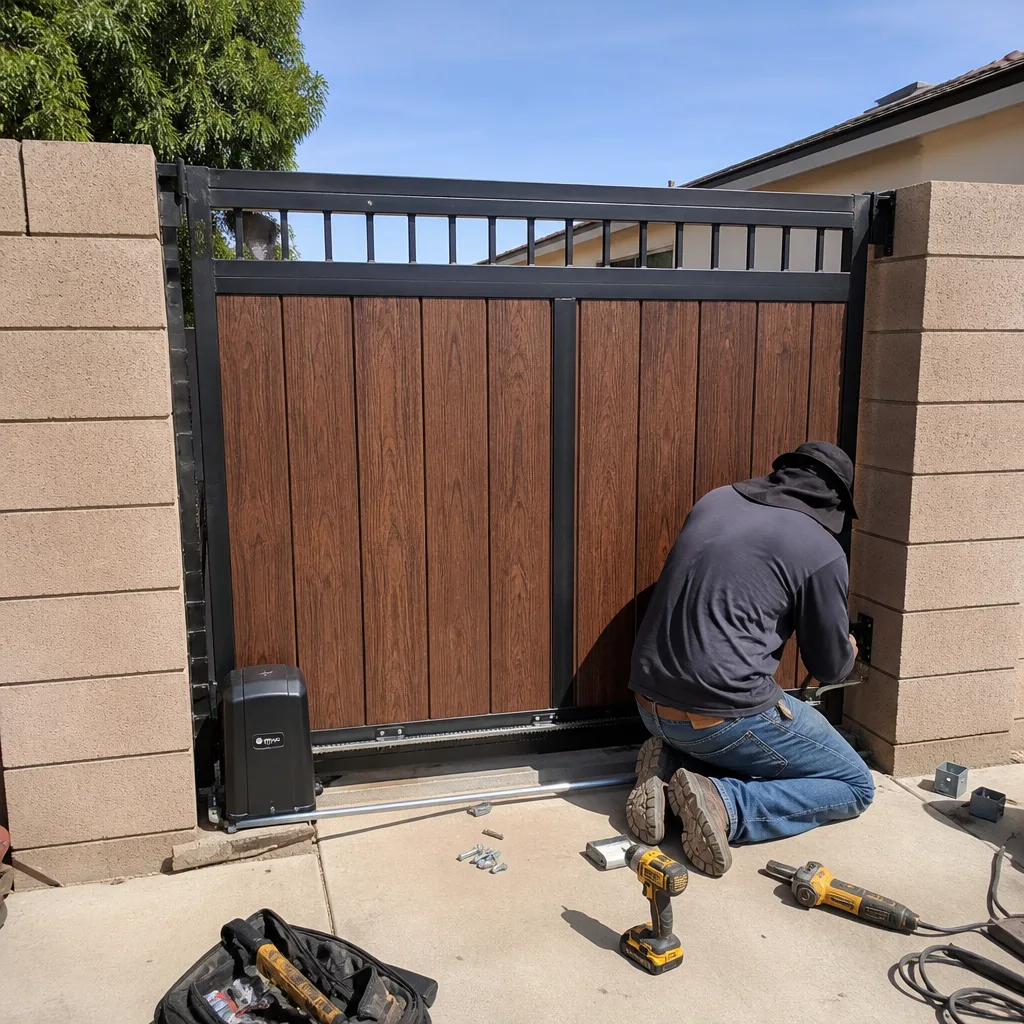 After
When to Call a Professional
Call a gate specialist when the gate’s behavior involves the control board, exposed wiring, an intermittent fault you can’t reproduce, or any safety system malfunction. Call when the gate moves by hand but won’t move under power – that’s an electrical diagnosis that requires opening the operator. Call when the gate has been hit by a vehicle, even if it still opens. Impact damage can compromise the gate structure and the operator’s internal components in ways that aren’t visible from the outside. Call when you’ve gone through the power checks and the physical inspection and the gate still won’t cooperate. Gate Repair Victorville offers free estimates in Victorville – call (833) 589-9763 and describe the symptom. We’ll tell you what we think it is and what it’ll cost to confirm.
Frequently Asked Questions
When the keypad works but the remote doesn’t, the problem is isolated to the receiver or the remote itself – not the operator motor or the gate mechanics. The fix is usually a re-learn or replacement of the remote, or a receiver board repair. Call (833) 589-9763 for a quick diagnosis over the phone.
A gate that opens but won’t close is almost always seeing an obstruction signal from a photo eye, safety edge, or loop detector. Clean the photo eye lenses, check the beam alignment, and inspect the safety edge for damage. If those are fine, the sensor wiring or board input is the likely fault.
Gate repair in Victorville varies widely by the failure type. A photo eye replacement or limit switch adjustment is typically under $200 in parts and labor. A control board replacement ranges from $300 to $800 depending on the operator brand. A full operator replacement starts around $1,200 and goes up significantly for heavy-duty commercial systems. The only way to get an accurate number is a diagnosis – which is why we offer free estimates at (833) 589-9763.
You can handle the external checks – power, remote batteries, cleaning photo eyes, clearing debris from the gate path – and find more guides & resources on our blog. Opening the operator housing, testing electrical components, replacing boards, or working on gate hardware under tension is not DIY territory. Those systems involve line voltage, stored electrical charge, and heavy moving components.
We repair the gate and operator already installed on your property, regardless of brand. Our technicians are factory-familiar with nine operator lines – LiftMaster, FAAC, BFT, Linear, Viking, Ghost Controls, DoorKing, Elite, and Mighty Mule – covering everything from residential DIY systems to high-cycle commercial operators. That’s the difference between electric gate specialists and a generalist who sells one brand.
A gate that stops midway and reverses is seeing either an obstruction signal from a safety device or a current spike from a mechanical bind. The manual release test distinguishes the two: if the gate moves freely by hand, the problem is a sensor or board issue. If it binds, the problem is mechanical. Both require different fixes, which is why the diagnostic order matters.
The Bottom Line
Gate troubleshooting is a decision tree, not a symptom chart. The same visible problem – a gate that won’t open – traces to different root causes depending on whether the power is dead, the receiver board failed, the gate is binding mechanically, or a safety sensor is falsely reporting an obstruction. Working through those possibilities in order, using the manual release and the operator’s diagnostic indicators, eliminates the cheap and probable causes before spending money on the expensive and unlikely ones. For the diagnostics that require a multimeter, brand-specific knowledge, or opening the operator, a specialist with cross-brand experience – from gate repair in Victorville to gate repair in Hesperia and electric gate repair throughout the High Desert – turns a guessing game into a confirmed diagnosis. When your gate outlives its useful life, the same team that diagnosed it can install a new system without handing you off to another contractor.
Written by the team at Gate Repair Victorville, serving Victorville since 2013.